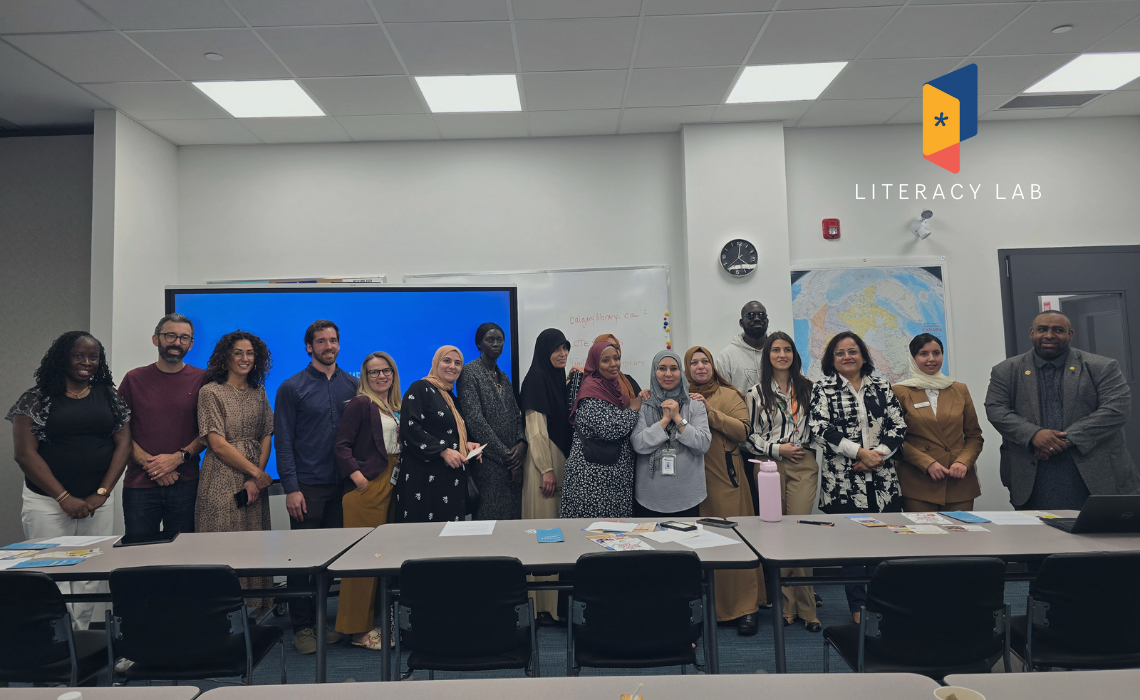
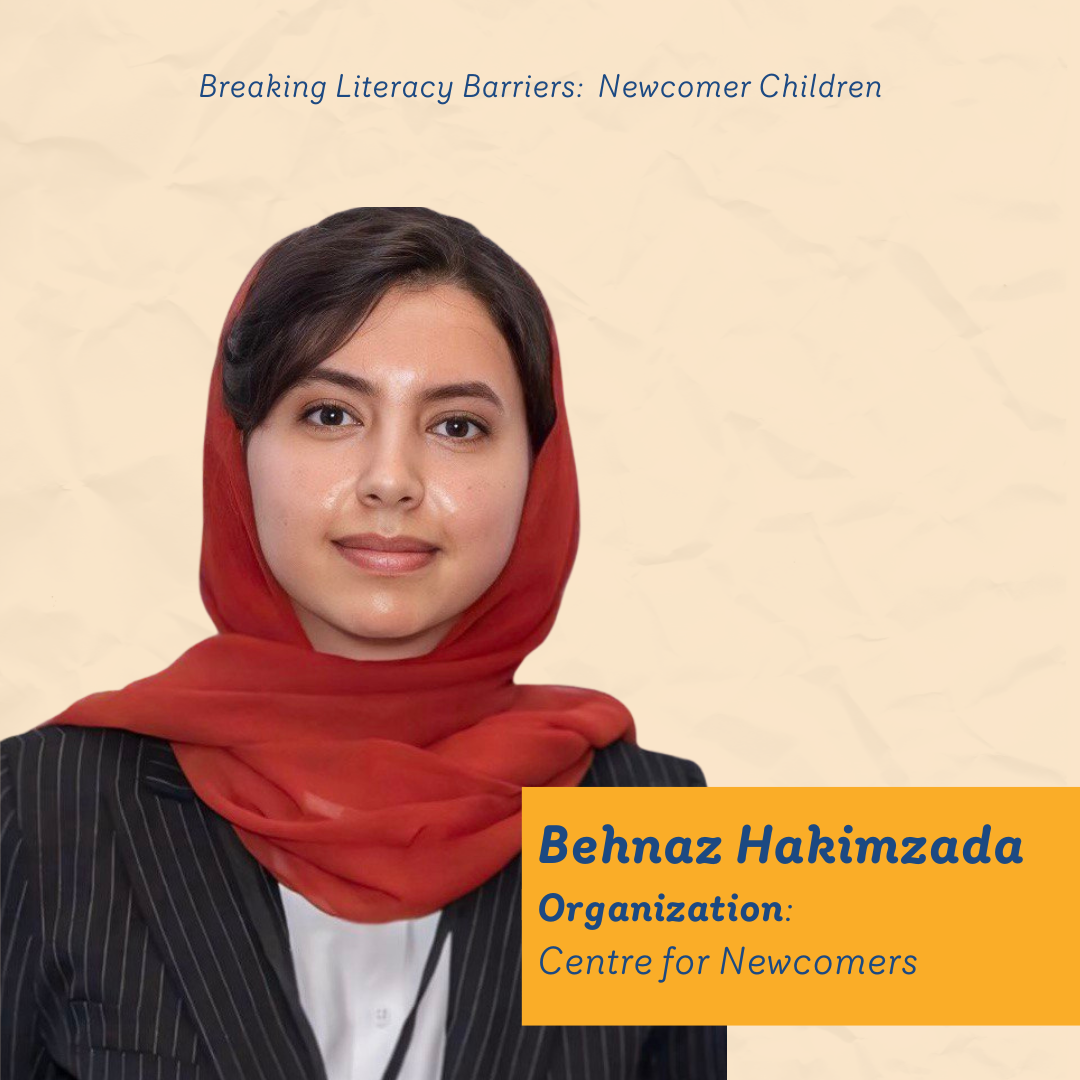
Across Alberta, children from underserved communities enter school without the necessary literacy foundation. The Literacy Lab has been working tirelessly to address this challenge, and one of its three focuses is the ‘Power and Inclusion of Newcomer Children.’ In this conversation, we speak with Behnaz Hakimzada, a lab member and a young professional working as a Youth Case Manager at the Centre for Newcomers (CFN).
Newcomer children in Alberta face significant challenges in accessing an inclusive education, especially when it comes to reading instruction. Many schools lack cultural responsiveness, leaving children from diverse backgrounds feeling disconnected from the curriculum. This gap not only affects their academic engagement but also makes it harder for their families to advocate for their needs due to unfamiliarity with the education system. To combat this, one participant suggested the creation of educational nights for newcomer parents based around understanding school in Calgary. These sessions would help caregivers to understand some of the basic processes and activities necessary to support their children in this new context.
Behnaz Hakimzada is a young professional working as a Youth Case Manager at the Centre for Newcomers (CFN) and completing her MA in Counselling Psychology at Yorkville University. Behnaz is passionate about supporting immigrant and refugee youth as they navigate complex social, emotional, and cultural transitions. She is also actively involved in advocacy efforts for newcomers and youth, working to amplify their voices and increase access to meaningful support. As a multilingual professional, Behnaz brings a culturally responsive and accessible approach to her work. Her practice is shaped by a commitment to cultural humility, trauma-informed care, and empowering young people by helping them recognize their strengths and move toward flourishing and empowerment.
You’ve been engaged with the lab throughout our solution prototyping. How did you end up getting involved and why did you decide to continue on with the work?
I was invited by one of our colleagues because I work with schools. They thought I could give lived experience of what we’re observing in schools, with parents, kids, and even teachers. When it comes to this younger generation’s literacy, I realized that literacy has been a huge challenge to not only the youngest generation among us, but even the older youth. They studied everything in their home country in a whole different language with a different alphabet and different grammar, and when they come here everything is different. They cannot even communicate with the community in their native language–how can they progress and thrive at the school?
What I can see in the younger generation – nowadays, they are so powerful, they are so smart. They have a lot of knowledge. So if they don’t have a basic knowledge of literacy, they cannot develop their talents. If we help them with literacy, then we pave the way for them to progress better in their lives.
You’re part of the Understanding Schools Session solution prototype. What challenges do you see in this area that made you want to join the solution team?
It’s been my observation that navigating the school system is a huge challenge. Part of the literacy issue is that it is not only the difference between the native language and the new language that kids are trying to learn–it’s also a system challenge that parents and kids are approaching. They have a really limited time to navigate it. Lots of kids spend at least the first year at school navigating the educational system. One year is too much to navigate one system. If we have somebody who can teach them what the system is, the difference between the educational system from back home and here, and how can they connect these differences… all human beings, we’re all creating meaning and we are trying to navigate things in our life. If we can create a meaningful connection between the system back home and the new system, we can help them to understand the system in Canada. Maybe they don’t have enough time or resources to communicate with other people who are knowledgeable about these systems. That’s a huge challenge for these kids.
Their parents are also having a hard time navigating the system. Most of the people new to Canada think that when their kids are going to school, the full responsibility is with the teacher. This is what is practiced in most of the other countries that newcomers are coming from. That is a normal and healthy behaviour. So when we come here, the responsibility is shared with the kid, the parents, and with the educational system. The fact that parents do not have enough time or resources to take this responsibility and support their kids is another challenge leading to their kids to not thrive within this educational system.
Many kids or parents might say that the educational system is not working for them–it is that they cannot navigate the system and they cannot find their way into the system. We have to have these parents getting enough knowledge about these systems that they can follow up with their kids every single day and they can assess the progress of these kids, not only with literacy, but with their academic progress.
Lastly, part of the reason the parents are not collaborating with the schools that much is that when it comes to newcomers, they are mostly in survival mode. They are having all their focus on providing for their family and putting food on the table. In that case, we have less energy and less focus from the parents. I think as long as we are going to have these parents in survival mode we are going to have this challenge. We can see that the negative outcome of lack of knowledge about the education system is going to be a long-term effect. If we can help them navigate it now, slowly we will be able to help them.
How do you think that the proposed solution we’ve been working on will help? And after doing the first iteration of the prototype, what reflections do you have?
I noticed how helpful it is to have these kinds of discussions with the people in the community; having someone to teach them what the school system is, how they can navigate it, and letting parents ask their questions and share their perspective of what their challenges are. That was really eye opening for me. We saw the actual results and we saw parents open up about the challenges they were experiencing. After that we received lots of feedback from the parents about how happy they were to get the chance to communicate with someone, not only to absorb the knowledge but to also share their experiences. I think that is something our newcomer communities need: not only someone giving them knowledge, but also letting them share their perspective and challenges. I think that is vital in identifying more challenges that the parents experience. Every person’s perspective is really important and unique.
What’s the biggest thing you’ve learned (or the biggest takeaway you have) from working with the lab?
How powerful it is to have a collaboration between different community serving agencies to deliver such a unique program. All of them have unique perspectives and knowledge about the struggles of our community. When we have a bigger collaboration, we can make the community stronger than before. If it were just one or two community serving agencies we might have only a couple solutions, but when we gathered agencies like the public library, CFN, CIWA, and even private schools, we learned that the struggle and challenge our community is facing is deep. We were able to navigate the challenge from different perspectives and insights and that was really powerful to me.
In addition to that, the conversational dynamic that we had in the session was really powerful and was something that we can get so much knowledge from. We got lots of feedback from the community and heard lots of stories. When we have that kind of communication dynamic in a session, we build rapport and allow participants to communicate freely without fear of getting judged or asking the wrong questions. I noticed how comfortable those participants were with us and how open they were about the struggles they had within the system and schools. They were actually all bringing in all those challenges with emotions. We had one parent trying to register one of their kids at school talk about how much exhaustion he experienced by receiving rejections. We had a chance to allow that parent to let out those emotions and share those challenges with us freely. That was a salient part of the session for me.
What have you been reading lately?

The Alchemist by Paulo Coelho. Every single time I read that book I get a new insight about self-awareness. I really like that in the book the real treasure is us as human beings and how important our talents, potentials, and capacity are in the pursuit of life and meaning.