
The Role of a Convener in Social Labs - A Conversation with Matt
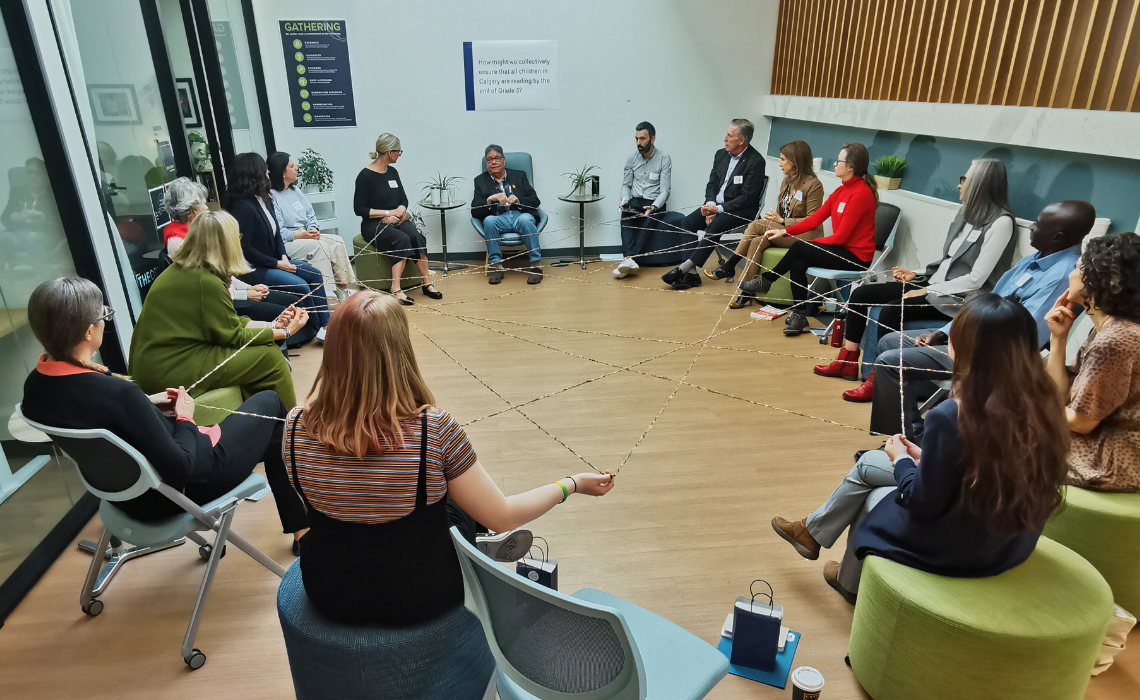
Matt Mayer is the Lab Steward of the Literacy Lab. Over the past two years, the Literacy Lab has hosted numerous workshops with community members and organizational leaders to evaluate and understand the various challenges contributing to childhood literacy in Calgary. This conversation was held towards the end of the Literacy Lab to better understand the role that social labs can play in collaborating and innovating to address systemic challenges.
Usually a social lab isn’t a “silver bullet” – it can’t answer all the world’s problems. It’s a way of coming together to learn together and then act together. Working on a systemic challenge requires stepping back to see if a social lab is even the right way to go about it. [It is] ‘phase zero.’ Labs tend to be useful in addressing “wicked problems”—those that are highly complex, that have many entangled variables and moving parts, and are not easily solvable.
These sorts of problems suggest that we need to bring together a diverse group of people with different perspectives. In this case, our anonymous funder said, ‘Hey! We want to take a unique approach to innovation with respect to literacy. Some things are working, some are not. Let’s try a different approach to this.’ A social lab approach seemed to be a worthy approach.
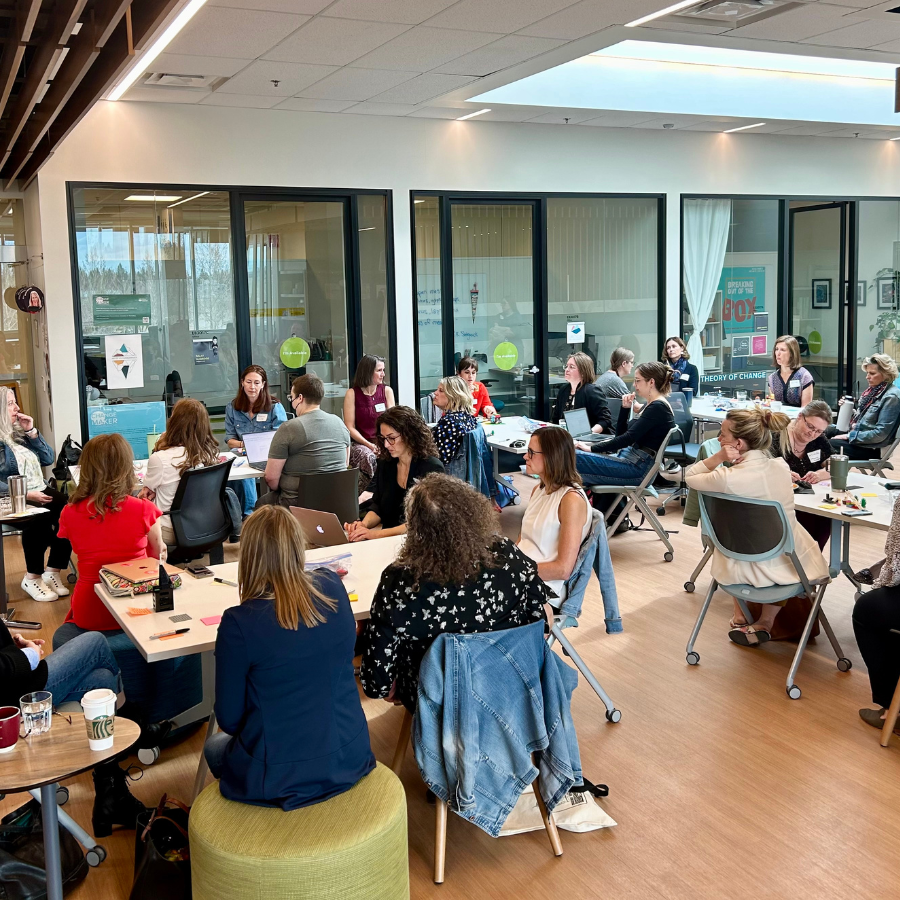
[In the Literacy Lab] the process is rooted in applied and theoretical research – primarily around human-centred design and design thinking. We followed a higher-level process arc called the double diamond to ensure we were solving the right problem before building solutions. We brought many people together to explore our convening question and ask if this was even the right question… is it worth exploring? We conducted a series of workshops, engaging in conversations with diverse voices in the literacy system, including those with lived experience, to explore the problem itself and identify opportunities for the systems to work together to positively influence challenging aspects of the system.
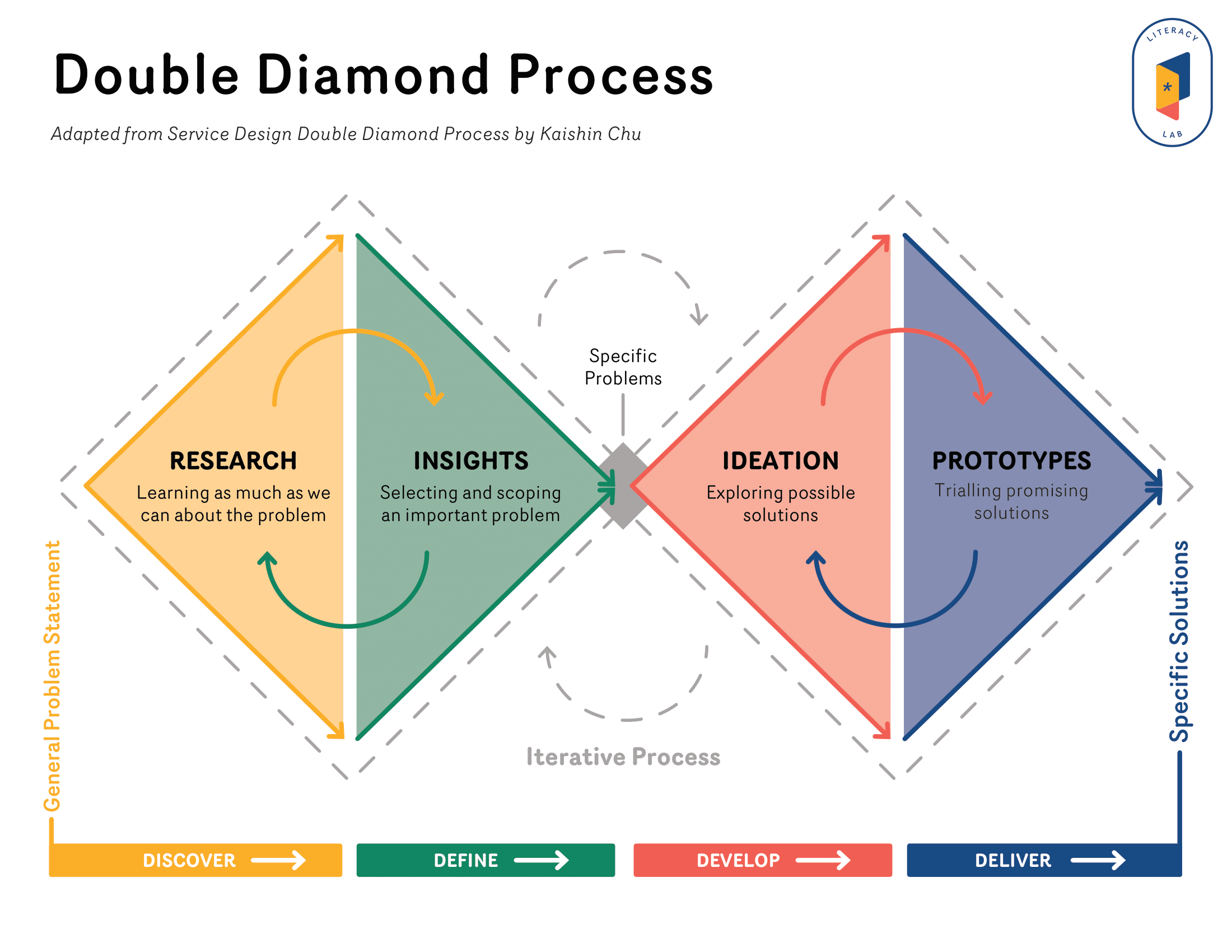 In our lab process, we identified three key innovation areas of this challenge. These were all informed by our work in our exploratory phase. Choosing these allowed us to then identify and explore solutions presented by Literacy Lab participants. There could be an infinite number of possible solutions, so we had to focus. To evaluate “success” with teams, we had upfront conversations asking, “How do we know if this is successful?” We had dedicated meetings to this. We decided on some things to track over time and then circled back–are we addressing aspects of this problem?
Often in innovation work, we either discover that someone is already doing something similar, or (if the idea is novel) we work on prototypes and are surprised by what we learn – even beyond what we could have predicted when evaluating systemic impact. We have workshops coming up for the solution teams looking at developmental evaluation. Sometimes the anecdotes and stories we couldn’t predict are extremely valuable.
For example, one of our prototypes aimed to prototype a “Festival of Early Words” to connect parents facing difficult trade-offs with early literacy programming. Through a solution team member, we discovered there were serious systemic challenges for incarcerated women… in some instances, they can’t even see their kids and can only interact with them over the phone. How do you connect with children, which is a big part of literacy, over the phone? An opportunity presented itself to support this specific need and we were able to broker a connection to an organization that works with incarcerated women and highlighting a significant challenge regarding our convening question despite the team having decades of experience in literacy. This is an example of emergent learning that happens in social labs.
Governance becomes a big part of it. In this case, it was participant- and community-led. I view my role as protecting the process, rather than directing it. That means ensuring solution teams have the autonomy to create, while also providing structures that help them make informed decisions. With human-centered design frameworks like the double diamond, we could create checkpoints and moments where we collectively reflect and ask, “What are we learning?” rather than, “Is this good or bad?” [I] typically let teams figure it out and am just there as a guiding voice on the process.
And not every lab is structured this way – not everyone uses the double diamond or human-centered design. Governance is interesting as a convener – within the system, among team members… How do you practice good governance? This is an ongoing, difficult, perplexing issue for social labs in general. It doesn’t get enough attention.
There’s a place for advocacy, but if advocacy were necessary to tackle a challenge, resources could be allocated accordingly. In this case, we have an issue that spans the entire system – there are deeply entrenched barriers or challenges. In conducting a lab, there is not a single answer, even if people think they have found it. The role of a facilitator is to say that there’s an infinite number of answers – how can we discern what might be the right one to try?
Whose idea is better or worse doesn’t matter. How could the potential solutions we undertake address the systemic challenges we are exploring? – We evaluate based on that. A solution could be to engage in advocacy work. However, ultimately, it transcends a specific side of an issue or a person that could have influence. To what extent does a potential solution address a fundamental issue and create systemic change?
It’s not that there’s no place for advocacy, but labs are about learning and tolerance for different perspectives, specifically around systems-level issues. It’s essential to share and contribute different perspectives and genuinely listen to others in the spirit of thoroughly addressing the question.
For example, the teachers are on strike. This is related to literacy and education. The strikes are between the teachers and the union versus the government…. As they engage in this debate, others in the system are impacted – parents, teachers, childcare facilities, recreation centres, companies that provide food to the school cafeterias, etc. This shines a light on where a lab could be appropriate. It’s not necessarily our place to have a voice on the strike itself (not on this level). We would look at everyone else impacted and the whole system to understand where breakdowns might be occurring. If we consider how to collectively ensure that all children are reading by the end of grade three, we require all these perspectives.
My role is to bring people together and encourage them to tolerate different perspectives and learn from one another. How do we bring the most experienced people together to learn something and try something? Part of the problem with the nature of this work is that it can be inaccessible by virtue of how we talk about it, including in some of the language that I’ve used here. So how do we remove that barrier? This is part of the art and science of facilitating a social lab that I continue to learn each time I work in these environments.