
2026 Map the System MRU Campus Final
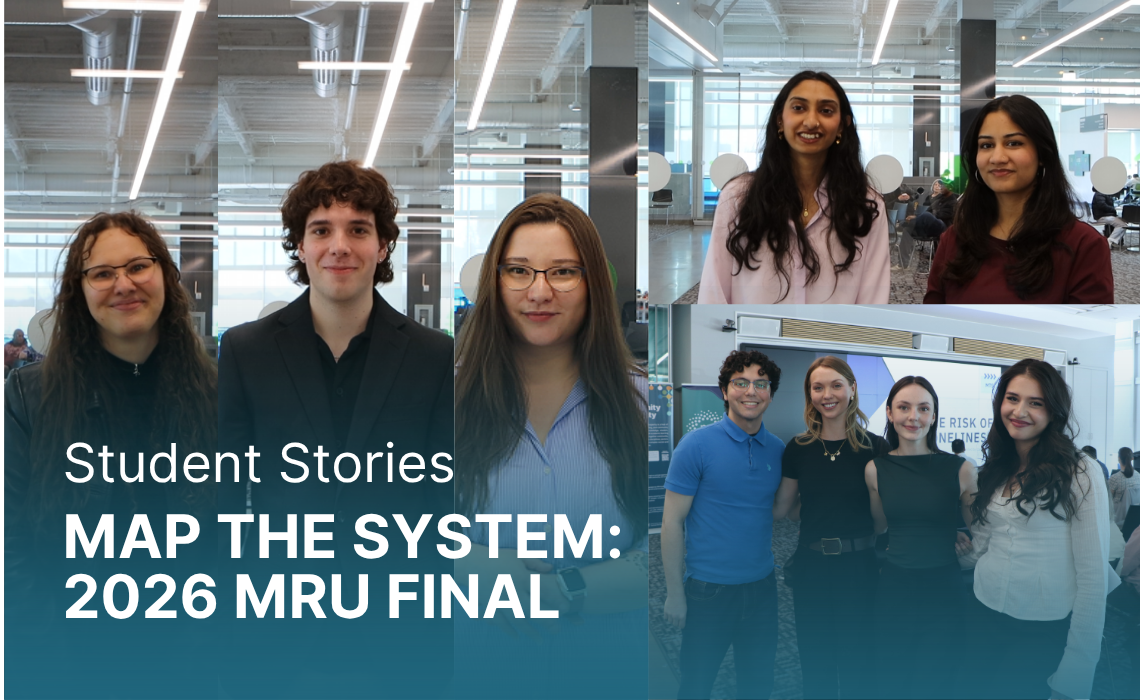
We are thrilled to celebrate the remarkable students who brought curiosity, courage and systems thinking to this year’s Map the System MRU Campus Final.
This year’s finalists tackled some of today’s most urgent and complex issues: from technological addiction and youth loneliness to Alberta’s healthcare system, disability supports and the opioid crisis. Through deep research, compelling storytelling and thoughtful systems maps, students pushed beyond symptoms to uncover patterns, root causes and leverage points for change.
As the program educator, Katharine McGowan, reflected:
“Students aren't afraid to ask difficult questions about systems we all take for granted. I am so happy that we can provide a platform for that exploration and empower students to think about, and hopefully create, meaningful systems change for all of us.”
This year also brought new supports for students, including short preparation videos and enhanced feedback leading into the campus final. According to Campus Lead Nicole Darnayla, those supports showed in the students’ presentations:
“This year we tried new strategies to help the students out. As we prepared for the campus final, it was good to know that the students found the short videos helpful… The coachability of each student in this program is what allows for changemakers to thrive, where collaboration is at the core.”
Congratulations to Our Finalists and Award Winners
This year’s finalists demonstrated the depth and diversity of systems thinking across disciplines, each exploring a complex issue through research, lived experience and systems analysis.
1. Top MRU Campus Team: "Alberta Public Healthcare Deterioration (Zainab Zaidi and Nooriya Zaidi)
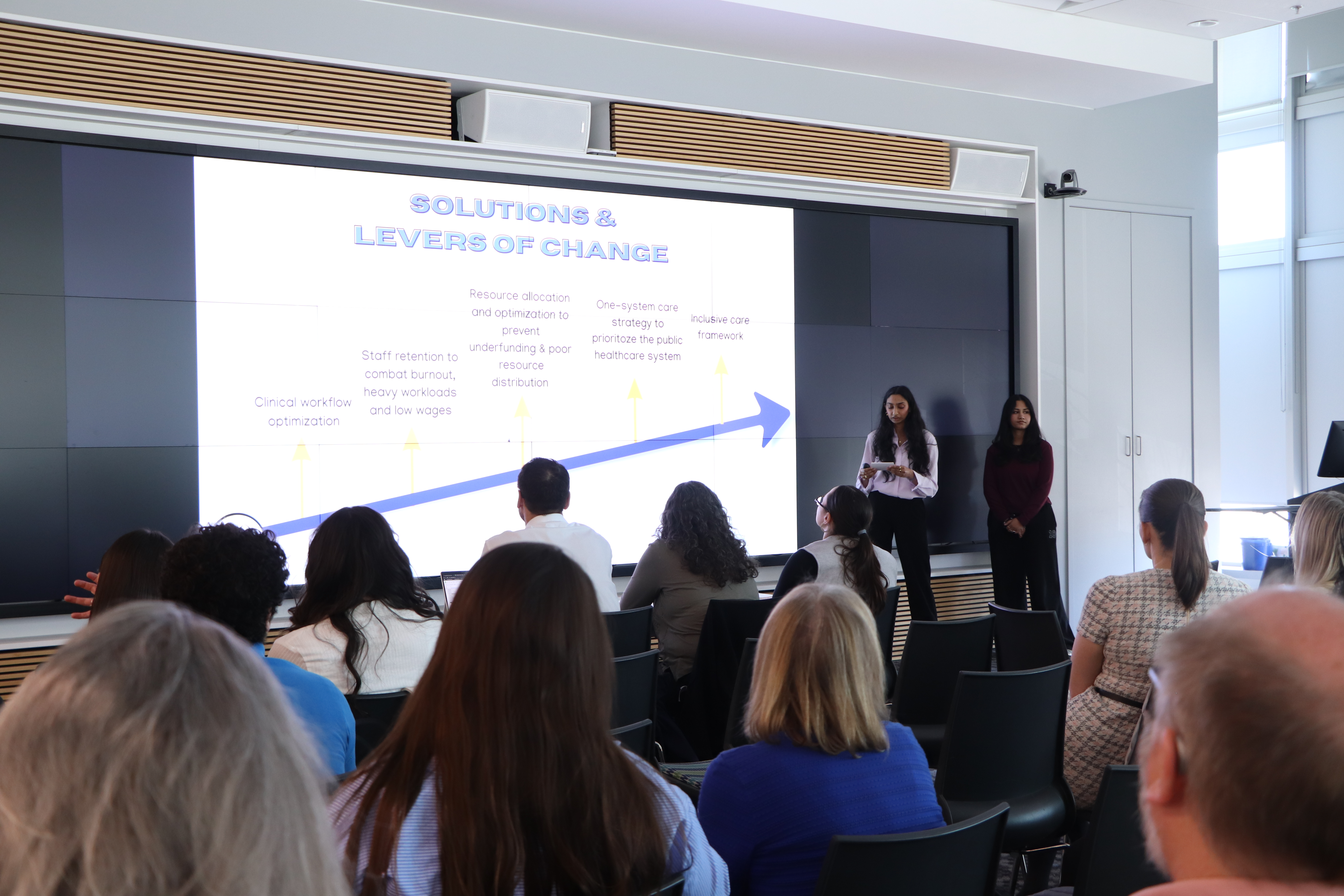
We are delighted to announce Two-Tier Truth, exploring the deterioration of Alberta’s public healthcare system, as this year’s Overall Winner.
Through layered systems analysis, the team mapped how staffing shortages, underfunding, population growth and privatization pressures reinforce one another, creating risks for a two-tier healthcare future. They surface how healthcare systems drift toward inequity when capacity constraints meet privatization pressures. The core issue is not only wait times, but the gradual reallocation of access based on ability to pay. Leverage points sit in funding allocation, workforce retention, and policy decisions that determine whether universality is maintained or eroded.
Their project asked a powerful question: What happens when access to care begins to depend on the ability to pay? Would you trust the current system with someone you love?
Through strong systems mapping, comparative policy analysis and compelling storytelling, their work exemplified systems thinking in action.
2. Most Thought-Provoking: "The Attention Economy" (Andres Gomez)
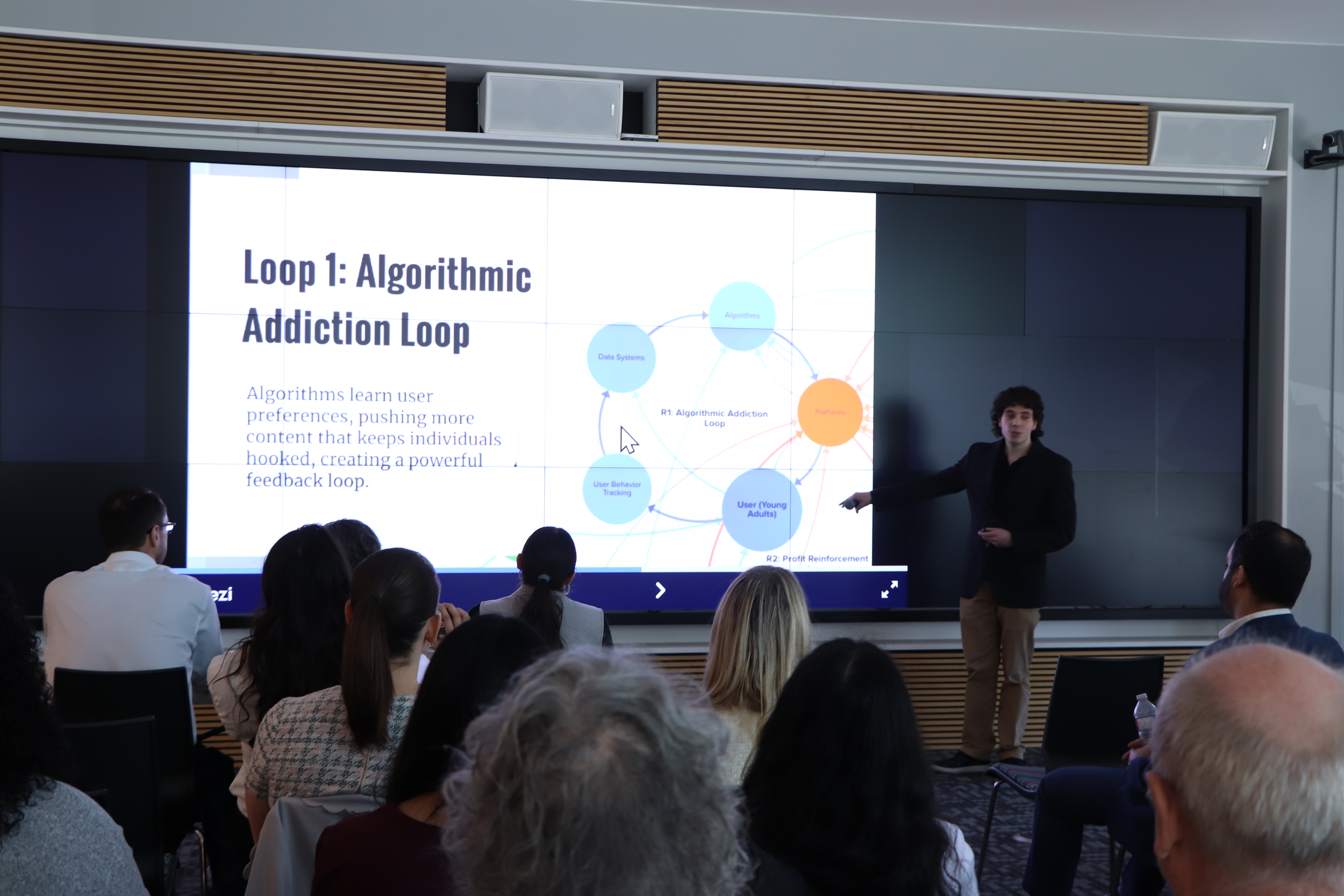
With his project on technological addiction, Andres Gomez earned this year’s audience-voted Most Thought-Provoking award.
His systems analysis of the attention economy challenged common assumptions that excessive technology use is simply about personal discipline.
Instead, he revealed reinforcing loops between users, algorithms, advertisers and platform design, showing how the system itself is structually built to sustain engagement over wellbeing. The problem is not simply overuse of technology, but a design ecosystem built on attention extraction. The current solutions with individual tools like app blockers and screen limits are not effective because they do not connect with the systems of platform design, algorithmic transparency, and shifting revenue models that currently reward addiction-like behaviour.
His project invited us to ask not simply how we use technology, but how technology is shaping us.
3. Best Research: "Youth Loneliness" (Dana Dutton)
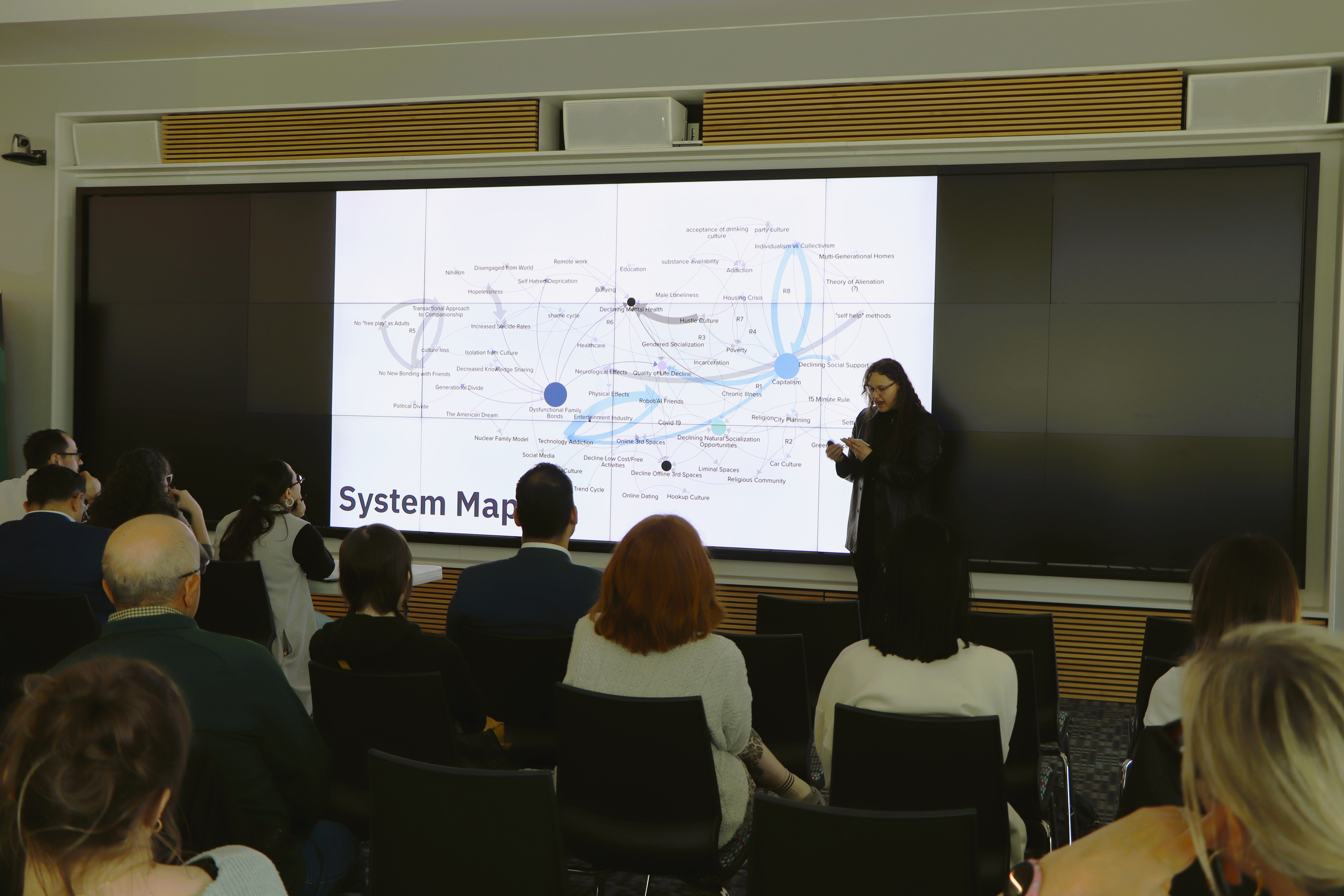
Dana’s research on youth loneliness offered a thoughtful systems analysis of an issue often misunderstood as purely individual.
Examining how capitalism, individualism and technology shape belonging and disconnection, Dana revealed loneliness as a systemic challenge rather than a personal failing.
Loneliness is framed here as a systems outcome shaped by economic pressure, cultural individualism, and digital mediation of relationships. The challenge is not only individual connection, but the erosion of conditions that make connection possible. Key leverage points include community infrastructure, workplace and education design, and shifting cultural norms around productivity and belonging.
Her project stood out for its depth of research, integration of multiple perspectives and powerful reframing of a growing social issue.
4. Best Systems Map: "The Opioid Crisis" (Aleaha Florence)
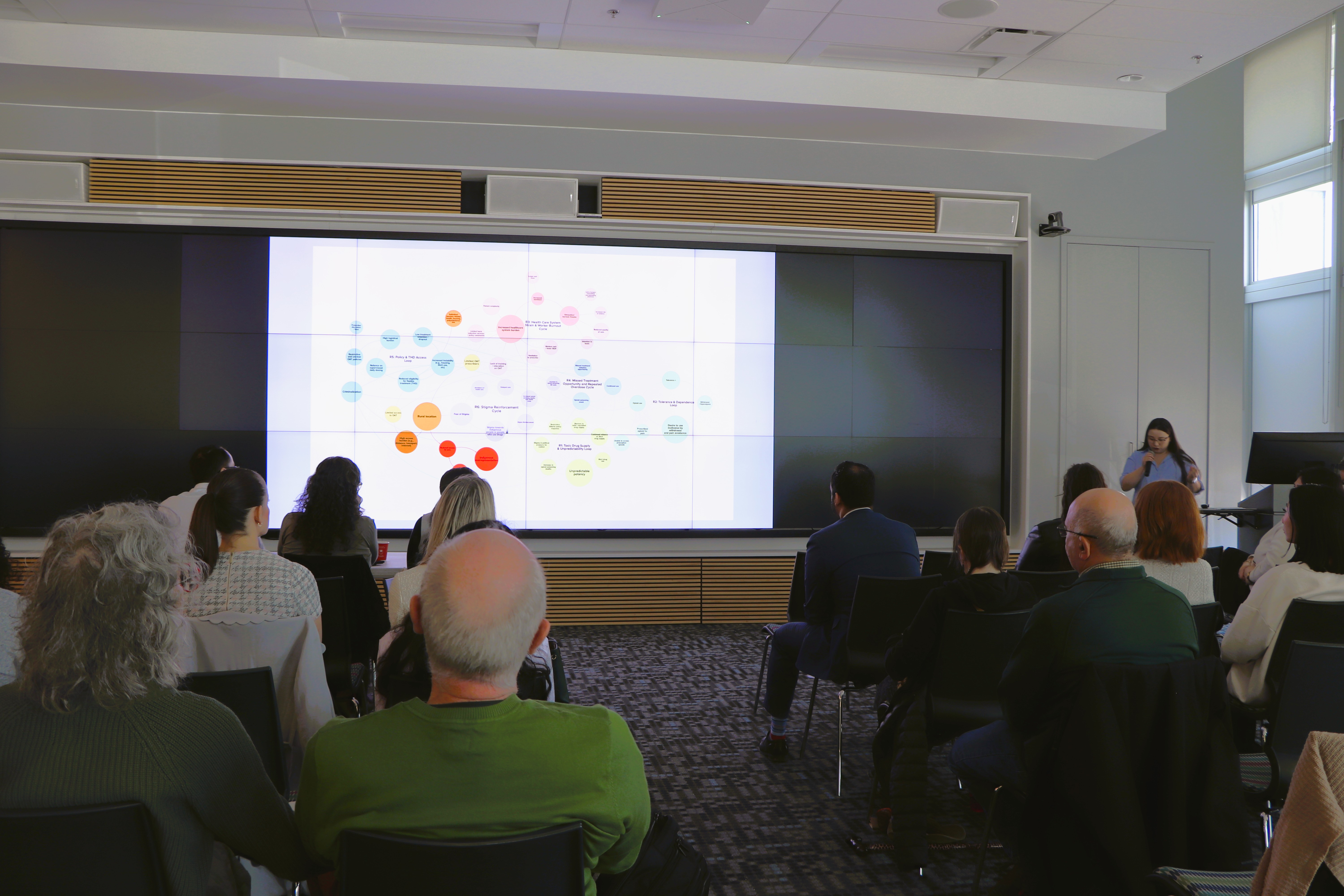
Aleaha Florence earned Best Systems Map for a deeply nuanced exploration of Alberta’s opioid crisis.
Through systems mapping, she revealed how stigma, fragmented care, policy barriers and Indigenous overrepresentation interact to sustain the crisis. Even when effective treatments exist, access is shaped by geography, regulation, and bias. The key leverage points are not only treatment expansion, but also destigmatization, safer supply access, and restructuring care pathways to reduce systemic exclusion.
Her work challenged dominant mental models around addiction and highlighted how perspective shifts, from moral failing to public health issue, can influence policy and outcomes.
5. Best Storytelling: "The Underfunding of the FSCD Program" (Boiling Frogs)
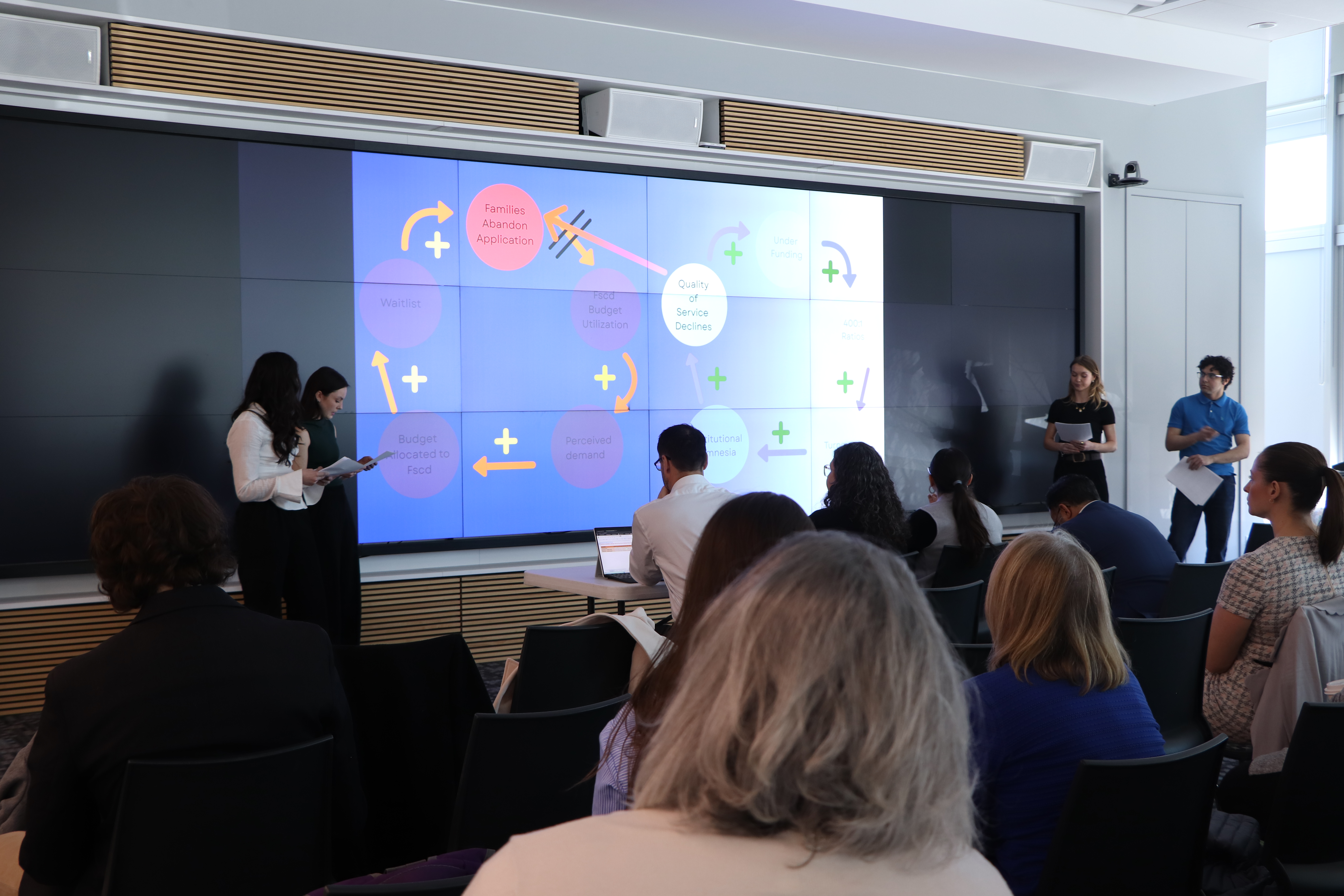
Mohamad Kamel, Laura Gonzalez, Amelia Gutfriend and Cameran Christianson
This team captivated judges and audiences with a moving exploration of underfunding in Alberta’s Family Support for Children with Disabilities (FSCD) program.
Using the “boiling frog” metaphor, they illuminated how slow-building system failures can become normalized, from growing waitlists to structural neglect affecting children and families. Under-resourced early intervention systems ultimately drive up long-term costs due to the need for later, more specialized care. The issue is not just waitlists, but feedback loops where underfunding reduces visibility, which then justifies further underfunding. Leverage lies in transparency, early intervention investment, and accountability mechanisms that prevent gradual system normalization.
Their presentation combined personal stories, policy analysis, and feedback loops to show how invisible systems can have very visible consequences.
What’s Next
“To be a student is to learn, but to value change and choose to be a changemaker means being a leader.” - Campus Lead Nicole Darnayla
We are proud of every student who took part in Map the System 2026. Your efforts matter, and your commitment to working on messy problems through a systems lens is helping build a sustainable and more interconnected future.
Stay tuned as Two-Tier Truth prepares to represent MRU at the global finals at the University of Oxford in July, 2026.