
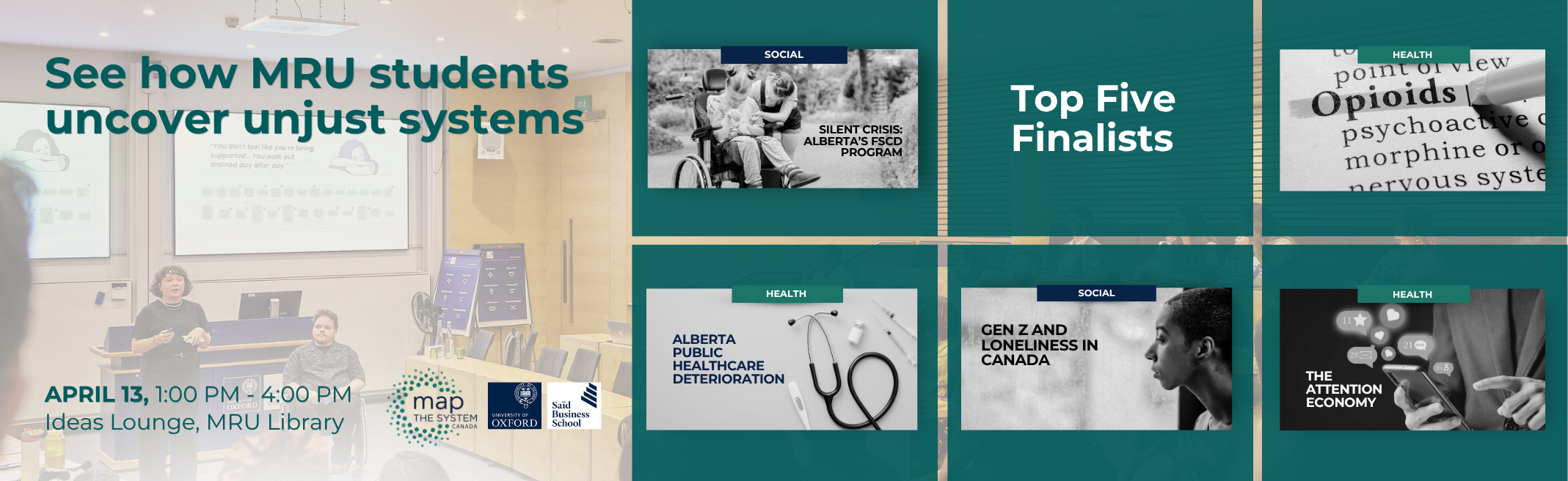
Map the System is a global competition that challenges students and educators to rethink social and environmental issues through systems thinking, bridging the gap between student-as-learner and student-as-changemakers.
The Campus Final took place on April 13, featuring MRU’s top five student teams tackling complex social and environmental challenges using a systems-thinking approach.
The winning team will represent MRU at the Global Final at Oxford University.

Team Name: Two-Tier Truth
Students: Zainab Zaidi, Nooriya Zaidi
“ Our research examined the deterioration of Alberta’s public healthcare system, with a focus on how its impacts differ across communities and how key stakeholders—policymakers, healthcare workers, patients, and private providers—shape and experience these changes. We adopted a qualitative, systems-based approach, drawing on reports, policy analyses, and recent literature to trace structural trends over time.

Students: Aleaha Florence
“ My project uses a systems thinking approach to examine the opioid crisis in Alberta, focusing on barriers to treatment and recovery as well as indigenous overrepresentation. Instead of viewing the issue as individual-level behavior, the project maps how structural, social, and policy factors interact to sustain the crisis. Key drivers include stigma, inequitable healthcare access, restrictive treatment policies, geographic barriers, and a toxic drug supply. These factors contribute to patterns such as delayed care, reduced treatment retention, and worsening health outcomes, with disproportionate impacts on Indigenous communities.
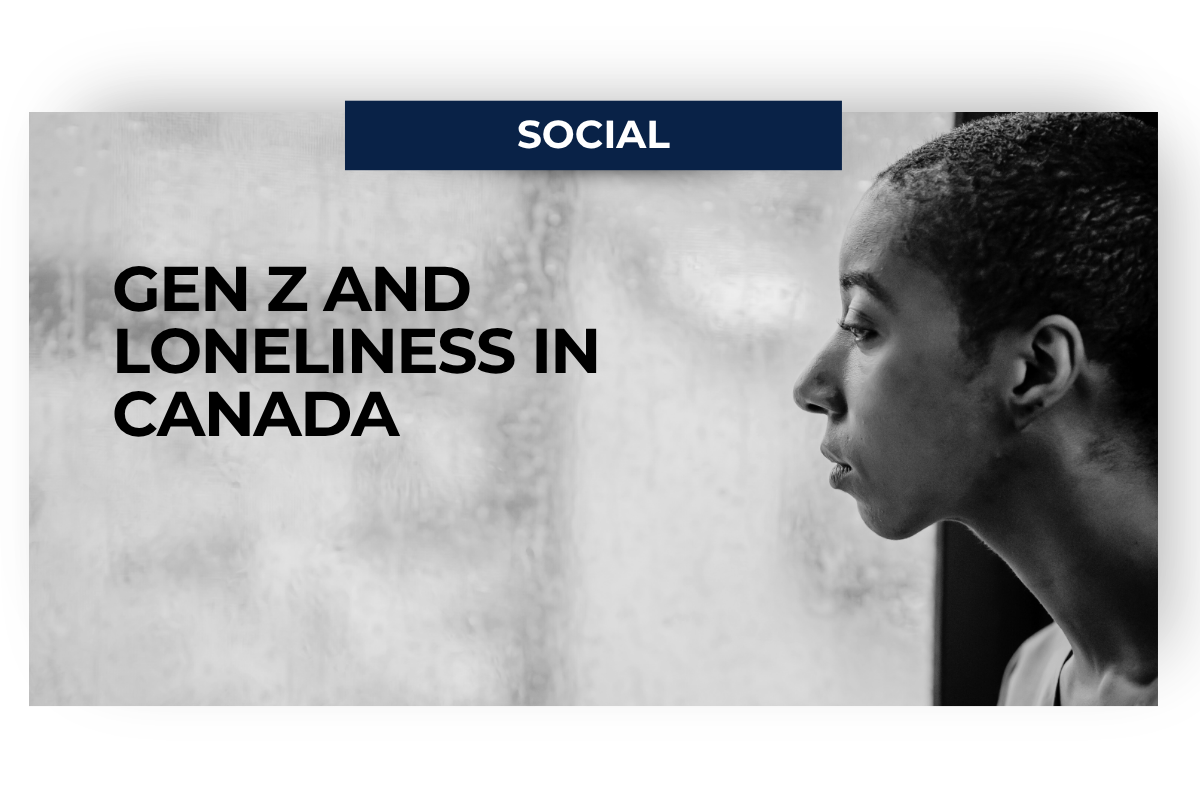
Students: Dana Dutton
“ My research identifies Generation Z as one of the loneliest generations, a pattern that is also evident in Canada. We define loneliness not simply as being alone, but as a lack of meaningful connection. Rather than viewing this as an individual issue, our analysis highlights how framing loneliness in this way overlooks the broader systems that sustain it.
I find that placing responsibility solely on individuals—and expecting them to cope independently—can intensify feelings of shame and guilt, while failing to address the structural factors at play. These include quality of life, sense of belonging, the influence of technology, and the pressures of self-sufficiency, all of which shape people’s capacity to build and maintain meaningful connections.

Team Name: Boiling Frogs
Students: Mohamad Kamel, Amelia Gutfriend, Laura Gonzalez, Cameran Christianson
“ Our research uses a system thinking lens to investigate why Alberta’s Family Support for Children with Disabilities (FSCD) program has reached a stagnant equilibrium; where children with disabilities are treated as a fiscal hindrance, maintained at the cost of their critical developmental windows.

Student: Andres Gomez
“ My project examines digital overstimulation and
compulsive social media use among young
adults in Canada. Rather than framing the issue
as a lack of individual self-control, it applies a
systems thinking approach to explore how
interactions between users, platforms,
algorithms, and economic incentives produce
persistent engagement. The research combines
academic literature, industry data, and systems
mapping tools, including the Iceberg Model and
feedback loop diagrams, to identify underlying
patterns and structures.
Meet the Judges
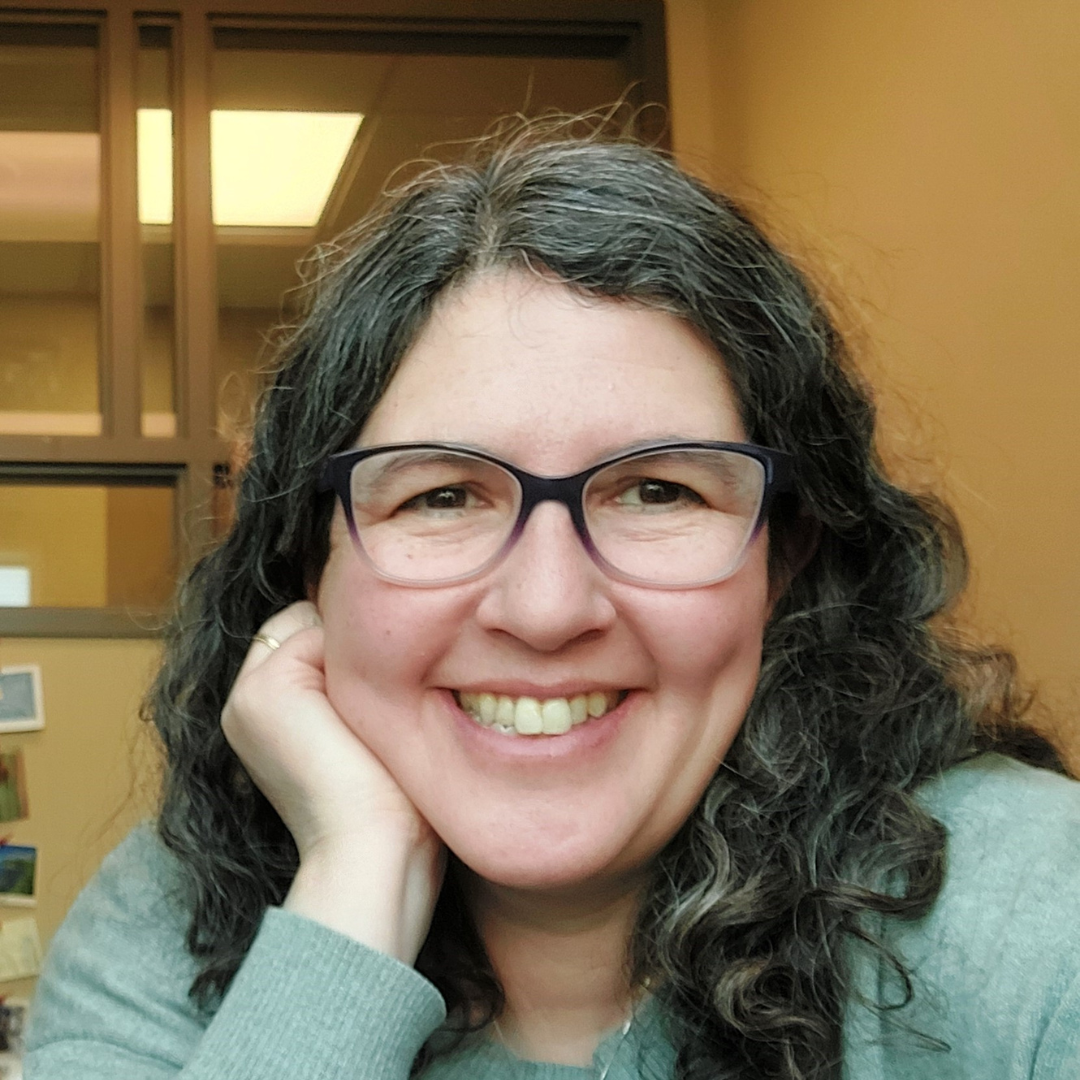
Inés Sametband, PhD
Inés Sametband is an associate professor with the Department of Psychology at Mount Royal University and a registered marriage and family therapist (RMFT) in Calgary, Alberta. Her practice as a researcher, clinician, and educator is informed by discursive and social constructionist-informed approaches. Her research focuses on the discursive aspects of psychotherapy. In recent years she has been studying how therapists facilitate conversations towards relational wellness when conflicting cultural ideas and practices negatively impact family members’ relationships with one another.
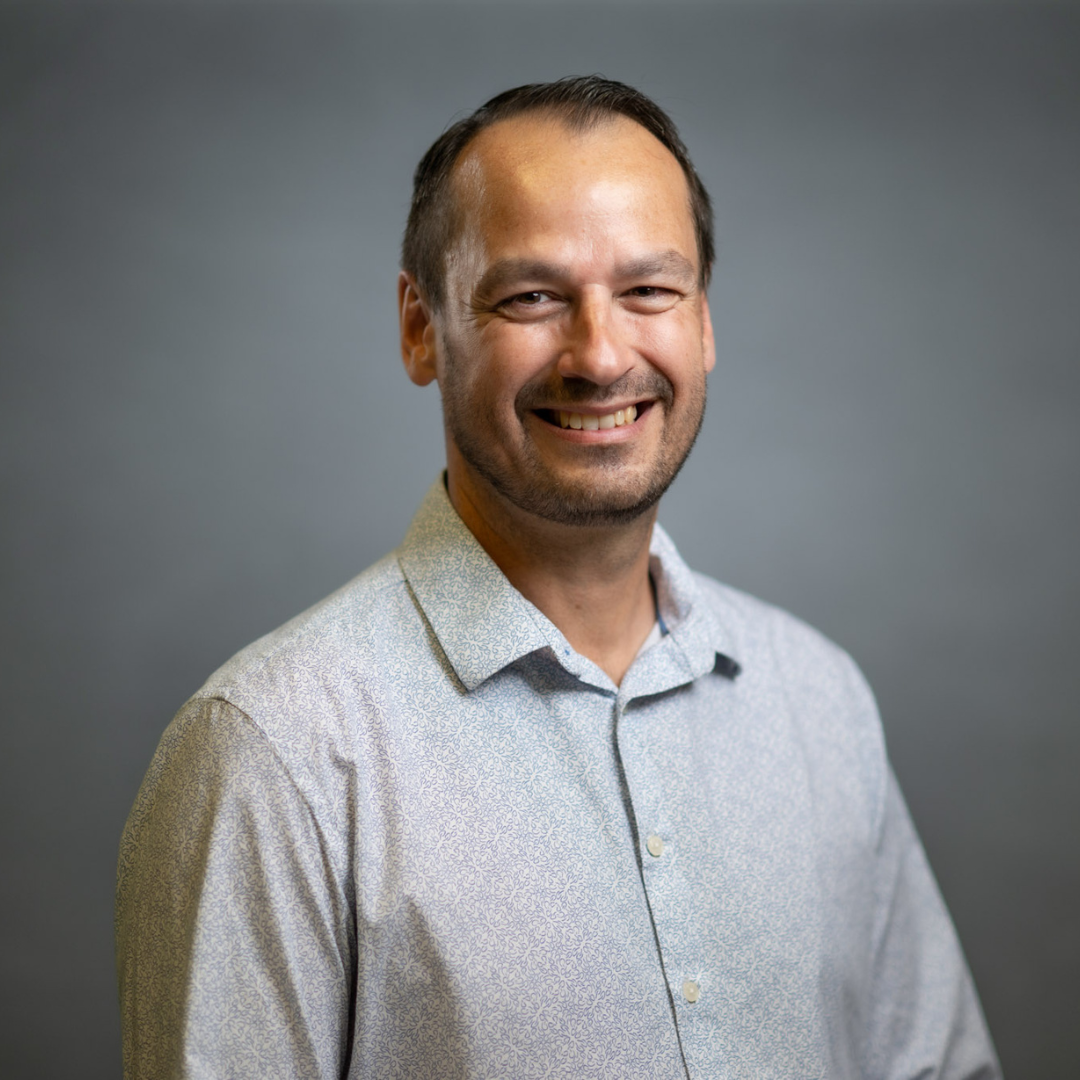
Tori McMillan
Tori McMillan (he/him) is the Director for the Iniskim Centre at Mount Royal University. He is a member of Berens River First Nation, Treaty 5. Tori has served as a teacher and administrator and his research interests explore the intersections of decolonization and reconciliation.

Hallie Vermette
Hallie is a recent graduate of the Policy Studies program at MRU, where she minored in Social Innovation. Her experience with political science, economics, and systems thinking has boded well in my participation with Map the System, where her teams have made it to campus finals two years in a row. She was also the President of the Policy Studies Student Society from 2023-2025.
Have Questions?
Contact: Nicole Darnayla, Campus Lead at idarn171@mtroyal.ca