
Craftivism in Action: Using Beadwork to Share the Convention on the Rights of the Child (CRC).
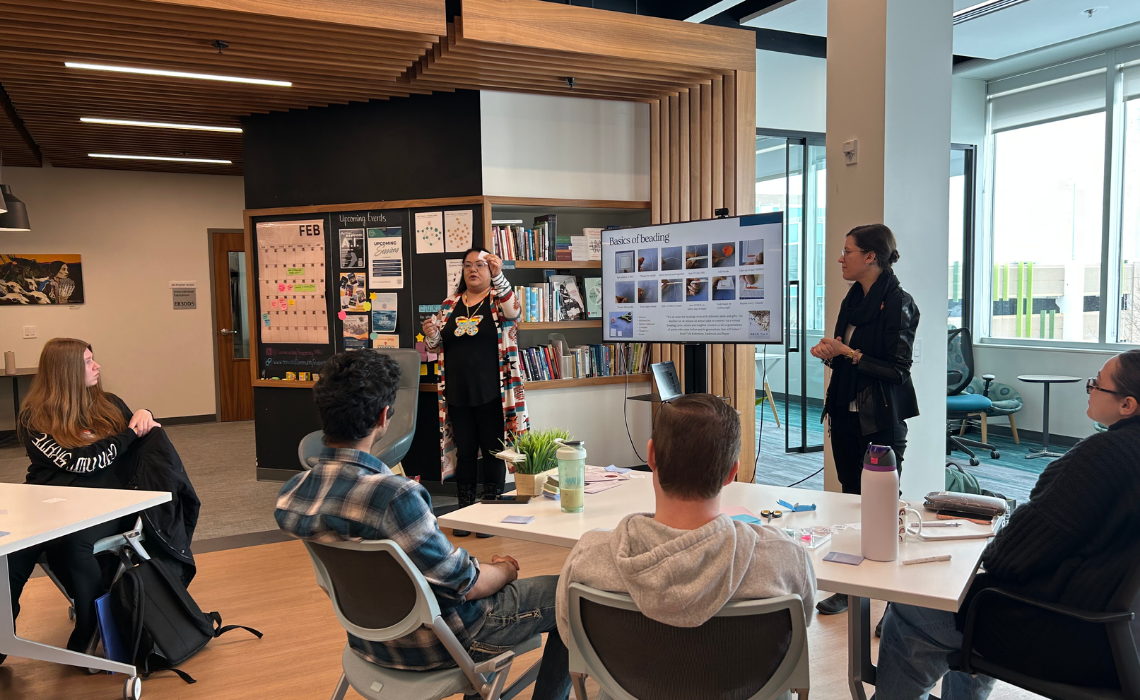
How do beads tell stories? How might beadwork spark stories of change? What if a creative process—threading beads together—could spark conversations about children’s rights, identity, and the realities many young people face every day?
During a recent Friday session with Catamount Fellows, we had the opportunity to hear from Tia Wells and Rachel Kmet Gilliat, two recent Mount Royal University graduates who are transforming beadwork and creative kits into tools for dialogue, advocacy, and community connection.
Their work began as a university assignment. But through passion, reflection, and many iterations, it has grown into something much bigger to engage with the community and invite people to listen, reflect, and engage in advocacy.
Craft as Advocacy
For Tia, the connection between beadwork and advocacy wasn’t something she had to discover, it was already there.
“It just comes from my own experience with the medium. In a way, the medium itself is advocacy,” she shared. “How can we connect the things that we would like to do together and show that advocacy is achievable through it? It’s a form of art, and it’s a form of storytelling and giving voice to people. It’s a form where people kind of see themselves in it. So my way with the beadwork and advocacy, I think they’ve always been connected. It’s not something like how can you see it? It’s more like, no matter where I see people, or anybody that shows me their beadwork from all over the world, it’s not just beautiful, but it carries their story and their identity with it.”
Rachel agrees. To her, the act of creating already carries meaning.
“Also starting from that place of recognition, you know, hopefully representation of, like you said, all the stories that are connected to all the different work. Every time you see beadwork, it resonates. It already holds meaning and voice. In that sense, it’s advocacy on its own, we just want to create more space for those stories to be seen and shared.”
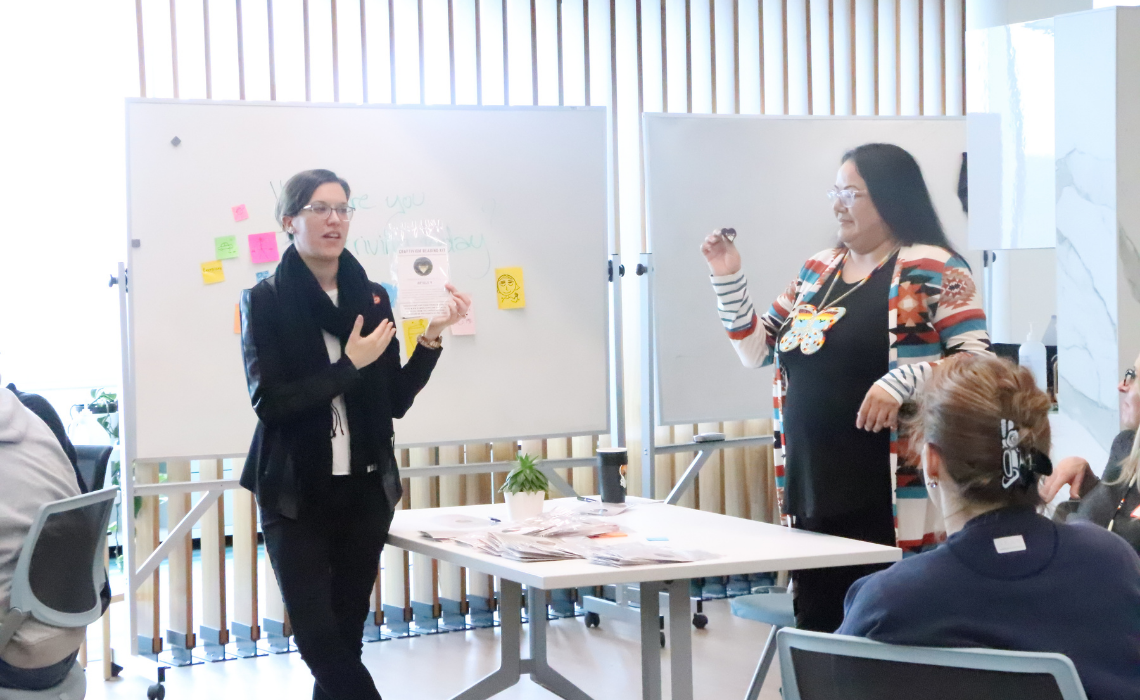
“Craft Is Just Craft”? Think Again.
When people dismiss craft as something small or insignificant, Rachel and Tia believe it reveals deeper social assumptions.
Coming from backgrounds connected to early childhood education and care work, they note that creative practices are often undervalued, especially when they’re associated with traditionally gendered roles.
“Craft has often been seen as ‘women’s work.’ But when we dismiss it, we overlook how powerful these forms of expression really are."
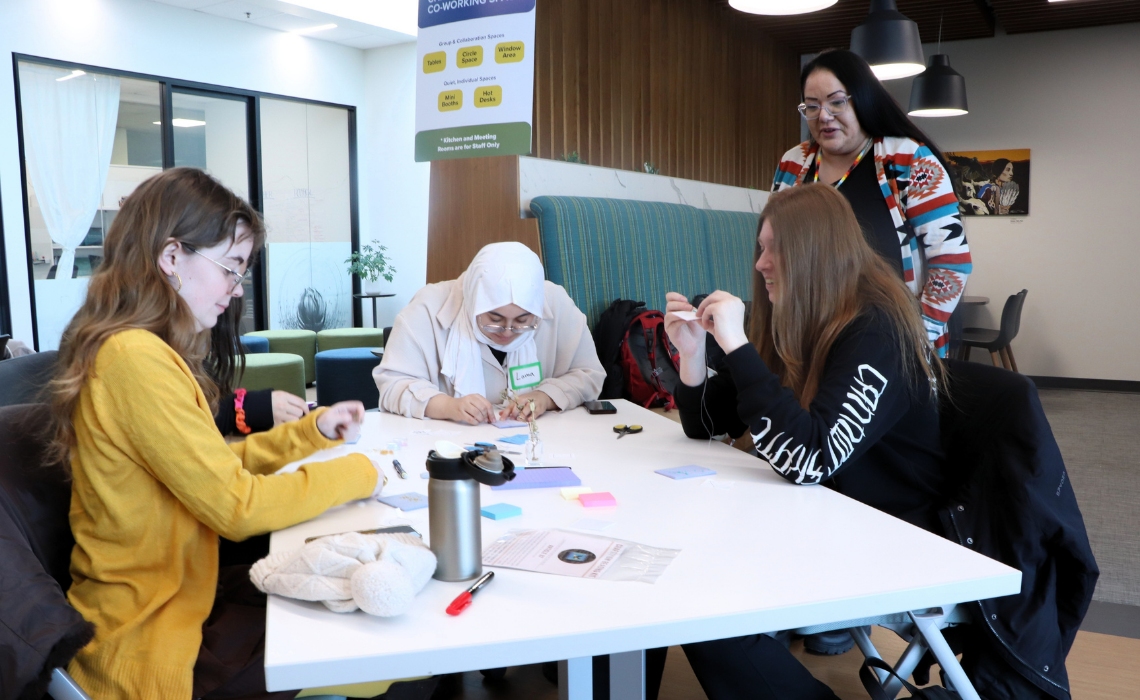
For Tia, beadwork goes far beyond decoration.
“When you’re looking at my beadwork, you’re not just looking at something decorative, you’re looking at a piece of art. Each bead can represent identity, memory, or even trauma that people have experienced. The beadwork I carry and wear has its own storytelling.”
In other words, craft can carry meaning in ways that statistics and reports cannot.
What’s Inside the Kits?
At the heart of their work are creative beadwork kits designed to spark reflection and conversation.
But the goal isn’t just to make something.
Rachel explains that the kits are meant to be experienced both individually and in community.
“It’s not really about the end product. It’s about the invitation to engage, reflect, and connect.”
Each kit contains tools and materials for creating beadwork but also an opportunity to explore how it connects with the convention on the rights of the children, more specifically and dominantly Indigenous children, in Alberta and Canada.
Connecting Art to Children’s Rights
The inspiration for the kits also came from a desire to raise awareness about children’s rights and lived realities, particularly those affecting Indigenous children in Canada.
Rachel explains that their designs connect to the United Nations Convention on the Rights of the Child (UNCRC).
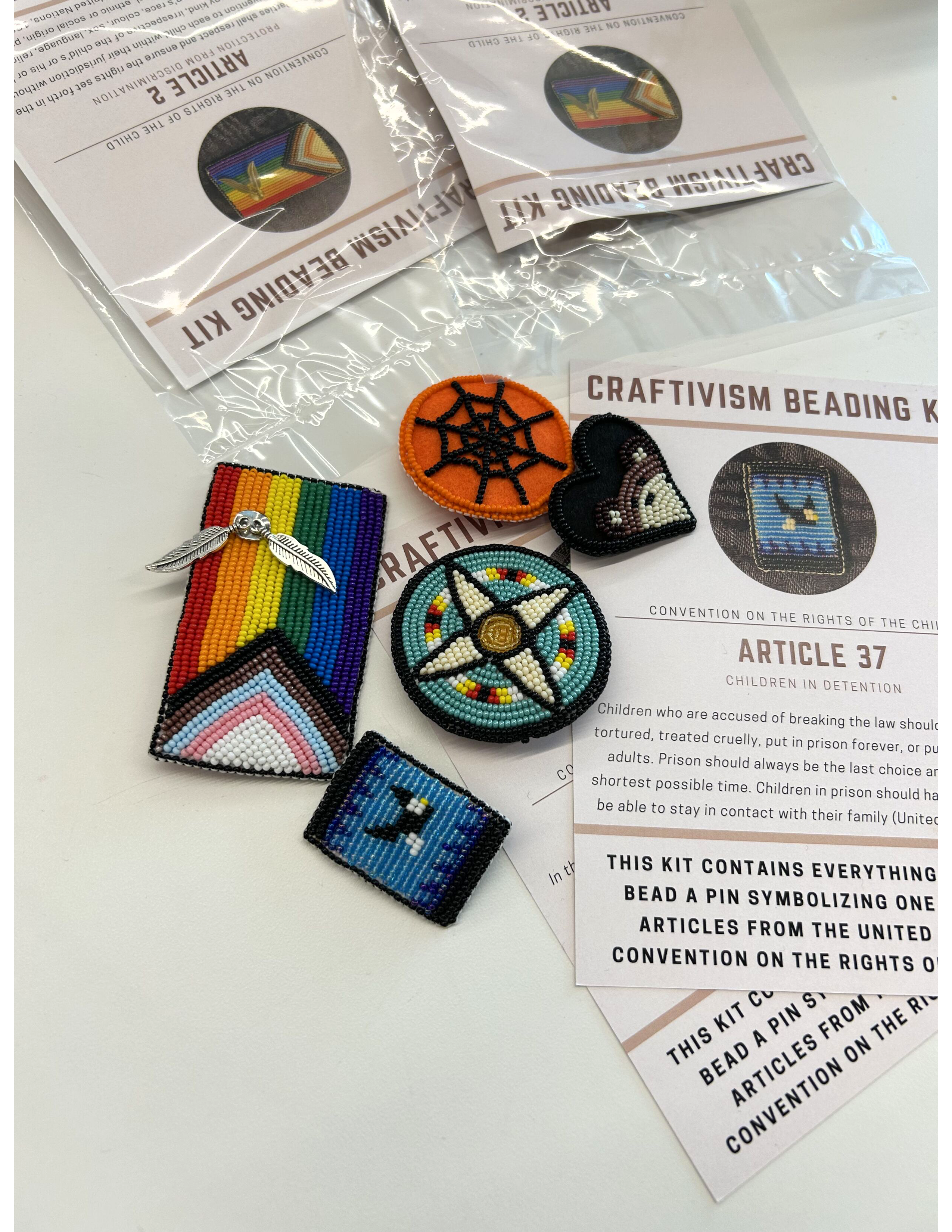
“The kits were designed to symbolically represent the articles of the UN Convention on the Rights of the Child and help people connect them to real experiences.”
The kit brings together the abstract rights and creative expression, making complex and emotional issues more personal, and more visible.
Tia envisions the kits growing into something collective.
“Right now I’m working with a group of people that I support in my work, and I have this vision that one day we could do this amazing work together. I would love for them to have the opportunity to create their own kits as well and add onto the ones that we’ve already created... There are many stories and ideas that could be included, so we hope one day it could become a collective creative project that’s open to many people. We want to advocate for this kind of work, where the audience can look at it and think, “This speaks to me.” That’s really our dream, and that’s the vision."
The hope, Rachel adds, is that the kits inspire action, inclusion, and community-building.
The Impact So Far
What began as a classroom assignment soon reached a wider audience.
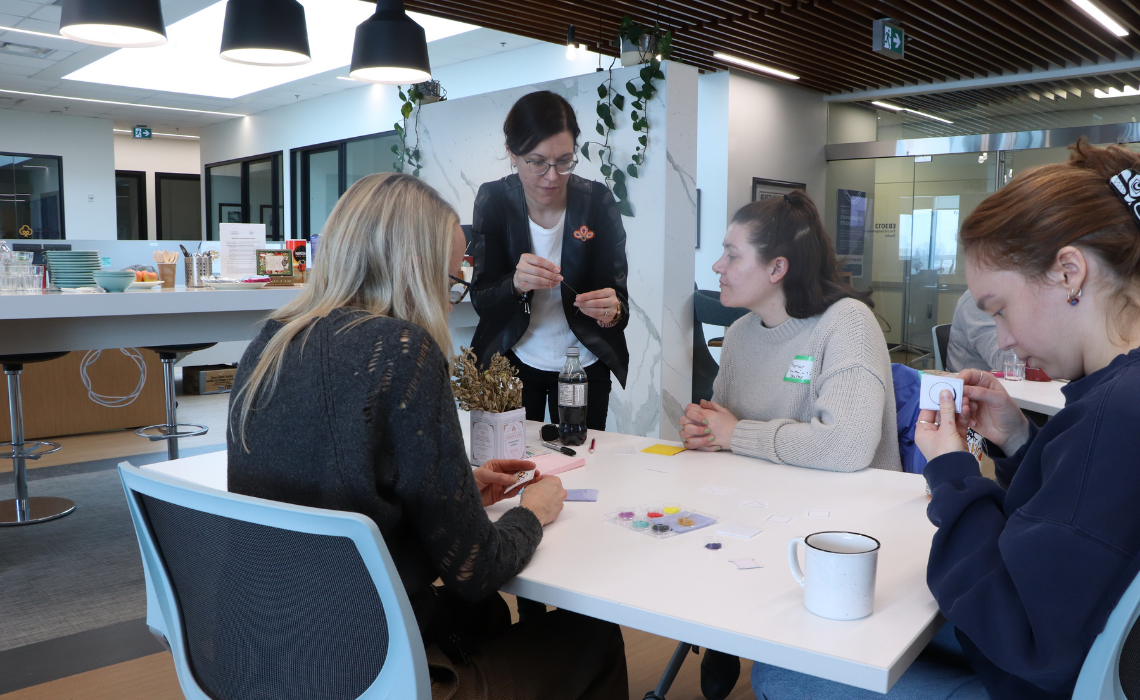
The project was featured during Inclusion Week at Mount Royal University, where it sparked further interest and encouragement. And this time, we were honoured to have them join us in a session that was part of Catamount’s Friday sessions and took fellows and students on an engaging journey, exploring crafts as a tool for social justice.
For Tia, the most exciting part is not knowing where the idea might travel next.
“We don’t know where it will go from here. Maybe someone else will reach out and continue the work. That’s the hope.”
A Final Reflection: Art as Active Hope
At the end of the conversation, both speakers reflected on what this work means to them.
For Tia,
“No matter what kind of art you do, let it be a space where you can express what you love. For me, that was beading. Just be passionate and keep going.”
Rachel’s reflection captures the deeper purpose behind the project.
“Sometimes it’s hard to stay hopeful when systems and decisions don’t align with our values. It’s easy to feel angry or bitter.
But these kits were designed to be a form of active hope, a creative protest that reminds us we can still use our voices and our art to speak about the things that matter.”
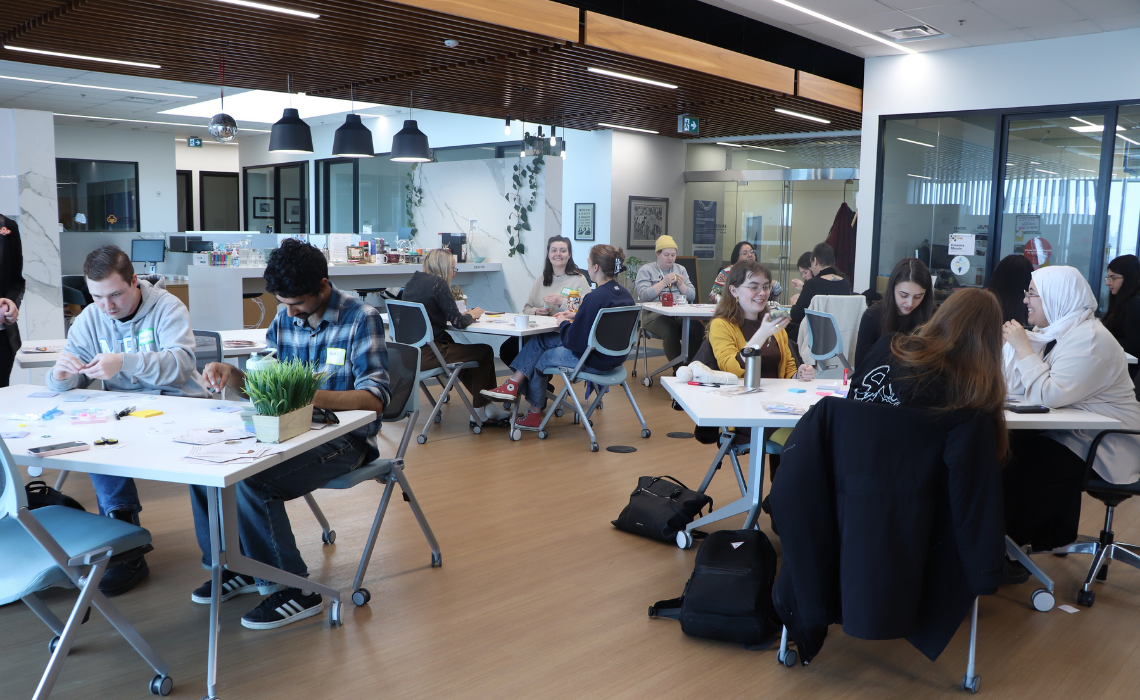
And perhaps that’s the most powerful lesson from their work: the kits combine hands-on creativity, personal expression, and social reflection in a way that feels accessible, meaningful, and inclusive. They make advocacy practical, tangible, and emotionally resonant, not just an abstract concept.
Sometimes change doesn’t start with a policy. It could start with a story, a conversation, and a shared creative activity that brings people together.