Timothy Caulfield to present as the 2026 Arts Distinguished Speaker
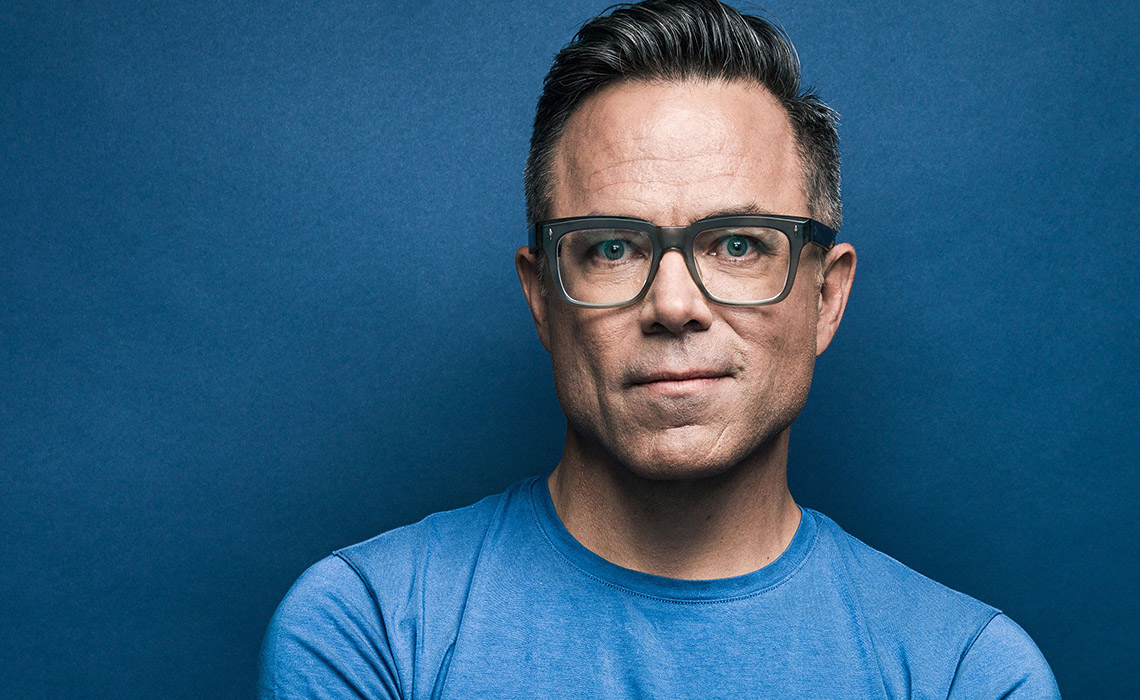
Timothy Caulfield will visit MRU on Thursday, Jan. 15.
We’ve never had more access to information, yet we’ve never been so misinformed. From wellness fads to miracle cures, false or misleading claims often spread faster than the facts. It’s a pattern at the heart of the “knowledge crisis” and one that Canadian scholar and bestselling author Timothy Caulfield has spent decades unpacking as he examines how hype, half-truths and wishful thinking shape what we believe about science and health.
Caulfield will visit Mount Royal University on Thursday, Jan. 15, as the Arts Distinguished Speaker to present "The Knowledge Crisis: How Did We Get Here and What Do We Do?" The event is part of an annual series that brings big thinkers to campus for conversations that cut across disciplines and spark public dialogue on issues that matter. Caulfield’s talk will explore the roots of today’s knowledge crisis, why misinformation spreads so effectively and how evidence-based strategies can help people cut through the noise and make more informed decisions.
Caulfield is a professor in the University of Alberta’s Faculty of Law and School of Public Health, and research director of the Health Law Institute at the same institution. He held the Canada Research Chair in Health Law and Policy from 2002 to 2023, with his interdisciplinary research on topics such as stem cells, genetics, research ethics, the public representations of science and public health policy resulting in close to 400 academic articles. With numerous academic, science communication and writing awards, Caulfield is a member of the Order of Canada, the Canadian Academy of Health Sciences, the Committee for Skeptical Inquiry and a Fellow of the Royal Society of Canada.
He contributes frequently to the popular press and is the author of national bestselling books, including The Cure for Everything, Is Gwyneth Paltrow Wrong About Everything? and Relax, Dammit! His most recent book, The Certainty Illusion: What You Don’t Know and Why It Matters, is a number-one national bestseller. Caulfield is also the co-founder of the science engagement initiative #ScienceUpFirst and the creator of the award-winning TV show A User’s Guide to Cheating Death, which has aired in more than 60 countries and streams on Netflix in North America.
Ahead of his presentation, we spoke with Caulfield about the forces that make misinformation so persuasive and pervasive and what gives him hope for a more informed future.
From your long-term perspective on misinformation, what recent trends or developments have had the greatest impact on how false ideas spread?
There have been so many destructive trends and technological advances that have had an adverse impact on our information environment. It is hard to select just a few. But one huge shift that doesn’t get enough attention is the impact of political identity. For some topics — like vaccines, climate change and immigration — your political affiliation has become the number one most predictive variable for the embrace of demonstrably false information. Alas, this is bad news. The more that belief in false information is about personal identity and membership in a community, the more difficult it is to change perspectives. Also, the discourse becomes more toxic and polarizing. Of course, the algorithms that drive social media and our search engines play to this reality. Increasingly, fear and rage and polarization are shaping our information environment.
You coined the term "scienceploitation" to describe how scientific language and early research can be stretched or distorted to promote unproven products. How does this pattern feed the wider knowledge crisis, and what signs should people watch for?
Science-y language is everywhere! Scienceploitation is when the language of real science is used to market bunk products, brands and questionable ideas. Quantum. Stem cells. Microbiome. Precision medicine. For example,
we recently published a study on the growing “stem cell supplement” market. Totally bogus. There aren’t stem cells in the products. They have no impact on the stem cells in your body. They don’t help with “regeneration,” which is often the promise. The phrase “stem cells” is simply being used to make the product seem legit, cutting edge and science based. This kind of science-y noise is obviously exploitative. But it also degrades real science and makes the information environment more confusing and chaotic. Watch for the use of trendy science phrases, especially if accompanied by grand claims and a lack of a clear and coherent explanation of how and why the science is relevant.
With social platforms built to favour engagement over accuracy, what’s one thing you wish more people understood about how social media shapes our views on health and science?
Increasingly, the information environment is rigged against us! Social media, search engines, podcasters, etc., have become a dominant source of information. All of these platforms use misinformation, fear and rage to increase engagement. They play to our emotions and pre-conceived beliefs. We should all remember this. When you see a headline that plays to your beliefs or that makes you angry or feel like “your team” just got a win, pause and reflect. Engage those critical thinking skills!
You’ve spoken about remaining optimistic about public trust in science. What gives you hope right now?
It is a very, very dark time. Harmful health misinformation is everywhere. I’ve never seen it this bad. But there are good things happening. More and more entities — professional organizations, health-care systems, research institutions, international public health entities — recognize this as one of the greatest challenges of our time. And they are responding with strong statements about what the scientific consensus says on key topics. Also, there are more engaging, diverse, creative and science-informed voices pushing back against the noise! The science communication community is amazing. And it is making a difference.
 MENU
MENU