 MENU
MENU



Bye bye, Bay
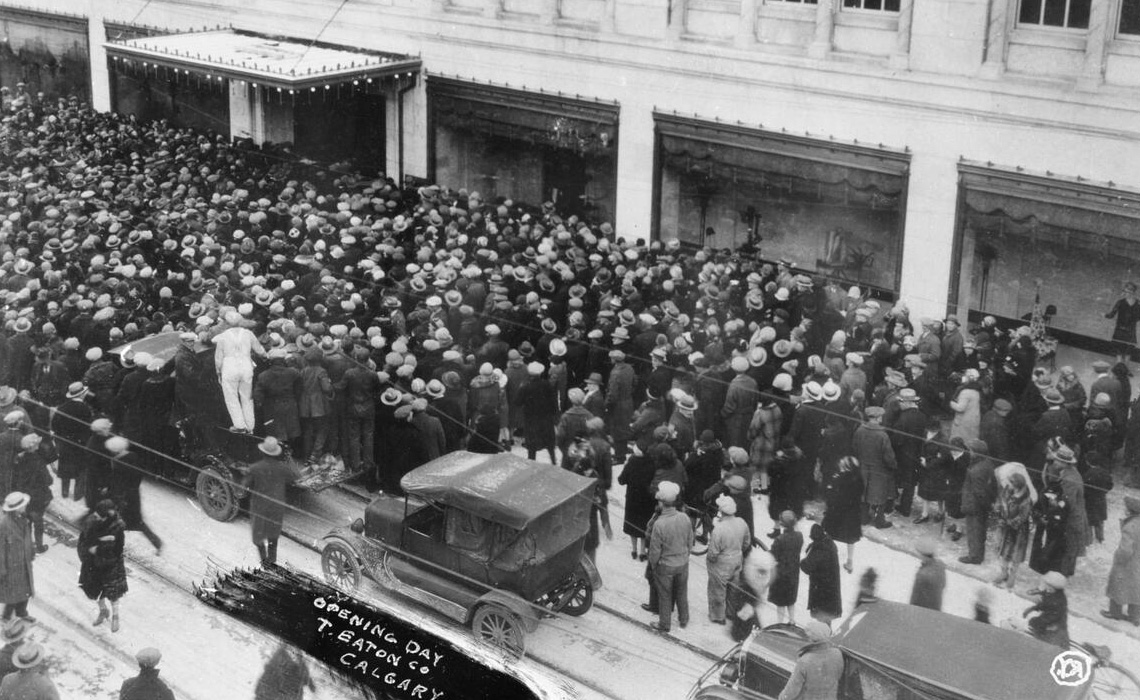
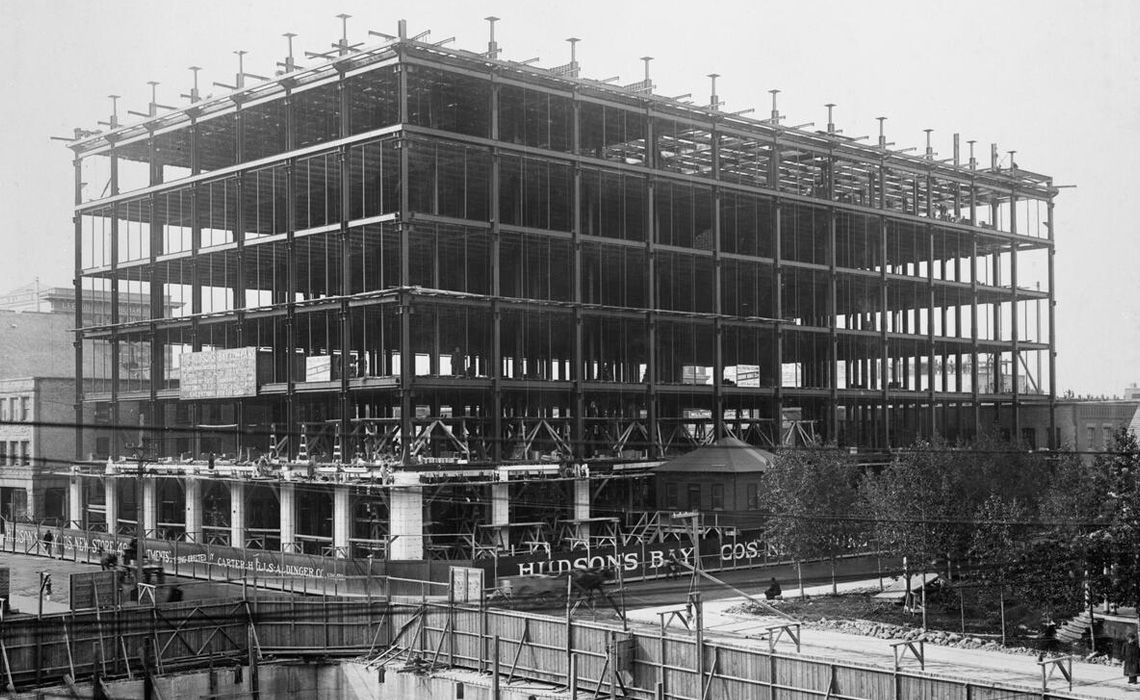
Canadian shoppers were stunned this spring when Canada’s iconic Hudson’s Bay Co. suddenly shuttered every location after 355 years. It’s the latest of a long line of Canadian-owned department stores that have come and gone, with the exodus beginning at the end of the last century.
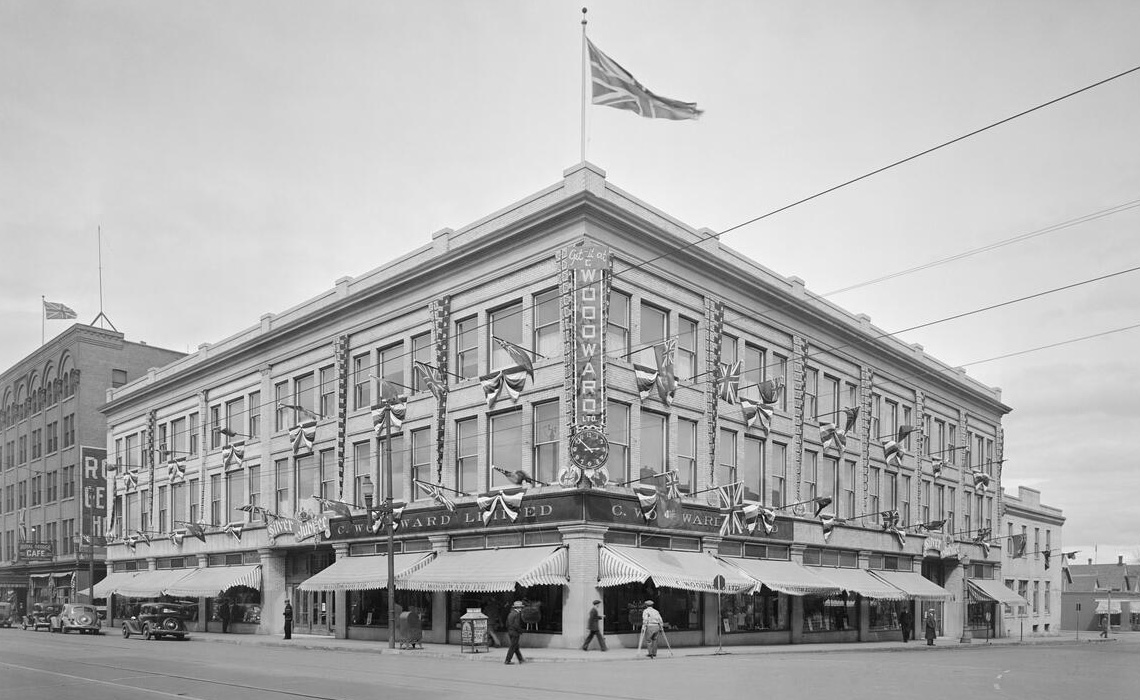
Woodward’s declared bankruptcy in 1992. Eaton’s, once the largest department store chain in the country, folded in 1999 after 130 years. Zellers collapsed in the early 2010s. Sears Canada shut down in 2018. And then there are the numerous other outlets, such as SAAN, Consumers Distributing, A&A Records, Beaver Lumber and Future Shop, that have disappeared from what seems to be the scorched landscape that is Canadian retail.
The Bay’s closing hit many the hardest due to its long and storied history in Canada. It started as primarily a fur trader from 1670 to 1870 and developed into a higher-end department store with locations in some of Canada’s most beautiful and well-known downtown buildings.
Many formed a personal connection with the Bay, says Dr. Neil Brigden, PhD, an assistant professor of marketing in the Bissett School of Business, where he studies consumer decision-making.
“I think a lot of us have memories of going to shop for important items at the Bay. I remember when I got my first suit for my high-school graduation we went to the Bay, and so I think a lot of Canadians have stories like that. We have this emotional attachment to the brand.”
The Bay’s downfall has been attributed to declining sales and rising debt, the struggle to adapt to online shopping, slow downtown foot traffic post-pandemic and its focus on leveraging real-estate assets rather than investing in the retail business.
“Unfortunately with any business, once you start to run into financial trouble it becomes difficult to invest in the things that are going to result in great consumer experiences. So, my experience being in the Bay in the last two years, it seemed like there wasn’t as much stock on the shelves. It was hard to find customer service. I noticed an escalator that wasn’t fixed for what seemed like a long time. The cracks were starting to show, and consumers don’t love those little frictions.”
Brick-and-mortar retail has been declared dead (or at least dying) many times over the last three decades, and the failure of the Bay seems to fully support the narrative that online shopping is now king. However, Brigden says, “It’s important to remember that online sales are still less than a quarter of total retail sales.”
It’s difficult to ascertain exact numbers due to the way statistics are calculated, Brigden says. A Statistics Canada report from 2023 (just after the pandemic) breaks shopping habits down by types of stores and reports an overall percentage of online sales in Canada of only around six per cent, but their research excludes non-Canadian entities, leaving out Amazon.
A U.S. Federal Reserve report from this year that includes Amazon and other major U.S. e-commerce players provides data suggesting that only about 16 per cent of U.S. retail sales are online. Another global report from SOAX in June found that about 19 per cent of all sales are online. An April 2025 survey by KPMG revealed that 61 per cent of 1,522 Canadians asked say they mostly shop at brick-and-mortar stores and 57 per cent say they are frustrated with the online shopping experience.
So, it’s not retail as a whole that is suffering, but the major department store chain certainly is. Big “anchor tenants,” such as the department stores found at each end of a mall, have generally disappeared except for a precious few.
To click or to tap
Brick-and-mortar stores that continue to be successful are those that have both strong online and offline offerings.
The Canadian Tire Corporation, which announced in May that it had entered into an agreement with the Hudson’s Bay Company to become the home of the HBC’s Canadian brands and other intellectual property, including the HBC Stripes, continues to chug along thanks to a helpful website.
“You can check to see if they have what you need available at a particular store near you. You can even figure out what aisle it’s in. And if something’s out of stock, you can order it online and have it shipped to you or to a store,” Brigden says. “Those options really complement the in-store experience.”
That could also be where the Bay went wrong. Their website was decidedly inaccessible, which led to low usage. Without use, no user experience data could be collected, leaving the Bay with little idea of what their customers were looking for.
Department stores are also ideal for browsing, where shoppers are happy to hunt around for great deals. Mission shopping, where people do their research online first, figure out what products they want and then go to the store for that item, has largely replaced browsing, however.
“I think the Bay depended on impulse buys or unplanned purchases,” Brigden says. As part of a group of companies drawing on some of the same inventory, Canadian Tire has built-in efficiencies that allows them more flexibility to pivot, he explains.
The evolution of the mall
Calgary’s largest mall, CF Chinook Centre, is also widely considered to be the city’s busiest. It’s often packed at all times of year, but it’s structure has subtly changed.
“Historically you’d have your two big anchor tenants at opposite ends of the mall, and those were likely big department stores, like the Bay and Sears. And those big department stores got good deals on their rent because the idea was they were bringing in all the traffic that was then going to walk between the two anchor tenants and stop and shop at all the smaller shops along the way. The mall generated a lot of its rent revenue from those smaller stores that weren’t big enough to pull in their own traffic.”
Chinook has been through a litany of anchors, including the Bay, Woodward’s and Zellers, which is making a recent comeback with a smaller-store concept, and now has H&M, the Scotiabank Theatre Chinook and Sport Chek as its de facto anchors. Smaller stores are getting much more effective at bringing in their own clientele, and so the old model is not as necessary. But the room those anchor areas provide is creating interesting opportunities for businesses. Brigden says they offer large retail spaces that are relatively affordable for potentially more retail, gyms, health-care facilities (as has happened in Newfoundland) and even pickleball courts.
While the departure of the Bay might be an unhappy reality, the good news is that retail is not dead. In fact, it is thriving in spite of the convenience of online options as people still enjoy the social interactions and sense of community that only in-person shopping can provide.
Remember when?
“My parents immigrated to Calgary from England, and all of my extended family was in England, and so on Christmas, we would usually get sent money from our relatives rather than gifts, because it as expensive to send parcels. For my brother and I, Boxing Day was huge, because that was when we could go and spend this Christmas money and get the stuff that we wanted. I remember buying our first Nintendo from Zellers on Boxing Day.”
Neil Brigden, PhD
Assistant professor of marketing
“Epic back-to-school shopping sprees with my mom always made me feel very special and grown up, especially when we stopped for lunch at any of the amazing department store cafeterias that existed. My mom would let me get fries and gravy and a piece of pecan pie and she would always get a BLT. Core memories of the very best kind.”
Michelle Bodnar
Summit editor
Bachelor of Communication — Journalism
“When I was growing up I think everything in our home came from either the Sears store or the catalogue, even the appliances, which lasted for decades.”
Deb Abramson
Summit production manager
Journalism Diploma, 1977
“Every summer, on the way to the cabin, my dad and I stopped at Beaver Lumber, where the sawdust clung to your clothes like a souvenir you never asked for. He scooped nails into a paper bag stamped with the familiar green-and-yellow beaver, then strolled the aisles with a bag of free popcorn. I followed along, marvelling that anyone needed 15 kinds of hammers, while my dad seemed perfectly at home. What lingers in my memory isn’t the tools or the popcorn, but how a simple stop for supplies became stitched into our summers, like another tradition we didn’t know we were keeping.”
Katie Cabaret
Director, Marketing
“We were a Sears family and would often shop for back-to-school clothes at the Marlborough Mall location. As a young, bored kid I remember playing hide-and seek-with my sister in the endless racks of clothing, popping our heads out to scare mom while she sifted through summer blouses. In the early days of home video we couldn’t afford our own VCR, so I also have memories of renting both the machine and some movies for the weekend. This was long before Blockbuster and Netflix.”
Dave McLean
AVP, Marketing and Communications
“My first real job, between high school and university, was at Kmart in Brentwood Mall. Long before Walmart, Kmart was the original discount department store in Canada, with a number of locations in Calgary. My core memory is of the leadup to Christmas and the madness that ensued as shoppers flocked to take advantage of the store’s famed ‘blue light specials’ and turned to quirky ‘As seen on TV’ offerings like the Abdominizer and Chia Pets as last-minute gifts. I walked off the sales floor Christmas Eve feeling exhausted, but pleased I’d helped some late shoppers find something for under the tree.”
Peter Glenn
Director, Communications
“Consumer’s Distributing was like online shopping before there was an internet. You browsed their catalogue, found the toy or game you wanted, filled out an order form and then went to the counter to hand it to the employee. Then it was an agonizing wait while they went to the back and searched for the item, and quite often they sadly came out empty-handed. It was a roller-coaster of emotions.”
Michal Waissmann
Summit art director
Bachelor of Communication — Information Design (Applied), 2007