 MENU
MENU



Training for impact
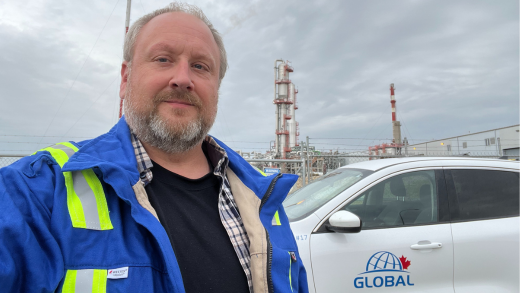
In Alberta, energy production and environmental responsibility are deeply intertwined. The province’s oil and gas industry is both a cornerstone of the economy and one of the most heavily regulated sectors in the world. Ensuring compliance with air monitoring and emissions standards requires specialized knowledge, technical precision and continuous learning.
For auditors and stack testers, the stakes are high. Their work verifies that facilities are measuring and reporting emissions accurately, helping both industry and regulators understand what is being released into the atmosphere.
In such a specialized field, training is critical. Mount Royal's Faculty of Continuing Education offers one of the only stack sampling courses of its kind in Canada, giving professionals hands-on training and theoretical grounding in stack sampling methods. For auditors like course participant Jeff Chapotelle and instructors like Max Clarke, the course fills a crucial gap in education and industry practice.
Chapotelle’s career spans both government and industry. For more than a decade, he worked as a federal enforcement officer with Environment Canada, interpreting codes, applying regulations and conducting investigations. Later, he moved into industry roles with major companies such as Suncor, focusing on environmental compliance and safety.
Today, as part of Alliance Technology Group (formerly Global Analyzer Systems), Chapotelle conducts third-party audits of continuous emission monitoring systems (CEMS) and ambient air monitoring (AMD) programs.
The work requires deep dives into policies, procedures, quality assurance manuals and technical data, but Chapotelle describes his role as collaborative rather than punitive.
“We’re hired by companies because they’re required to do these audits. But the ultimate goal is continuous improvement. It’s not about finding them in violation. It’s about working with them to identify things they can do better.”
This focus on helping companies improve, rather than penalizing them, is part of what makes the role rewarding.
While Chapotelle’s role is often about reviewing documents and data, he recognized the importance of understanding the practical side of stack sampling. That’s what led him to Mount Royal’s Stack Sampling course, which he describes as a beneficial blend of theory and practical learning opportunities.
“The instructor actually had sampling trains and we were required to assemble them and do the leak testing. We had to do some math – which I wasn’t expecting – but that’s actually a huge part of auditing. We need to understand those formulas and make sure that a company’s formulas are actually being done right.”
Chapotelle’s classmates included experienced stack testers looking to deepen their technical skills, while for him the value was in gaining first-hand appreciation for the processes he audits.
“There’s no CEMS auditing diploma, certification or degree, or really any directly related training for this job,” he explains. “That’s where the stack sampling course comes in.”
Because stack testing is such a niche area (only a handful of companies in Canada specialize in it) formal training opportunities are rare. As Chapotelle notes, students came not only from Alberta but also from British Columbia and Saskatchewan because MRU’s program is one of the only options available.
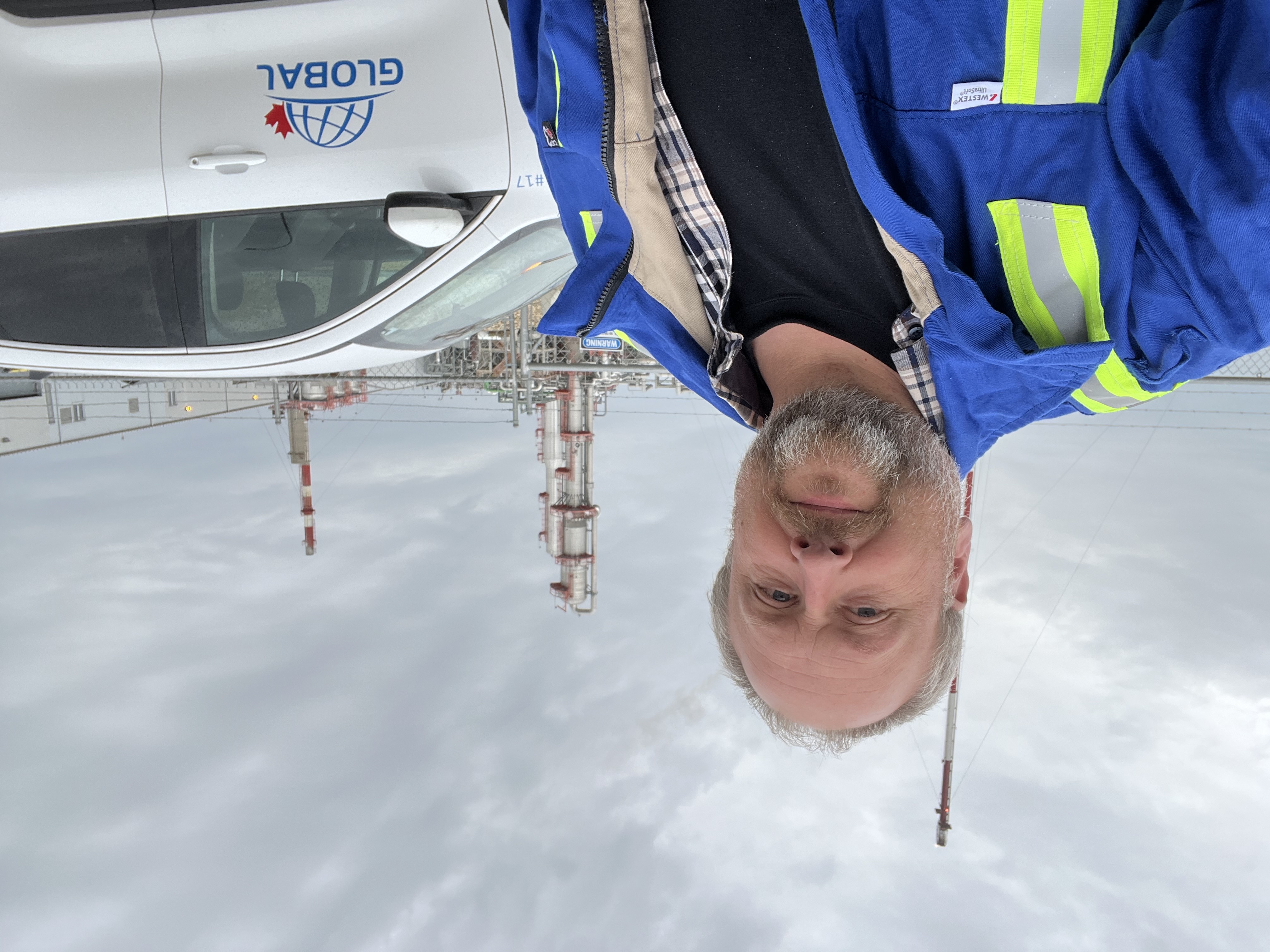
On the teaching side, Clarke has led the course since 2022, drawing on more than a decade of experience with Bureau Veritas (formerly Maxxam Analytics). His day-to-day work involves conducting stack tests and audits at facilities across Western Canada, giving him both practical and technical expertise.
He first stepped into teaching when his predecessor relocated and asked him to take over, which Clarke says felt like a natural transition.
When you’re in the field as a senior lead, you’re always teaching the younger technicians. So now this is just a more formal teaching process and delving more into the theory side of what we’re doing and why we’re doing it.”
For Clarke, the course isn’t just about relaying information. It’s about helping professionals connect the dots between theory and practice.
Students progress through Alberta’s recognized stack testing methods in sequence, with each step building on the previous one.
“Every step is essential,” Clarke explains. “There’s nothing that is more important than any other one, because the data right from the first thing that you do is going to affect everything down the line. That’s one of my favorite things about teaching the course.”
The course offers both a two-day theory option and a four-day practical option, where students handle real equipment, assemble stack trains, and practice sampling procedures.
“Seeing the equipment is just far more useful when it comes to making sure that the information sticks,” says Clarke. “It can be really, really helpful for people with different learning styles.”
Both Chapotelle and Clarke emphasize that Mount Royal’s course serves a real industry need. Whether for auditors seeking context, technicians seeking training, or stack testers strengthening their skills, the program provides something not available elsewhere.
The applications of stack sampling are also expanding. In addition to regulatory compliance, Clarke notes a growing demand in the area of carbon capture technology.
“We’ve seen a huge uptick in people requesting carbon capture and us using stack testing methods to help basically develop carbon capture systems,” he says. “The applications really could be anywhere that emits, because the purpose is to try to capture that carbon dioxide.”
Large projects, such as those at cement plants and oil sands facilities, now rely on stack testing data to refine carbon capture systems, reduce inefficiencies and measure progress. For professionals involved in these projects, Mount Royal’s course provides a foundation for understanding how the data is generated and why it matters.
The benefits of training go beyond technical knowledge. For Chapotelle, understanding stack sampling strengthens his ability to advocate for technicians and staff at the facilities he audits.
For Clarke, teaching the course has deepened his own expertise and given him new appreciation for the technical details. It has also allowed him to connect with a diverse group of learners – stack testers, auditors, technicians and reporting specialists – each of whom brings a unique perspective.
“I always tell the students that if you just come away having learned one thing, then the course has been a success.”
Class sizes at MRU range from five to 13 students, depending on industry demand. While small, these cohorts are diverse and highly engaged, representing multiple provinces and roles within the environmental sector.
Although the Alberta Stack Testing Code has remained largely unchanged since 1995, the skills and context provided in the course remain highly relevant. The program also adapts to evolving standards, such as the 2021 update to the CEMS Code, ensuring students are equipped with current knowledge.
Alberta’s energy sector is often in the spotlight, but as both Chapotelle and Clarke point out, it is also one of the most heavily monitored and regulated regions in the world. Stack sampling, air monitoring and emissions auditing are part of what makes that possible.
By offering the Stack Sampling course, Mount Royal provides specialized training that ultimately contributes to environmental stewardship. Although a niche program, its impact is far-reaching and helps industry professionals like Chapotelle, instructors like Clarke and students across western Canada build the knowledge and credibility needed to meet today’s challenges and prepare for tomorrow’s innovations.
Learn more about Mount Royal's Stack Sampling course on the program page.