Family-Centered Systems of Care
How might we prevent newborn apprehensions and keep families together through a Systems of Care approach?
Meet the Trio

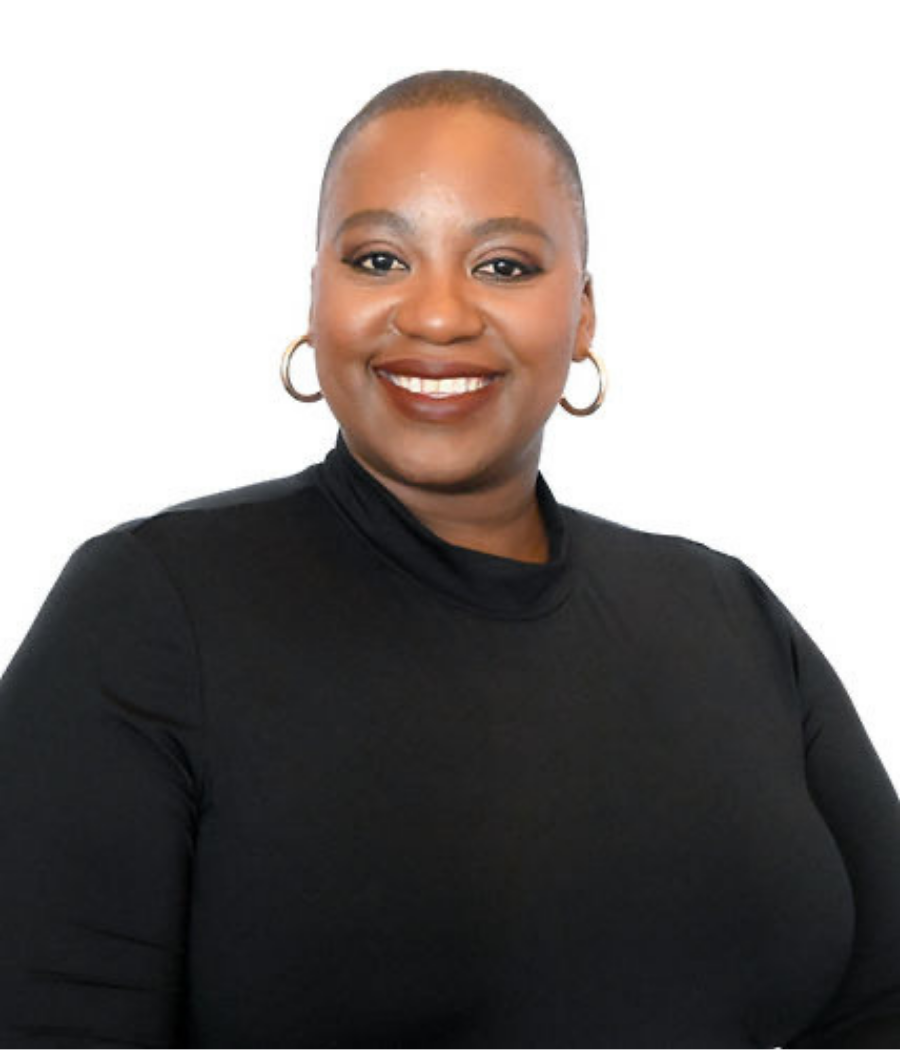

The Family-Centered Systems of Care trio was grounded in supporting systems-change work to prevent newborn apprehensions. Their learning journey focused on finding ways to connect academic learning with real-world community impact, while building capacity for family-centered, prevention-oriented practice. Nicole, Rebecca, and Harpreet worked directly with the community in the pursuit of ways to effectively support individuals across a variety of complex situations.
Reflecting on the Journey as a Student Fellow
- Written by Nicole Gallant

It is incredibly easy to focus on solution finding when tackling big issues. When change isn’t happening quickly and action isn’t being immediately taken, it can often feel like we’re stagnating rather than taking important steps to explore an issue to the best of our ability. Much of what both Catamount and the Changemaker Certificate did for me, was force me to slow down and try to digest certain intricacies of the complex issue I was presented with. It also made me realize that while our question is framed with a built in answer, it is continued organized efforts and the willingness to stop and take in what surrounds us and what others have to offer that will allow for substantial good to occur.
Through reading a wide variety of articles, news stories, and personal accounts provided to me by professors, professionals, and librarians, I realized that we were in a unique position of trying to patch together solutions based on the varied writings of individuals across North America.
Truthfully, there is no straightforward answer to our How Might We question. The differing experiences of each individual prevent us from forming a panacea to solve all ills in a single go.
However, all is not without hope. A core tenant of the Systems of Care1 approach is individualization and empathy directed towards the many varying ways of life lived by families engaged with this system. I hope that through empathy and acknowledgement of personal biases, continued efforts may form the conversations that are missing from the one-size-fits-all solutions that are so pervasive within our current ways of thinking.
1. Casey Family Programs. (2025). What strategies support effective implementation of the systems of care approach?
I hope that through empathy and acknowledgement of personal biases, continued efforts may form the conversations that are missing from the one-size-fits-all solutions that are so pervasive within our current ways of thinking.
In truth, what my work here has become is based around something said during a class by the first professor I had at Mount Royal University, Richard Harrison: Essays are the author's contribution to an ongoing conversation. I was reminded of these words, which were said to me more than four years prior, time and time again throughout the Catamount fellowship, most especially during my community conversation. While our final deliverable is not an essay or paper, I would like it to be part of a wider conversation about newborn apprehensions and the use of the Systems of Care approach. I’ve grown to feel that the best way we can support those affected by the far-reaching issues triggered by apprehensions, and attempt to prevent them through providing easier access to resources and community, is by actually engaging within said communities, not just speculating from a solely academic perspective.
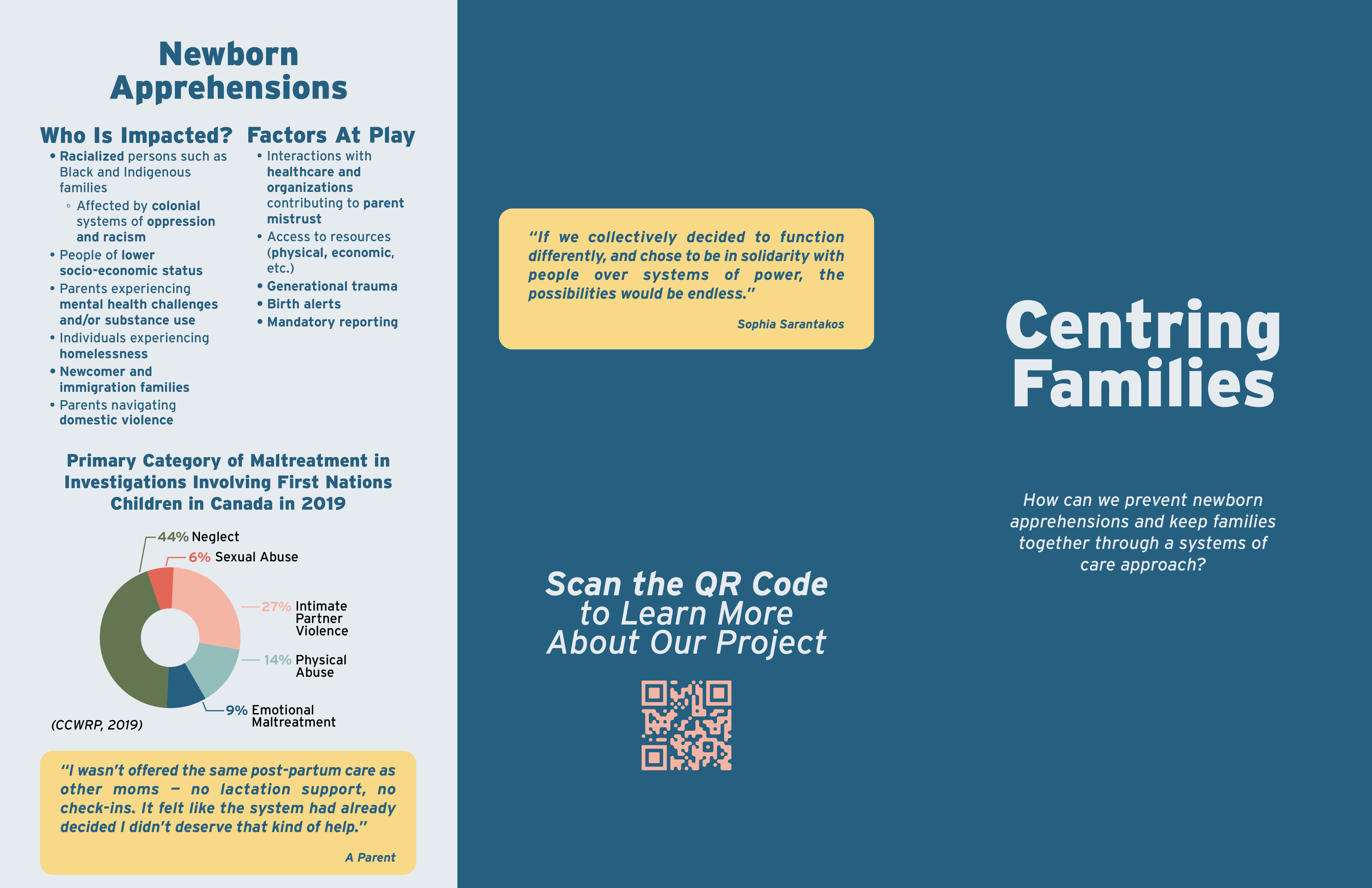
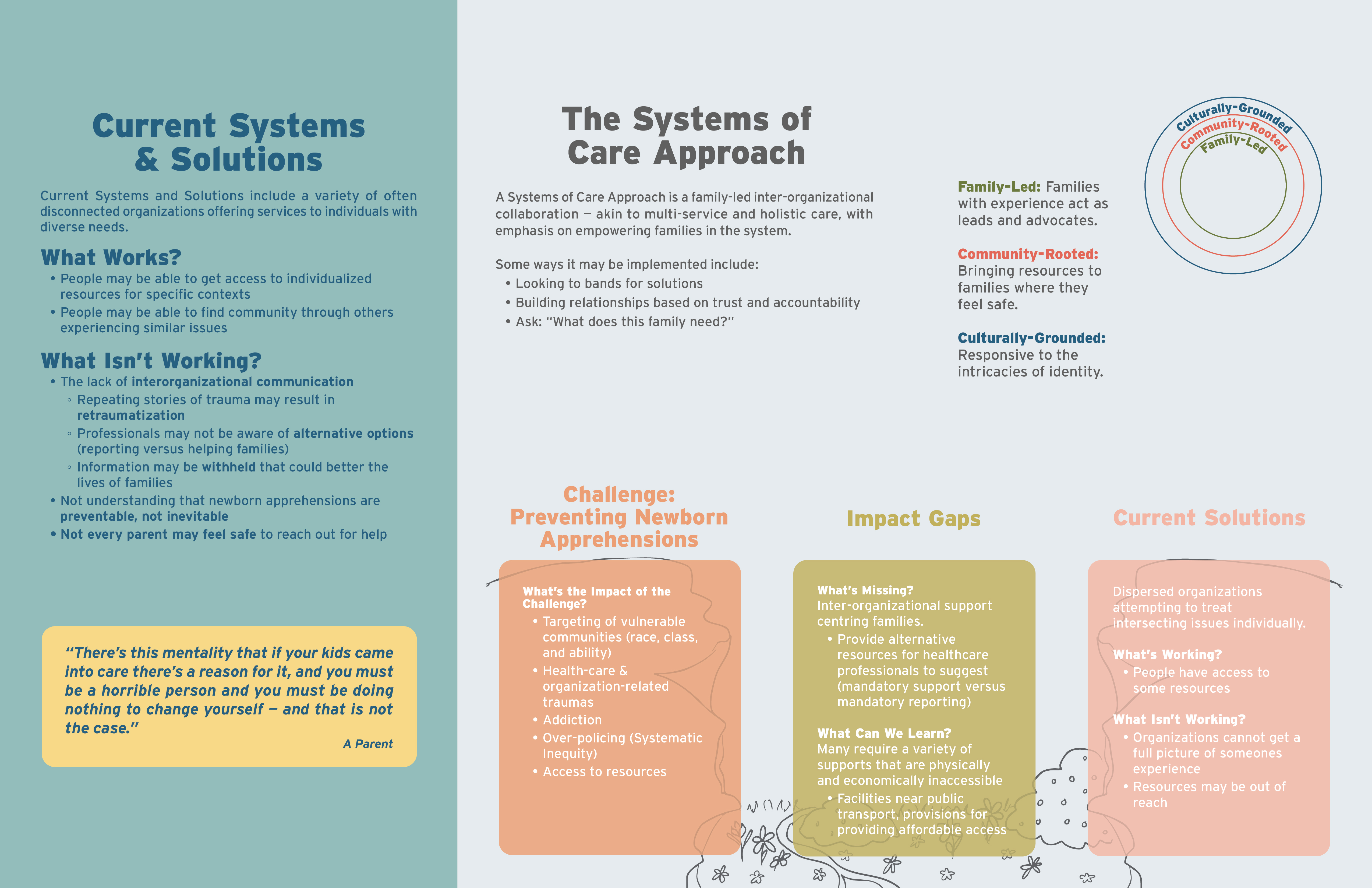
The format of our deliverable, a pamphlet, is based around that idea. The medium is meant to be something accessible, introducing those who encounter it to the basic concepts inherent to the Systems of Care approach as well as the experiences of individuals who have undergone or been at risk of child apprehensions.
It is my opinion that one of the key tools for progress is accessibility. Progress is a group project. The more people that can join this conversation, the more families can be supported, not separated. The issues they face are pervasive and systematic. While a single project will not enact immediate change, I hope continuous effort and willingness to look deeper into the issues may slowly begin to close existing gaps.
Our pamphlet can be found below.
Centring Families Pamphlet [pdf link]
Sources to Begin Learning About the Systems of Care Approach
Articles
Casey Family Programs. (2025A). How can the systems of care approach improve outcomes for children and families involved with child welfare? https://www.casey.org/soc-issue-brief/
Casey Family Programs. (2025B). What roles can Elders play to help children thrive and prevent them from entering foster care? https://www.casey.org/media/25.07-QFF-SComm-Elder-Connections_final.pdf
Casey Family Programs. (2025C). What strategies support effective implementation of the systems of care approach?
DeCarolis, G., Southern, L., & Blake, F. (2007). Improving child welfare outcomes through systems of care: Building the infrastructure: A guide for communities. https://www.williamscountyoh.gov/DocumentCenter/View/178/Systems-of-Care-A-guide-for-Communities-PDF?bidId=
Elke, D., Choate, P., & Tortorelli, C. (2025). A scoping review of birth alerts: A Canadian context. British Journal of Social Work, 55, 1636-1656. https://doi.org/10.1093/bjsw/bcaf014
Kenny, K. & Druker, A. (2011). Ants facing an elephant: Mothers’ grief, loss, and work for change following the placement of children in the care of child protection authorities. In D. Barrett’s (Eds.) Children of the Drug War (1st ed., pp.151-170). IDEBATE Press.
Kourgiantakis, T., Cooper, D., Cooper, D., Craig, S., Lee, E., Jones, J., Lau, C.K.Y., Tousignant, R.N., Singer, J.B., Johnstone, M., & Zahher, J. (2025). Sucicide among youth and young adults in Canada: Bereaved parents’ perspectives on the systems of care. International Journal of Mental Health Systems, 19(26). https://doi.org/10.1186/s13033-025-00680-y
Podcasts
Jones, T. (Host). (2025, September 18). Community in-site: How legal advocacy at birth can keep families together [Re-release] with Adam Ballout [Audio podcast episode]. In Thriving Families. Community In-Site. https://open.spotify.com/episode/0dt9CIv7CJ8Jxckn782W91?si=KU6ry-t2R5yxQx3xGIEV8g
O’Connor, L. (Host). (2021, May 19). Promising practices: A podcast about mental health and addictions: Recovery-oriented systems of care (AB) (S1E9) [Audio podcast episode]. In Canada's Premiers. Promising Practices. https://canadaspremiers.ca/ep9-ab/
Videos
Strong Families, Safe Communities Collaborative of NW Ohio. (2019, September 23). The systems of care approach to working with families: Why is this important? [Video]. Youtube. https://youtu.be/Gd6fCj2wRWI?si=uBnlCdS0a7Leh3a7