 MENU
MENU



What can we take away from Josh Allen’s tears?
As the NFL season heads into playoffs, the stakes are undoubtedly becoming higher as teams try to earn their spot in the most-watched game of the year — the Superbowl.
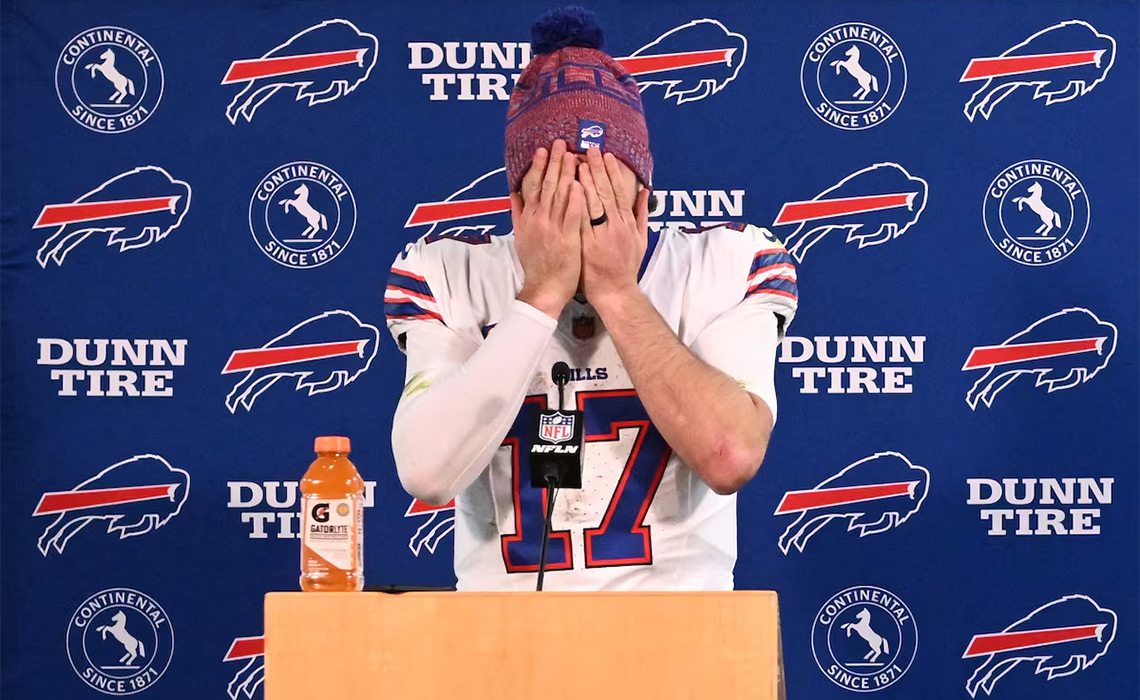
However, the talk after last weekend's divisional round is less focused on the field and more focused on one player’s post-game interview. On Sunday, Buffalo Bills quarterback Josh Allen cried in a postgame interview after losing to the Denver Broncos, saying he felt like he had let his teammates down. The loss ended the Bills’ season.
This led to a bigger conversation on Connect with Sarah Crosbie on QR Calgary 770 AM, featuring MRU assistant professor and alum Gio Dolcecore. Host Sarah Crosbie pondered what this display of vulnerability means for young men.
“We have spent the past year or two years looking at how men feel in the world,” said Crosbie, noting the increase in conversations around young men feeling a lack of connection to others.
She invited Dolcecore on her show to chat about how significant it is to now have a “macho masculine, quarterback” be in the headlines for his emotional display.
Dolcecore says this has raised a really important conversation about public displays of emotion.
“Josh wasn’t just tearing up, what Josh was doing was displaying how important his role is on the team and how committed he was to winning, and I think his message aside from all the tears was about camaraderie and the pride of sport,” Dolcecore said.
Crosbie and Dolcecore both remarked that gender plays a huge role in this scenario, too.
“Oftentimes when we see women displaying emotion it is seen as predictable or normal. There is a misbelief that it is easier for women to experience these emotions and feelings than it is for men, but the truth is, that is just a gender stereotype,” Dolcecore explained.
They encouraged Crosbie and listeners to think about the societal expectations surrounding emotion.
“What have we taught young boys and girls about feelings, and to make things even more complicated, how do all of these social constructs of gender affect those outside of the gender roles?”
So how is this bigger than sports exactly? Crosbie remarked that this specific moment and the attention it is getting feels significant — more important than football — and Dolcecore agreed.
Dolcecore explained that throughout history, dating as far back as Roman times, sport has been used to build culture and community in societies.
“Sports tell us what our culture is like,” they said, using the example of hockey and how it is part of Canadian identity.
“Sport teaches us what norms are, and above all else, sport teaches us what pressure and commitment look like and how one should do that.
“I think the space Josh had, that for him to demonstrate that, as a man, he prioritizes sport and he does exactly what he is paid to do. He takes it very seriously, he is a leader in that sport and he took responsibility for the loss,” Dolcecore said.
“Crying in the realm of sports for men seems to be a little bit more socially acceptable. I think crying outside of the realm of sports is still a very different conversation,” Dolcecore said, to which Crosbie agreed.
Regardless of gender, Doclecore said, if you cry at what is perceived to be ‘the wrong time,’ there are psychological and social costs to crying.
“You might be seen as weak, you may be mocked or viewed as not a good leader. However, in the realm of sport, I saw Josh Allen’s tears as an expression of defeat.”
On the note of body language, one thing Dolcecore picked up on in Allen’s interview is that he did not look up once when speaking. They remarked on his ability to speak well at such an emotional time, but pointed to his lack of eye contact as a sign of his true feelings at that moment.
Dolcecore wasn’t surprised by Allen’s tears, with the understanding of just how dedicated athletes are and how much they imagine earning the big wins. Allen was likely imagining winning that game and what that post-game scenario would look like, so he was likely in shock when he was doing his interview.
Overall, Dolcecore thinks the moment can lead all to a bigger reflection about priorities in life.
“Sport is one of those things that helps us build culture. I am really grateful we are talking about Josh crying and we are talking about vulnerability in sports and that we are seeing sports as an avenue for expression, because that’s what sports is all about.”
Listen to the full conversation between Crosbie and Dolcecore.