 MENU
MENU




Distinguished Faculty Awards
Eligibility | Criteria | Nomination | Application | Past recipients
Distinguished Faculty Awards celebrate outstanding performance by faculty in all aspects of their role and the ongoing enhancement of their teaching and/or scholarship. Recipients of this prestigious award demonstrate excellence in scholarly teaching, leadership in service and significant accomplishments in scholarship.
Distinguished Faculty Awards have two award categories:
- Excellence in Scholarly Teaching, Service and Scholarship Award
- Excellence in Scholarly Teaching Award
Recipients of the Distinguished Faculty Awards in both categories receive a monetary award of $1,500 (choice of a cash honorarium, professional development funds or donation to a Mount Royal scholarship), a letter acknowledging the award signed by the provost and vice-president, academic, and a framed certificate. Recipients of the Excellence in Scholarly Teaching, Service and Scholarship Award also receive a $3,500 grant to support their work in teaching and/or scholarship.
Award recipients are also recognized on Mount Royal's Faculty Excellence Awards website and at the Faculty Excellence Celebration in May. They may also be recognized through other channels.
Typically, one (but up to two) awards may be granted in each category each year. A Distinguished Faculty Award may only be granted to an individual once in each category.
2026 Distinguished Faculty Award Recipients
Excellence in Scholarly Teaching, Service and Scholarship Award
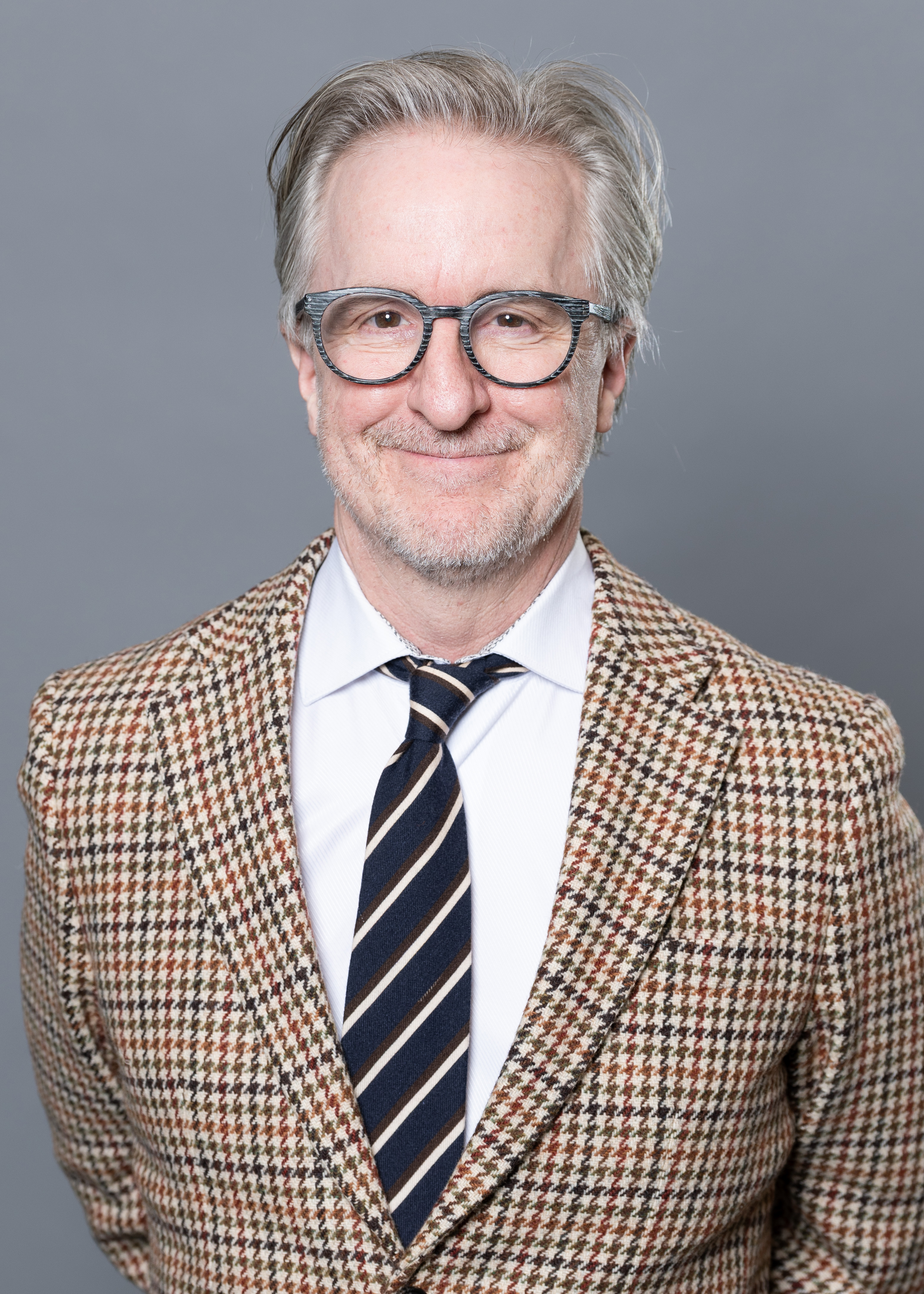
Randy Connolly
Joining MRU in 1997 as an instructor, Randy became a full professor in 2014. Across his 28-year career he has published 4 books, 54 peer-reviewed papers, and about 80 conference publications. Several of these publications have had a significant global influence on how computing is taught and imagined.
The most important of these publications is Fundamentals of Web Development. The book has been very successful and is used at hundreds of universities globally. It is the market-leading book in this area, and as such, it defines how this topic is taught worldwide in post-secondary contexts.
Over the past half-decade, Randy's research work has focused on addressing the way academic computing education imagines its disciplinary mission. This has included papers on reflexive practice, critical research and theory, political activism within the classroom, and connecting computing to the theories and practices of the social sciences.
For instance, his 2020 paper, “Why computing belongs within the social sciences,” published in Communications of the ACM, the principal peer-reviewed academic journal for computing, has had an important influence in this regard; with more than 54 thousand downloads, it is among the journal’s top 10-most downloaded articles this decade.
Randy’s contributions to teaching, service and scholarship at MRU have been impactful at every step of his career. He played a critical role in shaping his department’s foundations. In 1998, he led the development of the Applied Computer Information Systems degree, which ran from 2000 to 2009, and contributed to the research, planning, and implementation of the four-year BCIS degree that replaced it. He has been a conference chair, program chair, associate editor, and in 2025, started a three-year appointment as co-editor-in-chief for ACM Inroads, an international quarterly print magazine on computing education, which has further increased Randy’s influence on the global conversation surrounding computer education.
As noted by the Dean of the Faculty of Science and Technology Dr. Jonathan Withey, “Randy demonstrates the authentic and sustained integration of teaching, scholarship and service. His research informs what and how he teaches. His teaching questions feed back into scholarship and dissemination. And his editorial leadership and peer review work allows the scholarship of others to flourish.”
Excellence in Scholarly Teaching Award

Alexandria Farmer
Faculty of Science and Technology
Discovering her passion for teaching while leading a Biology 0130 lab during the pursuit of her Environment Technology Certificate at Mount Royal College in 2002 changed Alexandria Farmer’s career trajectory, and she’s never looked back.
Today, Alex is a highly respected coordinator and instructor across a spectrum of MRU biology labs, renowned for engaging her students and inspiring connections with nature. With a reputation for fun lab content, Alex catches students off-guard, for instance, when she jokes about a woman farting in an elevator to help them understand how molecular state affects the rate of diffusion.
“Alex inspires students to be part of, and connect to, the environment and not passively observe it from a distance,” says Dr. Carol Armstrong, PhD, an associate professor in the Faculty of Science and Technology. “Her game called ‘Live, Poop or Die’ is famous among the students and they take great delight in deciding which plants might be poisonous or cause other deleterious effects!”
Humour aside, Alex makes significant contributions to curriculum, developing and revising content in six courses to improve scientific communication skills, incorporate the scientific method into lab activities, generate data sets for statistical assessment and expand experiential learning opportunities.
Alex’s teaching strategies constantly evolve, responding to changes in course expectations, technology and the needs of incoming students. Her student-centred strategies facilitate collaboration and nurture an environment that is welcoming, free of judgement and open to curiosity. She seeks multiple angles to conceptualize theories and conveys relatable situations her students might encounter in their daily lives (hence the farting in the elevator joke!) to strengthen the understanding of concepts and information recall.
Alex co-founded the Alberta Native Bee Council (ANBC) in 2016 where she remains a director, ensuring her currency in scholarly research while sharing her expertise with nature groups, municipalities across southern Alberta and young students in K-6 classrooms. Her ANBC work also led to learning experiences for her MRU students and the development of “Plan Bee”, a science-based conservation initiative to create habitat for native bees and pollinating insects on campus.

Tamara Jenkins
Faculty of Arts
“I wanted to . . . express my deepest appreciation for the incredible experience I had in your class. Your dedication, passion and expertise as a teacher made it one of my favorite classes throughout my university years. I am truly grateful for the way you have fostered a positive and engaging learning environment. Your ability to convey complex concepts in an accessible manner and your willingness to go the extra mile to ensure our understanding has been truly remarkable.”
That’s an excerpt from one of the student messages Tamara Jenkins displays in her office to remind herself of her potential to shape the experiences of students fortunate enough to take one of her psychology classes.
Having cultivated a broad academic perspective by teaching more than 180 psychology sections and 40 sections in other faculties over the last 21 years, Tamara’s philosophy and energetic classroom presence are her calling card – a contrast to the 24-year-old who found public speaking terrifying when she applied to MRC for a contract position in 2005.
Accordingly, Tamara ensures she smiles upon entry into the classroom, unleashes an enthusiastic delivery and treats each lecture as a conversation. Her goal is that her students understand how every concept they learn can make a difference in their lives and the lives of those around them.
“As a result of the overlap in our courses, Tamara and I have had frequent discussions about principles of course design, teaching techniques, evaluation and student development,” says Dr. James Taylor, PhD, associate professor of psychology. “I’m always interested in hearing what Tamara has to say, as she is a thoughtful instructor who finds creative ways to engage students.”
As co-chair of her department’s EDIA committee, Tamara launched a Psychology Peer Mentor Program. Each fall, in collaboration with Student Counselling Services, 15 to 20 psychology majors are trained as peer mentors who host drop-in hours in the Psychology Student Lounge. This academic year, Tamara collaborated with Career Services to have the mentors’ volunteer hours officially logged and captured as work-integrated learning on their experiential transcripts.
Awards Requirements
Eligibility
All candidates for this award must be nominated.
The Distinguished Faculty Awards respect the diversity of roles and responsibilities undertaken by faculty at Mount Royal and the unique contexts and settings in which faculty are situated. Candidates are reviewed on the overall quality of their applications in relation to the award criteria. The awards are available in two categories:
Excellence in Scholarly Teaching, Service and Scholarship Award
All full-time tenured faculty on the TS or TSS work pattern with at least five years of full-time service with Mount Royal are eligible for the Excellence in Scholarly Teaching, Service and Scholarship Award.
A nominated faculty member may apply for and be granted more than one Faculty Excellence Award in a given academic year. However, a faculty member may only apply for and be granted ONE award within EACH award category (Distinguished Faculty Awards, Teaching and Learning Awards, and Research Recognition Awards) in a given academic year.
A faculty member may not be granted the same Faculty Excellence Award more than once in a lifetime. This applies to all awards in the Faculty Excellence Awards program. Previous recipients of a Distinguished Faculty Award in the previous full-time credit award category are not eligible to receive another Distinguished Faculty Award.
Excellence in Scholarly Teaching Award
All senior lecturers with permanency, lab instructors with permanency, and contract faculty who have taught at Mount Royal in a credit area for at least eight semesters (consecutive or nonconsecutive) are eligible for the Excellence in Scholarly Teaching Award.
A nominated faculty member may apply for and be granted more than one Faculty Excellence Award in a given academic year. However, a faculty member may only apply for and be granted ONE award within EACH award category (Distinguished Faculty Awards, Teaching and Learning Awards, and Research Recognition Awards) in a given academic year.
A faculty member may not be granted the same Faculty Excellence Award more than once in a lifetime. This applies to all awards in the Faculty Excellence Awards program. Previous recipients of a Distinguished Faculty Award in the previous contract faculty credit award category are not eligible to receive another Distinguished Faculty Award.
Criteria
Excellence in Scholarly Teaching, Service and Scholarship Award
Nominees for the Excellence in Scholarly Teaching, Service and Scholarship Award are assessed on the following criteria:
Excellence in scholarly teaching
- Teaches in alignment with principles of effective practice in undergraduate education
- Holds high expectations for student learning
- Aligns intended outcomes, teaching practices and assessment methods
- Innovates and experiments in teaching with a view to enhancing student learning
- Engages in reflective practice
- Commits to continuous improvement in teaching
- Engages in teaching informed by scholarship
- Supports/mentors colleagues relative to teaching
- Influences or has an impact on teaching beyond the academic unit
Leadership in service
- Demonstrates substantial participation and contribution in service
- Contributes to the support or advancement of organizational goals and priorities (internal or external)
- Demonstrates leadership in service, beyond membership and participation
- Provides evidence of influence and/or impact and making a positive difference
Significant accomplishments in scholarship
- Sustains scholarly activity
- Holds a pattern of consistent dissemination of research outcomes in peer-reviewed fora/venues
- Has an impact on scholarly work in one's field
- Demonstrates the integration of scholarship and teaching
- Mentors/supports colleagues relative to scholarship
Excellence in Scholarly Teaching Award
Nominees for the Excellence in Scholarly Teaching Award are assessed on the following criteria:
Excellence in scholarly teaching
- Teaches in alignment with principles of effective practice in undergraduate education
- Holds high expectations for student learning
- Aligns intended outcomes, teaching practices and assessment methods
- Innovates and experiments in teaching with a view to enhancing student learning
- Engages in reflective practice
- Commits to continuous improvement in teaching
- Engages in teaching informed by scholarship
Nomination
Please carefully review the eligibility and criteria for the Distinguished Faculty Award, along with the following information, before submitting a nomination.
Eligibility to nominate
Nominations can be submitted by any student, employee or alumni of Mount Royal University, excluding any members of a Faculty Excellence Awards adjudication committee in the current adjudication year.
Self-nominations are not accepted.
Requirements
- All nominations must be seconded by a full-time or contract faculty member who is not a member of a Faculty Excellence Awards adjudication committee.
- Nominations should be accompanied by a statement that includes the reasons for the nomination (maximum 500 words). Specific reference should be made, where possible, to the nominee's qualifications relative to the criteria.
- Nominations should be submitted to the Office of the Provost and must be completed using the nomination form provided on this webpage during the nomination period.
- An mtroyal.ca email address is required to complete a nomination form. Anonymous emails or testimonials will not be accepted.
Application
Application process
- All candidates for this award must be nominated.
- The selection committee receives and reviews all nominations to confirm eligibility.
- Eligible nominees are invited to apply for the award. They are supplied with detailed application instructions.
- Applicants have approximately three to four weeks to submit their applications.
- The selection committee reviews the applications and selects the award recipients.
- All applicants receive a decision letter from the selection committee.
- Award recipients are expected to be announced by mid-April.
Excellence in Scholarly Teaching, Service and Scholarship Award
Detailed instructions, an application form (via Google Forms) and a dossier template (via Google Docs) will be provided to nominees who are invited to apply. All application materials must be submitted in PDF format.
The application package includes:
Dossier document (maximum 20 pages):
- Introduction (cover letter)
- Statements outlining excellence in scholarly teaching
- Teaching philosophy
- Innovative teaching methods
- Reflective practice
- Integration of scholarship in teaching
- Mentoring and impact
- Statements outlining leadership in service
- Service activities
- Leadership contributions
- Influence and impact
- Statements outlining significant accomplishments in scholarship
- Scholarly productivity
- Impact in your field
- Mentoring in scholarship
- Summary of three (3) to five (5) SPoT evaluations from the past three years
Additional documents:
- Current Curriculum Vitae (any CV format is accepted – an MRU CV is not required)
- Up to three (3) signed letters of support. Letters may be provided by individuals, internal or external to Mount Royal, who are familiar with the nominee’s work and contributions. Applicants are asked to refrain from requesting letters from tenurable faculty members.
- Up to five (5) other supporting documents, if necessary (e.g., course outlines, chair and peer evaluations etc.)
Excellence in Scholarly Teaching Award
Detailed instructions, an application form (via Google Forms) and a dossier template (via Google Docs) will be provided to nominees who are invited to apply. All application materials must be submitted in PDF format.
The application package includes:
Dossier document (maximum 15 pages):
- Introduction (cover letter)
- Statements outlining excellence in scholarly teaching
- Teaching philosophy
- Innovative teaching methods
- Examples of peer recognition
- Examples of student impact
- Summary of three SPoT evaluations from the past three years
Additional documents:
- Current Curriculum Vitae (any CV format is accepted – an MRU CV is not required)
- Up to three (3) signed letters of support. Letters may be provided by individuals, internal or external to Mount Royal, who are familiar with the nominee’s work and contributions. Applicants are asked to refrain from requesting letters from tenurable faculty members.
- Up to five (5) other supporting documents, if necessary (e.g., course outlines, chair and peer evaluations etc.)
2026 Distinguished Faculty Awards Adjudication Committee
| Member | Title |
| Dr. Karim Dharamsi | Vice-Provost Academic (Chair) |
| Dr. Connie Van der Byl | Associate Vice-President, Research, Scholarship and Community Engagement |
| Dr. Kenna Olsen | Vice-Dean, Faculty of Arts |
| Dr. Leah Hamilton | Vice-Dean, Research and Community Relations, Faculty of Business, Communication Studies and Aviation |
| Dr. Sonya Jakubec | Acting Associate Dean, Research, Scholarship and Community Engagement, Faculty of Health, Community and Education |
| Dr. Melanie Rathburn | Vice-Dean, Faculty of Science and Technology |
| Katharine Barrette | Associate Dean, Public Services, University Library |
| Dr. Jodi Nickel | Professor, Education, Faculty of Health, Community and Education 2025 Distinguished Faculty Award recipient |
| Dr. Gülberk Koç Maclean | Senior Lecturer, Department of Humanities, Faculty of Arts 2025 Distinguished Faculty Award recipient |
| Dr. Aries Sutantoputra | Sessional Instructor, General Management and Human Resources, Faculty of Business, Communication Studies and Aviation |
| Tala Abu Hayyaneh | REC President, SAMRU |
Return to Faculty Excellence Awards
The Faculty Excellence Awards are administered through Academic Affairs, as part of Mount Royal’s Celebrate U framework for employee rewards and recognition.