 MENU
MENU



A journey through land, laughter and learning
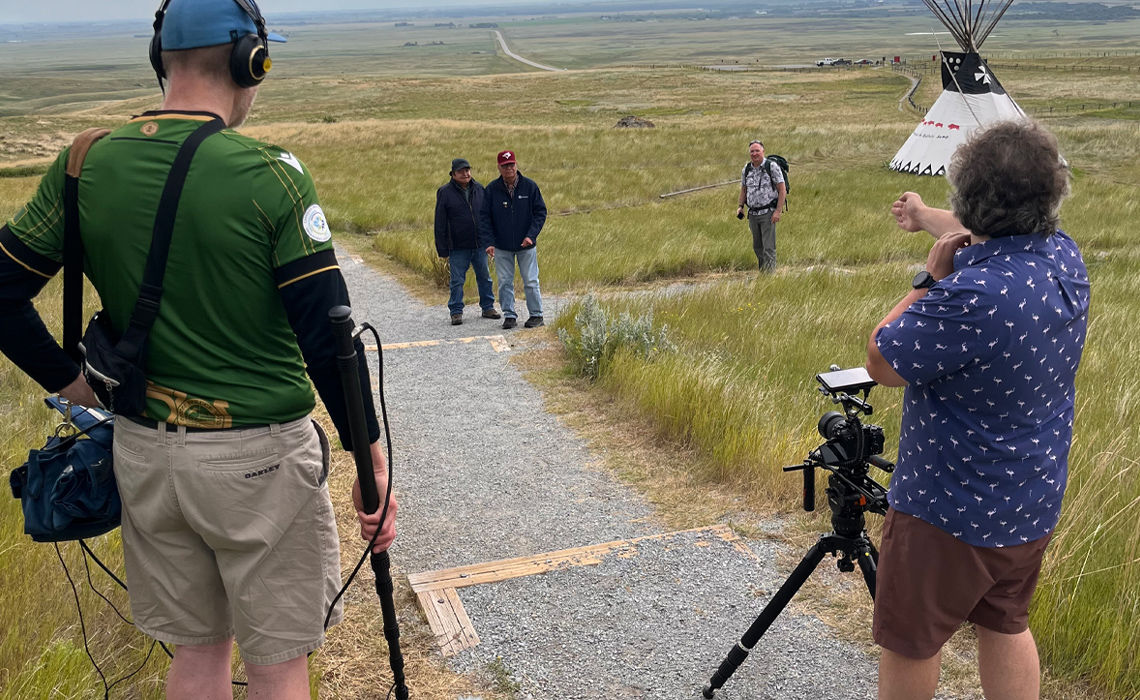
Two Siksika Elders and a dean walk into the Bella Concert Hall. What followed wasn’t a punchline, but something much more lasting — a film project that bridges generations and ways of knowing.
It all started at last year’s Ecotourism and Outdoor Leadership (ETOL) Film Night. Steve Price, former dean of MRU’s Faculty of Health, Community and Education, was chatting with Blackfoot Elders Roy Bear Chief and Hayden Melting Tallow after an evening of student films and the screening of a trailer for Ani to Pisi, a feature-length documentary about the human spiderweb.
“Hayden, who’s kind of the creative soul, just said, ‘Hey, why don’t the three of us do a film for film night? Let’s go on an adventure together,’ ” Price recalls.
With support from the Academic Media Group (AMG), consisting of Ian Borg, Chuck Dickens and Ella Finstead Meakin, the idea took root and filming for what would become Nitakit began. To ground the project in the ETOL program’s spirit of hands-on learning, fourth-year student Jake Clark was also brought on board as part of his practicum.
“The best advice I’ve received during my ETOL career was to be a ‘yes person’ when new opportunities come your way,” Clark says. “This was a chance to learn more about Blackfoot culture from knowledgeable and respected members of the community.”
Told through the land
The group began brainstorming where to go, eventually choosing a path that connected key parts of the Siksika traditional territory: Blackfoot Crossing, Head-Smashed-In Buffalo Jump, Banff and Castle Mountain.
Nitakit begins with a quiet moment — a dean standing before the Buffalo Robe at the Mount Royal Recreation entrance, wishing he had someone to teach him more about what it means. Suddenly, two Elders appear and offer to guide him, setting the stage for the adventure to follow.
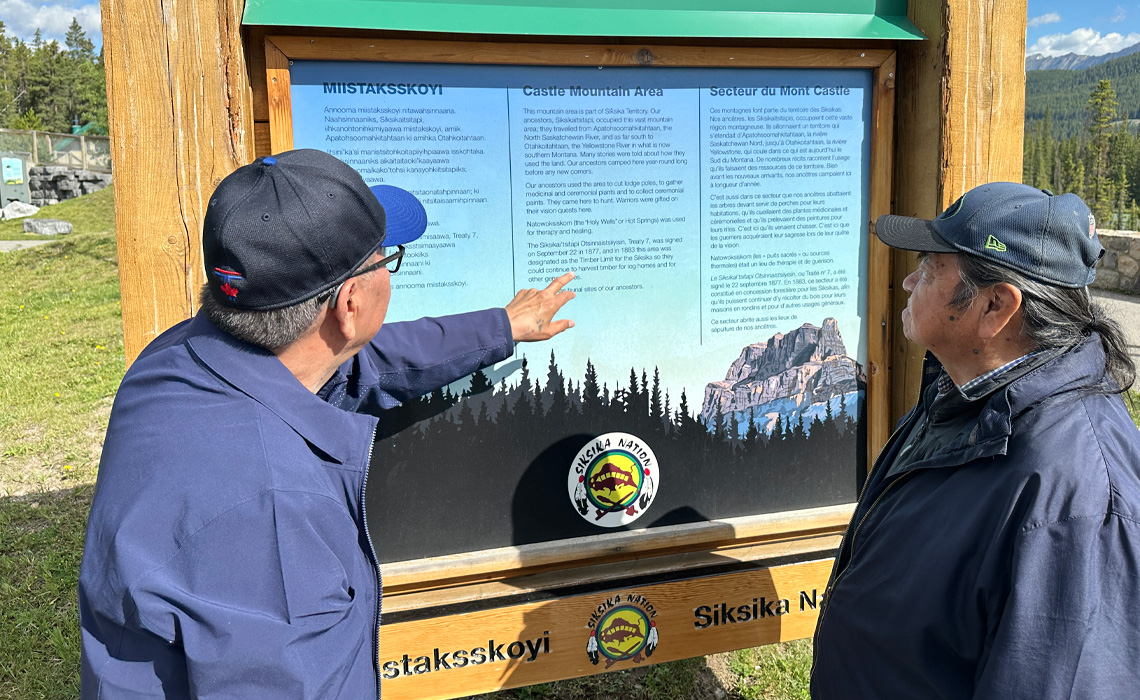
At each site, Bear Chief and Melting Tallow share teachings about the deep relationship between people and place, from how the buffalo sustained their ancestors to the importance of Castle Mountain as part of the Siksika Treaty 7 agreement.
“The film is Elders sharing their knowledge about the Blackfoot culture through the land. We are giving voice back to the land,” Bear Chief says.
“I want to let people know that we are not always in our reserve,” Melting Tallow adds. “The film shows that we were in these areas before settlers came. Our traditional territory is quite large.”
Humour, heart and a little raw kidney
While the film is steeped in teaching, it also includes laughter.
“Blackfoot has a lot of humour in it,” Bear Chief says, which comes out in the film.
One memorable moment came in Banff, when the group sat at picnic tables and Price was “initiated” with a tasting of raw beef kidney, a Blackfoot delicacy. More than just a shot for the film, the AMG and Clark also joined in behind the scenes.
“The camera crew weren’t just filming, they were also learning. Jake was learning, too,” Bear Chief says. “We became a little family.”
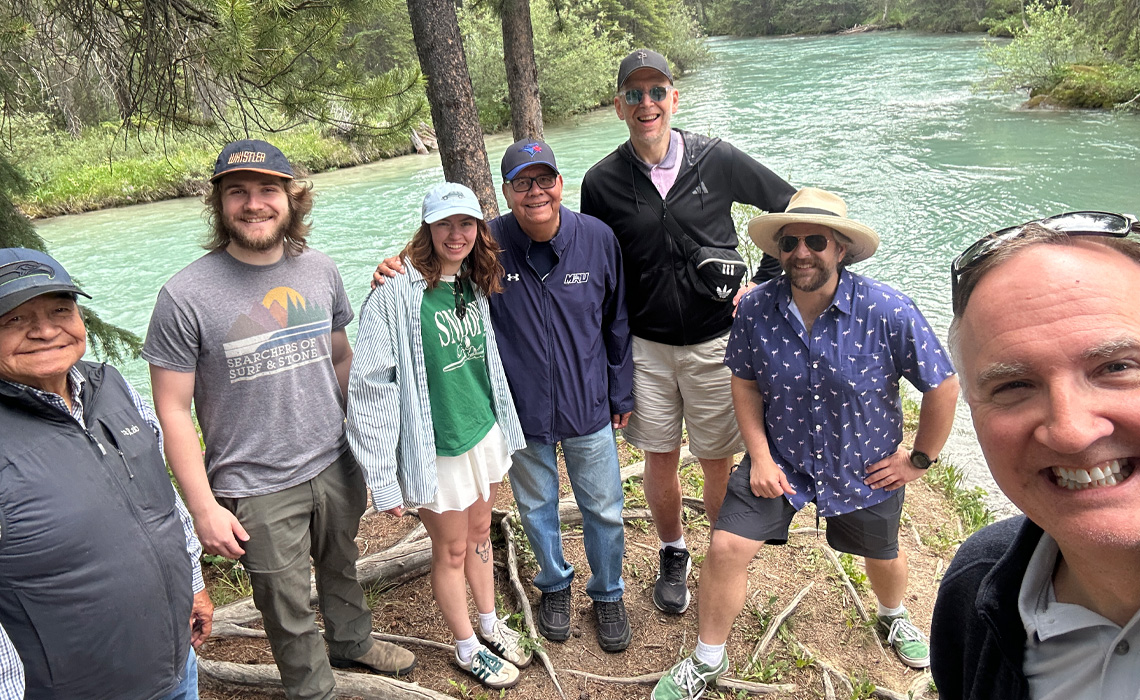
For Borg, that sense of connection was one of the most powerful outcomes. “I’m really thankful to be part of a community that supports Elders like Roy and Hayden — and for our Elders to trust us with bringing their teachings to this medium,” he says. “That trust reminds me this work isn’t just about filmmaking, it’s about relationship, reciprocity and care.”
Over five full days of filming, the group logged around 20 hours of footage, eventually refined to a 15-minute film.
Borg adds that the process brought together far more people than the crew alone. “This project required coordination with Blackfoot Crossing Historical Park, Siksika Nation, Head-Smashed-In Buffalo Jump and Parks Canada in Banff,” he says. “Everyone we met opened their doors with such generosity. We made relatives at every one of those places.”
For Price, the experience was deeply personal. “It’s amazing to have Elders that work with Mount Royal who are willing to work with our programs, get to know students, and support faculty and staff. It is just so honouring,” he says.
Meaning and legacy
As the laughter and long days of filming came to an end, a deeper sense of meaning emerged for everyone involved. For Bear Chief, Nitakit carries on the ideas first shared through Ani to Pisi, the “human spiderweb” that connects people, place and purpose.
“It is an extension of Ani to Pisi,” he says. “It extends to all these areas we went to; there’s no disruption in the web.”
He sees the film as more than storytelling — it’s an act of education and continuation. “It’s about learning, educating. There’s more to a land acknowledgement. It allows a further interest into it,” he says.
For Price, the experience was both personal and profound. “When we started the project, I didn’t know I was leaving MRU,” he says. “But then, as things developed, it became one of my last projects here — a final opportunity to promote reconciliation, support students and work with Elders I deeply respect.”
He adds that the film’s purpose goes beyond the screen. “There’s so much that we could learn by just being with Elders, being with community members of the various nations in Treaty 7, and across Canada, in both treaty and non-treaty territories, and just creating a relationship that allows for the conversations,” he says. “In the movie, we’re talking the whole time.”
To Bear Chief, the project’s sentiment runs even deeper. “This one is very sentimental, as Steve is no longer at MRU, so it was the last project Hayden and I did with him,” he says. “It’s fitting that we were able to teach him more about Blackfoot culture with specific spaces.”
See it at ETOL Film Night
The film will premiere at the 25th annual ETOL Film Night, a celebration of storytelling and adventure hosted by fourth-year ETOL students at the Bella Concert Hall.
Each year, the event showcases short films exploring outdoor pursuits, leadership and our relationship with nature. Proceeds support the Allan Derbyshire Student Fund, which helps ETOL students cover costs for expeditions and certifications — experiences that turn classroom learning into leadership in the field.
This year’s event will also mark the presentation of the first Zane Halperin Legacy Award, a new endowed scholarship that recognizes an ETOL student who demonstrates leadership and mentorship within the program.