 MENU
MENU



Gaining valuable work experience as a student
Youth unemployment numbers in Canada are bleak, sitting at just 14.7 per cent in September of 2025. However, the federal government is promising to continue supporting youth through several initiatives, such as the Canada Summer Jobs wage subsidy and Student Work Placement Program.
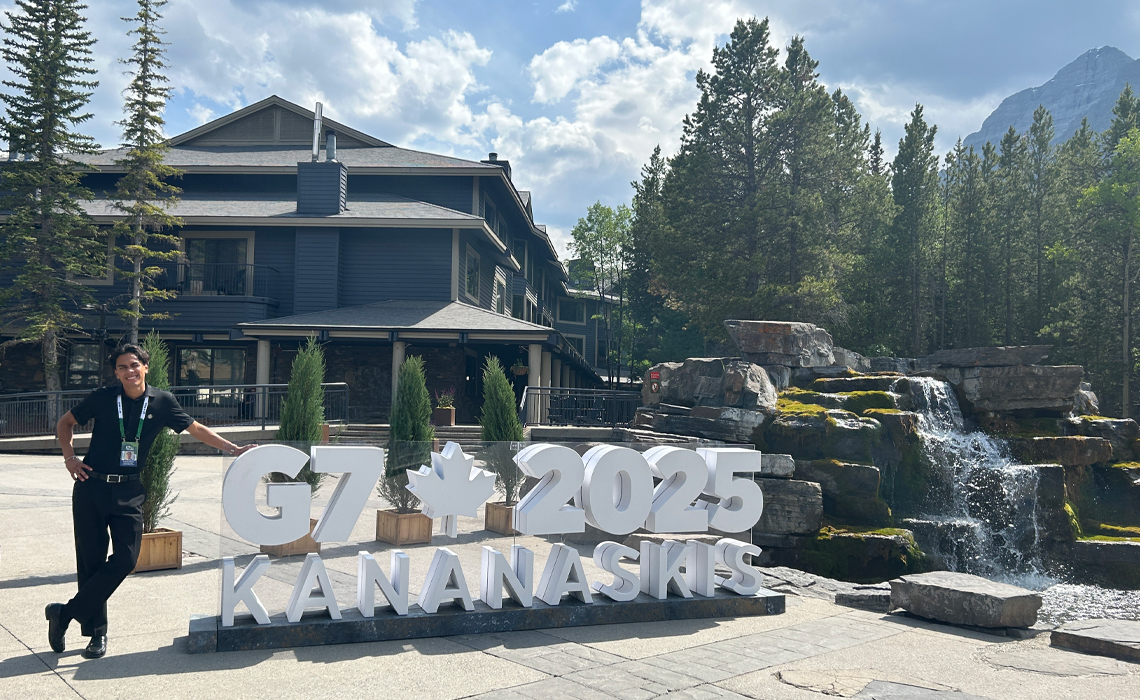
It was through one of those programs that fourth-year Bachelor of Business Administration – International Business student Gerardo Soriano had the opportunity to take part in the G7 Summit in Kananaskis over the summer. He secured his summer student internship opportunity through Global Affairs Canada.
Soriano says he has always had a passion for connecting across cultures and has worked in a variety of customer service roles. Thanks to his previous experience working at a local Earl’s, Soriano had the skillset for what he was about to take on, but he admits he couldn’t fully prepare for the job until arriving on-site.
“The funny thing about it was that none of the students knew anything about what we would be doing until we got to Kananaskis because it was, of course, very confidential,” he says.
His role ended up being within the Summit operations team. Everyone working and attending the Summit had designated venues and restaurants for their meals. This included a large number of people, such as international politicians and delegates, police and RCMP members, hotel staff, and countless others. Soriano’s role was to be in charge of an entire dining venue for one of those groups.
“For the most part, I was assisting with logistics, guest co-ordination, and helping delegates navigate the venue. I was also responsible for ensuring that everything ran smoothly on the ground, from welcoming international delegates, including greeting VIP’s, to answering delegate questions, ensuring schedules were followed, logistics with the venue, and of course, things that cropped up at the last minute.”
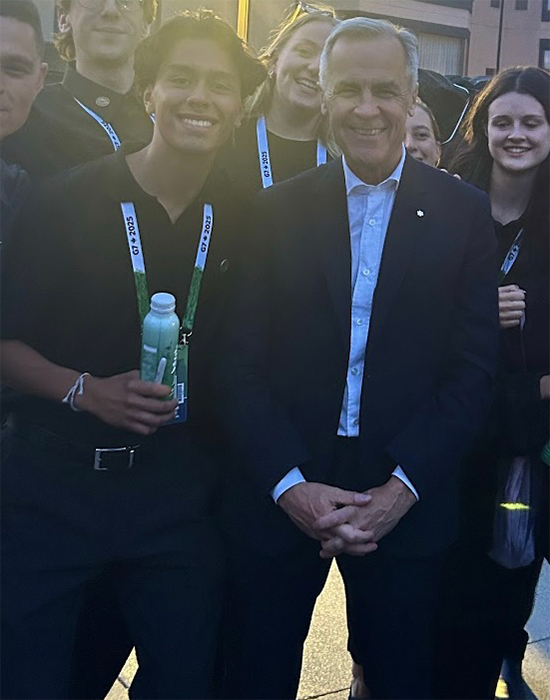
Soriano says his Spanish language skills, international business background and work experience all contributed to making him a great fit for the job. He even got to meet Prime Minister Mark Carney during his internship.
“My eagerness to learn and ability to stay calm and professionalism in high-pressure environments also helped me on the job,” skills he says he has honed and developed through both work and school.
“As an international business major, I’ve picked up both the classroom knowledge and the hands-on skills I needed to step into such a fast-paced, international setting,” he says.
“The courses in global trade, marketing and cross-cultural management gave me a good grasp of how countries and organizations work together, and a lot of my classes focused on real-world projects, teamwork and presentations. That kind of applied learning made it easier to jump in and feel confident during the Summit.”
Soriano says one of his biggest takeaways was learning about himself and what he enjoys in the workforce. Especially as he prepares to graduate in the spring of 2026.
“At first, I was intimidated because it was such a huge event, and I didn’t know what to expect. But once I got into the role, I saw how important it is to stay adaptable, calm and professional no matter what’s going on around you.”
As he returned to school for the fall semester, he was able to reflect on his time at the G7 and the confidence it instilled in him.
“If I can handle welcoming world leaders and making sure operations run smoothly at an event like the G7, I know I can handle presentations, deadlines and team co-ordination at school. It also motivates me to take more advantage of opportunities outside the classroom, whether it’s internships, international exchanges, or networking, because I’ve seen first-hand how much those experiences prepare you for real-world careers in international business.”
Another MRU face at the G7
While Soriano was busy ensuring the food venues ran smoothly, Dr. AnneMarie Dorland, PhD, an associate professor with the Bissett School of Business, was charged with managing media activity on the ground in Kananaskis and in Calgary.
Having an extensive background in corporate communications and media relations, Dorland was a perfect fit for the role. When she was asked to take part in the Summit, she didn’t hesitate to say “yes,” noting that it was incredible to be a part of a major global event and see the inner-workings of the G7 up close.
“I was managing media movements, which means that when bilateral talks are organized between national delegations I was co-ordinating which media were granted access, ensuring that they were accredited and passed through security, and facilitating the protocol requirements for the diplomatic partners.”
In doing that work, she had a pivotal moment with the South African media team. Dorland was escorting them back to their security zone, noticing the photographer was visibly shaken.
“I asked how he was, and he replied that his time in the bilateral talks taking the photos of the meeting between the Presidents of South Africa and South Korea would be one of the most important moments of his life. He shared that it is only through photographs that history becomes reality for the world, and that he was the vessel through which that transformation happened,” Dorland explains.
“It made me think so differently about media engagements, and about the role of journalists in an event like the G7.”
Seeing so many nations come together was an incredible experience, Dorland says.
She recognizes what a valuable experience Soriano and herself had, and encourages students to keep their eye out for opportunities with the many federal government programs.
Tips for students on the job hunt
Dr. Leda Stawnychko, PhD, an associate professor of Strategy and Organizational Theory with the Bissett School of Business, has a strong interest in helping students navigate their entrance into the workforce. Earlier this year, in an article for The Conversation Canada, she outlined four strategies for Gen Z struggling to find work. Those strategies include thinking beyond traditional pathways, building core skills that matter, investing in future-ready capabilities and building meaningful connections.
Stawnychko emphasizes the importance of gaining experience, even when the job market feels uncertain.
“Focus on what you can control: your relationships, your learning, and the small steps that create momentum over time. Reach out to people in your network and ask them for support and advice,” she suggests.
“Take the initiative and have a goal of connecting meaningfully with someone new every week — and use LinkedIn. My own research shows that connections are one of the most effective ways to access opportunities for development and career advancement.”
Stawnychko also points out that it is important for organizations to invite students to join them, whether it is a summer work program or an internship opportunity.
“Students bring fresh energy, new perspectives and digital fluency to the workplace,” she says. It is, of course, mutually beneficial, as students gain confidence, build networks and earn practical experience that will help them succeed after graduation.
Stawnychko highlights her own philosophy when it comes to working with students. She explains, “I partner with students to co-create knowledge, reduce power differentials and build reciprocal learning relationships. My student collaborators often describe the experience as confidence-building and professionally transformative. For some, this is the first time they’ve felt seen as an equal contributor, not just a learner or subordinate, and that has translated into new and exciting professional paths.”
For students who might be feeling discouraged, Stawnychko emphasizes that it is normal to feel that way, especially in a trying job market. Furthermore, she notes, non-linear pathways are not detours.
“They are increasingly valid entry points into meaningful work. Things like side projects, community involvement and volunteer work may not look traditional, but they develop core skills and networks that employers value.”
She also points out that we are living in rapidly changing times. Canadians are living longer, and careers are spanning over more decades than ever before.
The traditional path of school-work-retirement is no longer the norm, Stawnychko says. “Much of what we learn in our degrees will likely become outdated before we retire. What matters most is cultivating lifelong learning habits and surrounding ourselves with people who support us, but also help us grow.”
Even if that doesn’t look like the traditional kind of work experience, she says it is important to take advantage of opportunities you have.
“If you have the option, try to visit a relative or friend in another country and learn about their way of life. Experience staying at a hostel, in another province or country, and stay open and curious about the many interesting people you will encounter. I have made extremely rewarding lifelong relationships this way.”