 MENU
MENU



All eyes on the Arctic
The world finds itself in tumultuous times, and not even the frozen Arctic is safe from the upheaval. Recent political maneuvers regarding the sovereignty of Greenland, combined with musing over Canada becoming the 51st state, have brought the Arctic into an unexpected spotlight.
However, this recent development is just one in a crop of threats, both old and new, that are posing challenges for Canada’s most remote region.
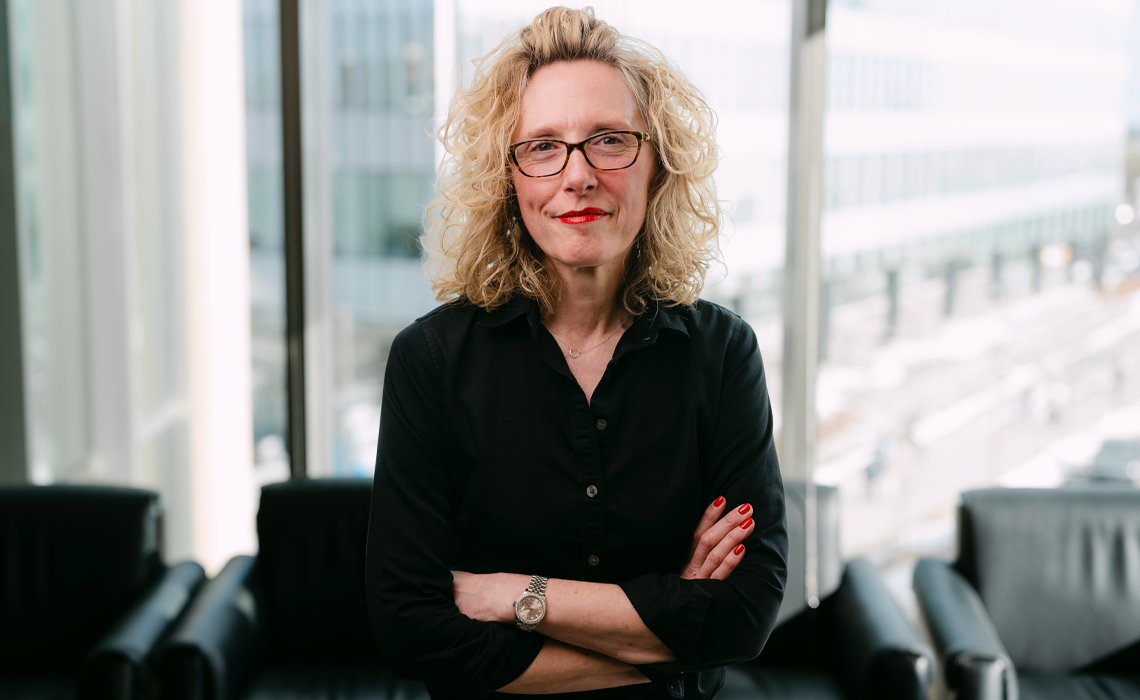
Mount Royal University professor and scholar Dr. Kari Roberts, PhD, is stepping up to help Canadian decision makers grapple with these challenges.
Roberts is chair of the Department of Economics, Justice and Policy Studies, an expert on Russia-U.S relations, specifically in the context of the Arctic, and is co-lead of the North American Arctic Defence and Security Network (NAADSN). This network of scholars, funded by the Canadian Department of National Defence, conducts research and provides expert policy advice regarding issues affecting Canada’s North.
NAADSN is focused on tackling three core policy challenges: The defence of the Arctic, defending North America and the realities of strategic competition globally and how that affects Canada.
While the straining tensions between the U.S and the rest of the world are at the forefront of attention right now, Roberts’ scholarly interests are typically focused on Russia.
As a student of international relations in the ’90s, Roberts grew her scholarship on post-Cold War Russia and its relations with the West.
Roberts’ interest in Russia’s Arctic endeavours began when Russia planted a titanium flag on the seabed of the North Pole in 2007. This symbolic claim to the Arctic caught Roberts’ — and the world’s — notice, and her research has been focused on Russian Arctic policy ever since.
Roberts says that Russia has been ramping up militarization in the Arctic over the past 10 to 15 years. This, combined with Russia’s annexation of Crimea and its invasion of and war with Ukraine, has sparked major concerns around Russia’s intentions in the Arctic.
Roberts points out that the Arctic is critical to Russia’s economy, to an extent that many may not realize.
“Russia is the largest Arctic nation. There are 2.5 million Russians who live in the Russian Arctic. Russia has major industrial cities in the Arctic. The Russian Northern Sea Route is critical to Russia's energy dominance. It is critical to its economic growth, future and strength. It is critical in terms of its geopolitical positioning,” Roberts says.
The Arctic is a high-stakes economic endeavour for Russia, Roberts says, which can explain its behaviour in the region. As an NAADSN advisor, she hopes to bring this context to decision makers and provide a critical perspective on Russian foreign-policy decisions in the Arctic.
Despite these rocky geopolitical relationships, Roberts says that NAADSN is also working on an even larger existential threat: Climate change.
When discussing Arctic security, one might immediately gravitate towards military issues, but Roberts states that climate change is one of the most serious security threats the Arctic faces today.
“In the public domain, we don't frame climate change as a security problem. Security tends to be this hard, military focus. How do we protect our sovereignty, whether it is from the Russians or from becoming the 51st state? But climate change represents a serious challenge to northern communities. And this has been the main focus of our network.”
Rising sea levels, melting ice, soaring temperatures, food insecurity and loss of ecosystems that support northern communities are all catastrophic shifts in the Arctic world that, in many ways, pose a more immediate threat than Russia or the U.S.
Roberts points out that NAADSN’s three core policy challenges are all tied together by the changing climate. In addition to working with the federal government, NAADSN works to bring territorial governments and Indigenous communities together to identify challenges and find solutions to the issues that affect the security of everyone living in the Arctic, operating in the spirit of “nothing about us without us.” Roberts stresses that a holistic approach must be taken to Arctic security, and while it can be easy to focus on the militaristic threats, it is important to not lose sight of the challenges faced by Arctic communities, and essential to ensure their partnership in driving the Northern security agenda.