 MENU
MENU



Finding peace and healing
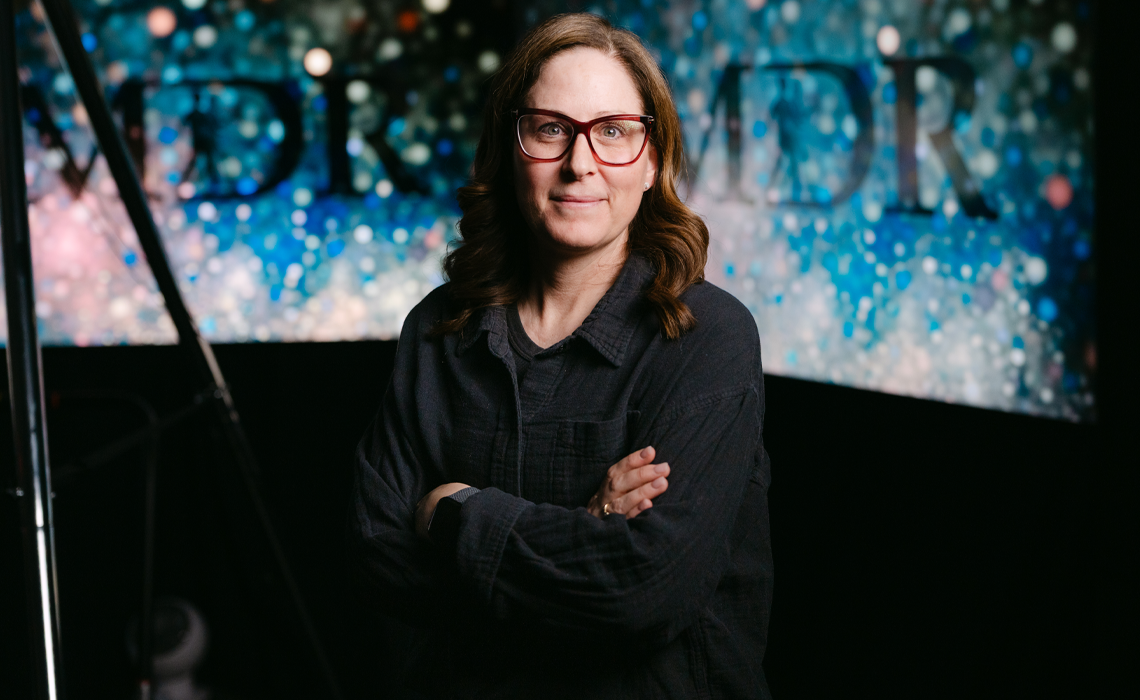
From the start of her nursing career, Dr. Katherine Bright, PhD, has been dedicated to addressing women’s mental-health concerns across lifespans, with a career in mental health spanning more than two decades.
Bright’s research focuses on improving care for women experiencing trauma and mental-health challenges during pregnancy and the postpartum period. She works with women who experience severe anxiety, post-traumatic stress and psychological distress following difficult or traumatic births, with the goal of developing therapies that are both effective and accessible.
To advance therapeutic practices, Bright has adopted Multi-Modal Motion Assisted Memory Desensitization and Reconsolidation therapy (3MDR).
3MDR is an emerging trauma therapy that combines virtual reality, motion-assisted therapy and personalized sensory cues (photos and music) to assist in treatment. This approach is designed to help support emotional processing of traumatic events by splitting the patient’s attention between different tasks, so they are not exclusively focusing on their traumatic memories.
3MDR has shown its effectiveness in reducing PTSD, depression and anxiety, primarily in veteran populations, but also in first responders. Studies from the Netherlands, the U.S. and Canada suggest that 3MDR is well-suited for expanding to more diverse civilian populations.
“When people do trauma therapy, it can sometimes be really challenging for them to sit in that place of discomfort. They can almost get swallowed up, overwhelmed and they can dissociate. 3MDR helps them to stay in their body. They are moving and still processing. So, they have to be dividing their attention up, rather than shutting down,” Bright says.
Bright’s current research project on assessing the effectiveness of 3MDR is currently in pragmatic clinical trials. Bright is employing it with a wide range of trauma patients, including women who have experienced traumatic pregnancies or births. Early findings from the clinical trials suggest that the therapy may help reduce symptoms of PTSD, depression and anxiety, while helping improve the patient’s interpersonal relationships and daily functioning.
The process starts with Bright building rapport with the patients to better understand who they are and what their experiences have been. Patients then select photos and music that represent the traumatic experiences they will be working to unpack.
“We try to put these pictures into a story. The story could be about a particular place or time. It could include people in it. But we want to map the story out a little bit for them. We rate each picture based on how intense they think the picture will be, and then we map it out. We want it to be a natural story for them to tell with us,” Bright says.
Once the assessment sessions conclude and photos are selected, the treadmill comes into play. Patients are guided through the pictures as they walk, while simple computer graphics display open fields of blue and dark hallways that act as intermissions between the photos. At each stage, patients process the distressing memories associated with the photos. Following each image, patients complete a dual attention task to reduce the vividness and emotional intensity of processing the images.
Once the session is over, Bright helps the patient unpack what they went through, discussing observations, insights and emerging themes. This time also involves assessing the patient’s mental health and planning for supports and self-care between sessions. This process is repeated over six to eight sessions.
While the procedure seems simple, Bright says the results in the pragmatic trials have been very promising.
“There's a natural arc to the sessions. We start at a slow and tolerable pace, and then it gets more intense. And that feeling of dipping your toe into the intensity and then coming out, starts to be something that they replicate in their everyday life.”
Bright continues, saying, “I think we also see a lot of improvements when it comes to the relationships that they have with their families. They had pulled away from people who had been supports before. Now they are realizing that people can be safe.
“We have family members who say this changed everything. My partner is back, my father is back, my spouse is back. I feel like they are able to pick their life back up.”
In addition to her clinical research in Calgary, Bright is part of an international consortium working to advance 3MDR therapy. The interdisciplinary group includes psychiatrists, occupational therapists, nurses and computing scientists to improve its effectiveness. Bright notes that the consortium is now planning to incorporate virtual reality technology into 3MDR to help patients on their healing journey, and she aims to be part of the journey of continually improving the technique.