 MENU
MENU



Arts Care 2026
On Friday, April 2, Mount Royal University Conservatory hosted Arts Care 2026: The Art of Social Prescribing. The fourth-annual conference welcomed more than 90 artists, physicians, nurses, social workers, link workers, galleries, arts administrators, foundations, and advocacy professionals from across Alberta and as far away as Toronto.
Hosted by the Conservatory’s director, Dr. Terry Clark, PhD, and facilitated by Dr. Neta Spiro, PhD, of London, U.K.’s Royal College of Music’s Centre for Performance Science, this year’s event focused attention on the use of the arts in social prescribing.
Social prescribing is a growing process used to address social determinants of health, which include things like income, education, social inclusion and support. Collectively, these socioeconomic factors are known to contribute to individual and community physical and mental health.
Social prescribing connects individuals to non-clinical, non-medical supports as a means of improving health and well-being through connection. In Canada, the arts have not yet been widely adopted as a social prescribing pathway. Internationally, however, there is a vast and growing body of evidence supporting the arts as part of social prescribing. Moreover, evidence points to the vital role of the arts in supporting health and well-being outside the sphere of social prescribing.
In the United Kingdom, where social prescribing has its roots, the arts are widely included. So, too, in the United States. Social prescribing is relatively new in Alberta and is only offered to adults over 55 who tend to have multiple significant health and socio-economic needs. As such, social prescribing leans heavily to income management education and support, connecting to social programs offered at senior centres. Connection to the arts is typically incidental. With this knowledge, the conference sought to ask: what might we gain from including the arts? What might integration of the arts in social prescribing offer? What transcultural opportunities might we address via the arts?
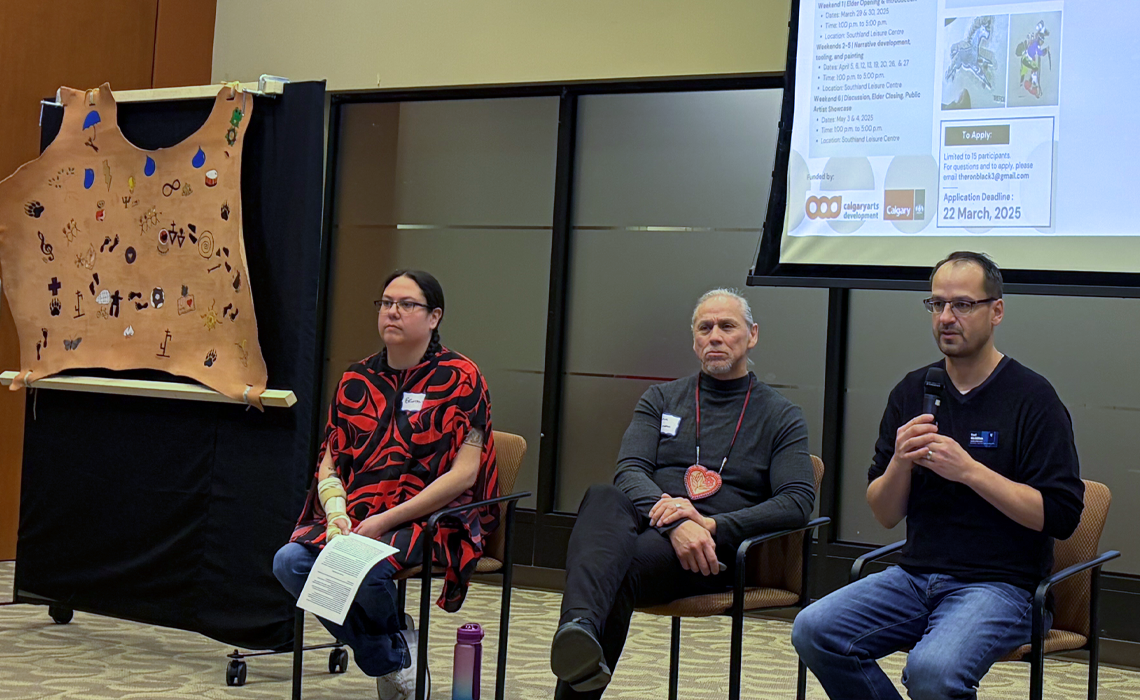
As in past years, the conference opened and closed with guests from MRU’s Iniskim Centre. Dion Simon, Naato’ohsokay, Medicine Trail coordinator kindly honoured attendees with an encouragement song, and Jesse Pelletier closed with a round dance. Pelletier is a proud member of the Siksika Nation, Treaty 7 Territory, east of Moh’kins’tsis. Pelletier is a knowledge keeper, traditional hand drum musician and singer. He has shared the gift of his music throughout Alberta.
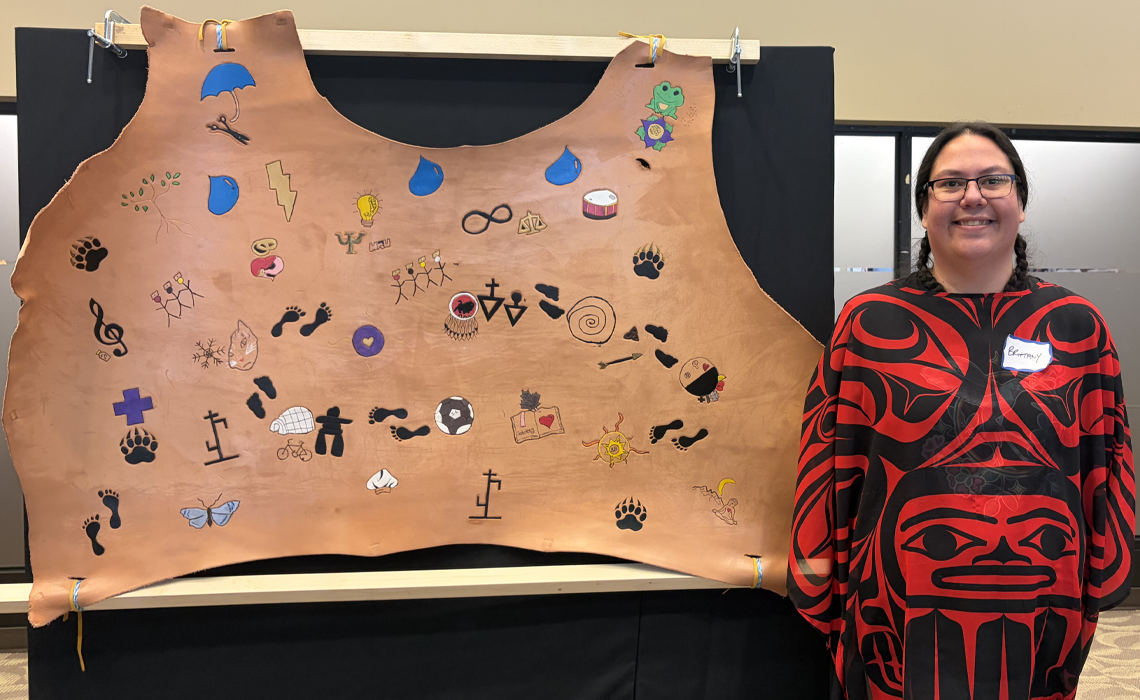
Thanks to Simon, and Iniskim’s director Tory McMillan, the conference was very pleased to welcome Brittany Ettagiak, who is enrolled in MRU’s child and youth care studies degree, as its first student speaker. Ettagiak shared her experience and the value of reconnecting with her culture as a member of the Piikani Nation through her creation of her Winter Count. Simon provided background insight into the integral role of art and music in Indigenous healing pathways, leading up to global applications.
Interspersing panel discussions and roundtable conversations, delegates had ample opportunities to network, explore opportunities and challenges, focusing on how to better integrate arts in social prescribing and health care. Representatives from the Canadian Institute for Social Prescribing, the Calgary Adapted Hub (which is chaired by MRU’s David Legg, PhD), MRU’s Iniskim Centre, Alberta Ballet, the Rozsa Foundation, the Canadian Centre for African Immigrants Movement Research Society, Healthy Aging Alberta, and Edmonton Seniors’ Coordinating Council presented information on client interactions, Indigenous and multicultural perspectives, and building meaningful collaborations poised to balance resources with client needs.
With an aim of looking to the future and next steps, participants indicated wide interest in building community of practice networks and exploring next steps to more fully integrate the arts in existing social prescribing endeavours as well as expanding arts in health offerings across the lifespan. The Arts Care Hub looks forward to continuing relationships to build out these partnerships and collaborations. The conference agenda, bios, and more is available online. For more information about the work of the Arts Care Hub or to join the distribution list for the Hub’s newsletter, please contact Lisa Collins via email at LCollins@mtroyal.ca.