 MENU
MENU



Dining by design
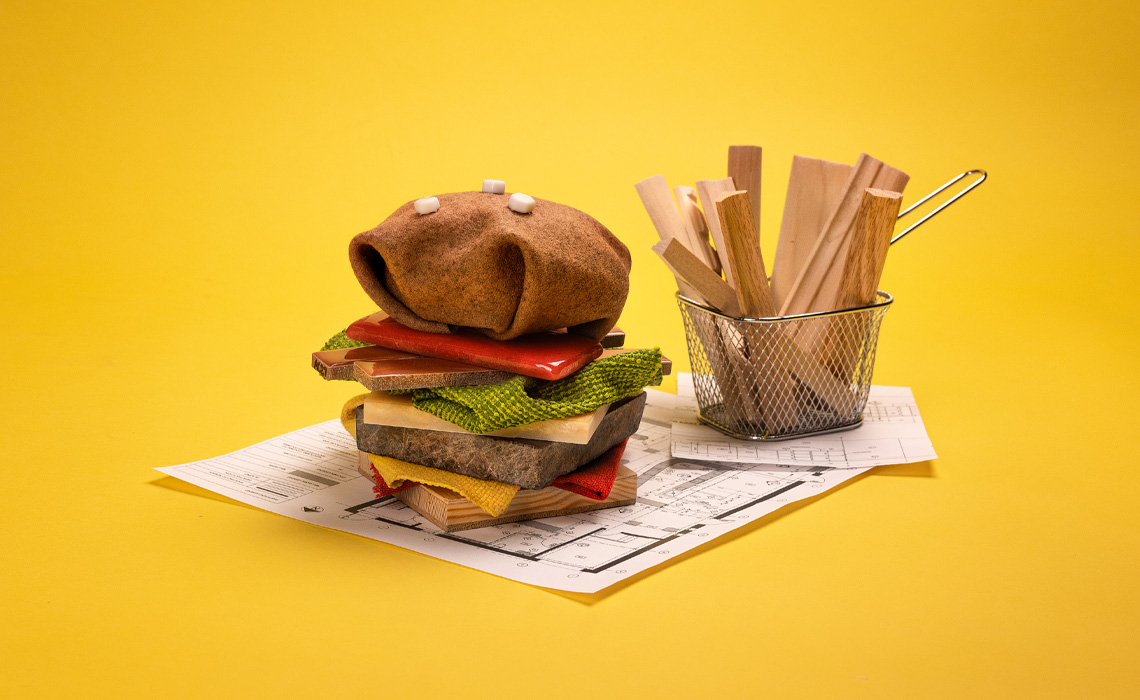
Calgary is hungry. Not just for food, but for environments that draw you in and make you want to stay awhile. With nearly 3,800 restaurants across the city (about 2.9 for every 1,000 people), Calgarians are showing up and dining out.
On average, 44 per cent of Calgarians’ food budgets are spent on meals outside the home, helping local restaurant spending increase by 7.5 per cent annually over the past five years. That’s the fastest growth rate among Canada’s major cities, outpacing Toronto, Vancouver and Montreal.
But behind the boom lies a fragile industry.
Industry association Restaurants Canada reported that in early 2024, more than 60 per cent of restaurants were losing money or barely breaking even.
In a climate of fierce competition and tight margins, what’s on the plate is only part of the story. Increasingly, a restaurant’s staying power depends on what surrounds the meal: lighting, layout, acoustics and how staff and guests move through the space.
That’s where design comes in. More than just décor, it’s the invisible architect of experience.
Some of Calgary’s most talked-about hospitality spaces come from the studios of three MRU interior design alumni: Sarah Ward (2004), Amanda Hamilton (2005) and Landon Anholt (2010). Their styles may vary, but the throughline is unmistakable: each designer creates spaces that feel good and function beautifully.
Together, they’re shaping how Calgary eats, drinks and connects, one intentional design choice at a time.
Experience at the core
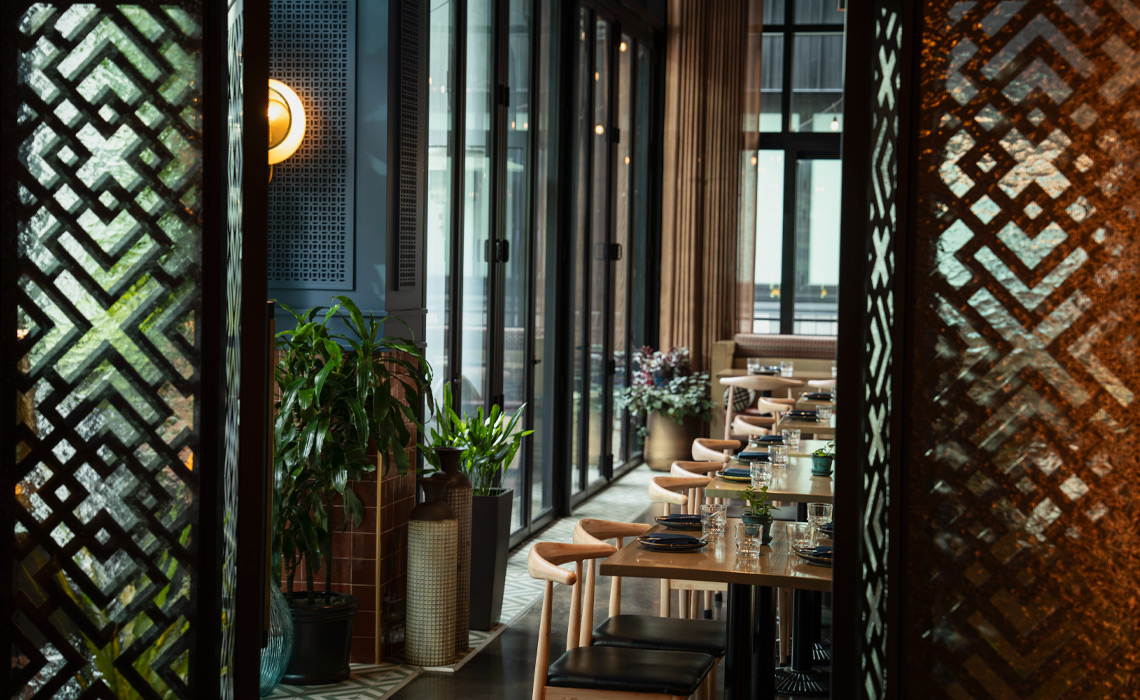
“My mom still thinks I just pick things like paint colours,” laughs Anholt, co-founder and principal designer at Way of Normal, a Calgary studio specializing in food and beverage design.
It’s a common misconception. Interior design is far more than decorating — it’s a technical profession that bridges architecture, spatial planning, construction and human psychology. In restaurants, that expertise comes alive. Designers don’t just select finishes. They map how people move, how the back-of-house connects to the front and how a kitchen functions efficiently.
“Restaurants are one of the most complex projects an interior designer can take on,” says Ward, who launched Sarah Ward Interiors in 2013. “You have to make sure the kitchen works, the staff can move efficiently and that the whole guest experience flows.”
Anholt estimates about 80 per cent of the work comes down to co-ordination. “Plumbing, structure, mechanical, audio-visual … It's an intricate dance. If you don’t do it right, you can tell right away.”
Hamilton, who started Amanda Hamilton Interior Design in 2009, likens the process to a puzzle, one that balances practical constraints with creative intent. “I love figuring out how to best use space. How to make it both aesthetically beautiful and super functional? It’s incredibly intellectually challenging.”
It’s part science, part performance, with creativity woven throughout. When it’s done well, the result feels seamless, and Calgary’s top designers know this better than anyone.
Designing with drama
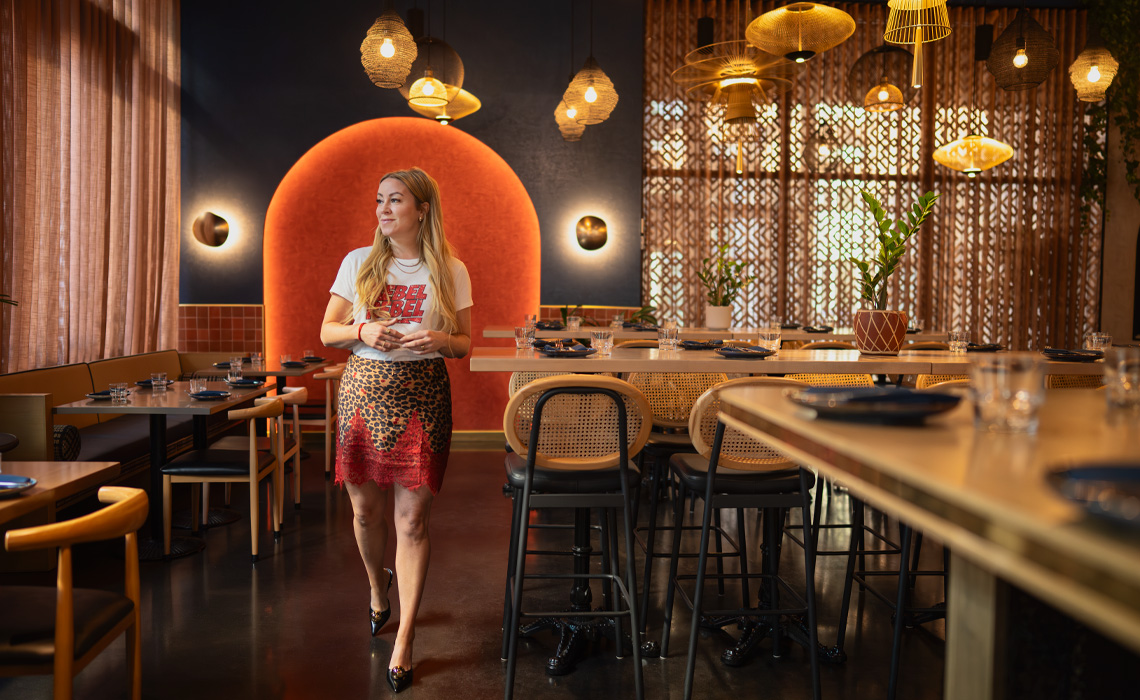
With a background in art and musical theatre, Hamilton brings a flair for storytelling and performance to every project. “I’m less interested in transactional relationships and more in the client’s vision. If a client is thoughtful, collaborative and open, that’s when projects come alive,” she says.
The process begins with understanding the people who will inhabit the space. “I don’t want to be presumptuous about what somebody wants,” she says. “I want to understand who the end user is. Who are the people coming in, and what feeling do we want the space to embody?”
While her studio works across sectors, hospitality holds special appeal “It’s where you can be the most theatrical and concept-driven,” she says. “Residential projects lean toward timelessness and practicality. But in hospitality, you can take more risks. You can be bold, even a little provocative.”
That might mean a massive wall mural or a washroom done top-to-bottom in bright pink, like Hamilton’s playful strawberry cream cheese walls at Booyah Bagels in Red Deer. Those stand-out loos have become a signature. “It’s kind of our calling card. I love when someone comes back to the dining table and says, ‘The washrooms are so cool. You need to check them out. Bring your phone.’ ”
But it’s not about flash for flash’s sake. “Clients are investing in the emotion someone else is going to feel when they go into a space,” she notes. “It might be someone’s only night out that month. So it has to feel special. It has to feel like an experience.”
Even when a project is more technically complex, that same philosophy applies. Rodney’s Oyster House, located in a historical building, required a careful balance between code compliance and honouring the original character. “Figuring out how to make it flow beautifully while maintaining the heritage details was incredibly satisfying,” she says. “I really loved thinking about how we could respect the building’s roots while also making it functional for today.”
Hamilton’s approach of blending narrative, drama and careful spatial planning forms the backbone for every project. Her philosophy is clear: a space should tell a story, delight the senses and serve its function with ease.
Visions worth investing in
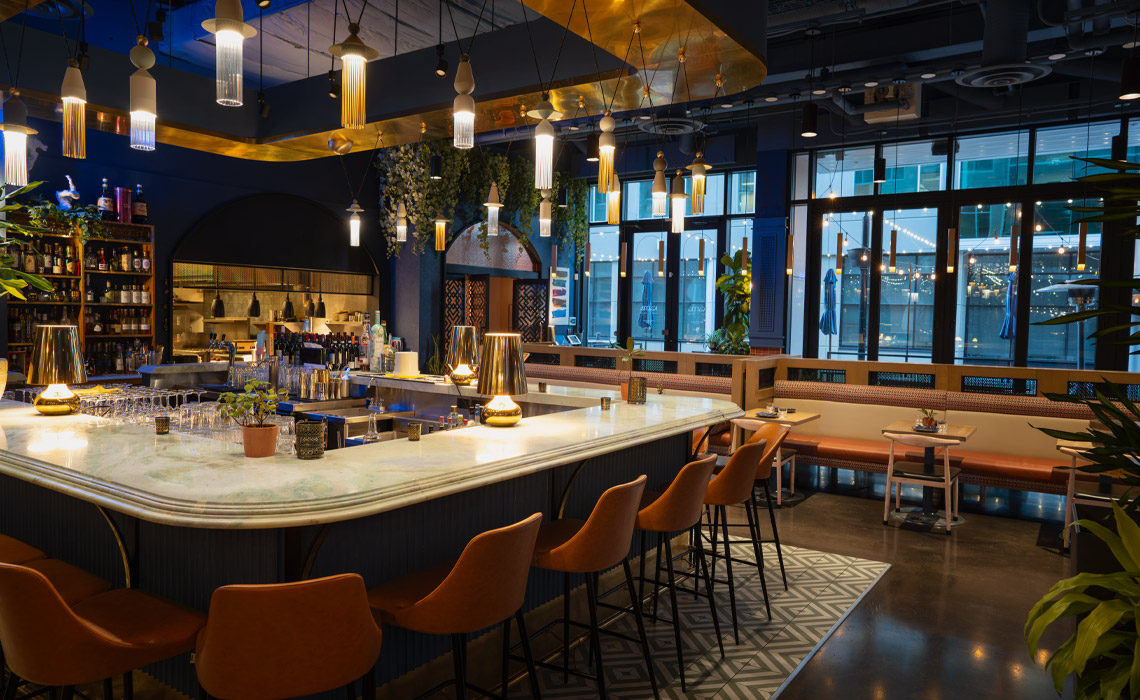
What makes a restaurant design truly memorable? For Hamilton, it starts with the food.
“The best restaurants are those where chefs or restaurateurs have a strong idea of the menu,” she says. “Without that, food and design can feel disconnected.”
At Kama, a modern rustic Mediterranean restaurant, chef Kenny Kaechele was engaged from the beginning — a collaboration Hamilton relishes. “It’s my favourite when the chef is involved. It makes our process of developing the concept so much easier.”
The space draws on the vivid colours, textures and energy of Moroccan marketplaces and the broader Mediterranean region. Lighting, finishes and furnishings echo the menu’s global flavours, and both the bar and kitchen are featured as focal points. “It creates energy and a symbiotic relationship between food and beverage, perfectly aligned with the concept,” Hamilton says.
In 2022, Kama earned a masi Design Award for its flawless integration of concept, function and atmosphere.
Native Tongues Taqueria in Victoria Park presented a different challenge: making a commercial space feel like it had always belonged. The 1,950-square-foot restaurant pulls from Mexico’s colourful culture, blending locally reclaimed materials with new pieces for a sense of history.
“We didn’t want it to feel like a designer was involved,” Hamilton explains. “We kept the finishes raw, rustic, nothing that would feel too trendy or overdesigned.” The goal was a space that felt like it had evolved over time at the hands of the owner, and nearly a decade later it remains a favourite in the city.
“People are seeing the value in working with interior designers to create something special,” Hamilton says, adding that she’s noticed restaurateurs becoming more willing to embrace bold design. “They’re stepping outside their comfort zones and imagining what’s possible beyond the expected.”
Built for the long haul
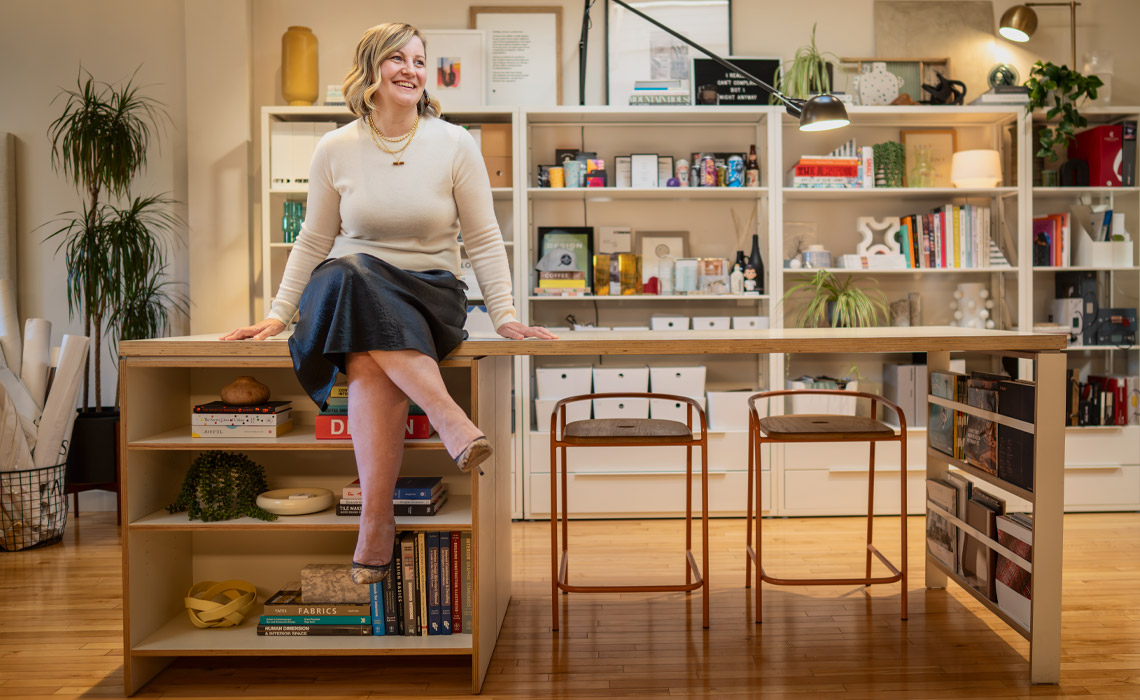
Designing for longevity, not just opening night, is always top of mind for Ward. “The way I view sustainability is really in how we build the business for the client,” she says. “We want a restaurant to have at least a 10-year runway before anyone needs to think about major updates.”
That means being mindful of trends and deliberate about materials that won’t date or deteriorate quickly. “Wherever possible, we work with local millworkers and Canadian manufacturers. That’s part of the sustainability story, too,” she adds.
It’s a mindset that guided her work on The Nash, which opened in 2014 inside Inglewood’s historic National Hotel. For the client, a seasoned restaurateur, this was going to be his final project. “It had to encapsulate everything he’d learned in his 40-year career,” Ward explains.
To capture that sense of permanence, Ward and her team spent months defining what “legacy” meant for the client. The palette drew from the building’s history: natural wood, marble and reclaimed materials, including boxcar planks from the nearby railway.
In the Offcut Bar — the Nash’s speakeasy-style counterpart — old radiators were repurposed as table bases, while archival mug shots of Calgary criminals, discovered through a British Museum research project, now line the walls. “That project had such a strong narrative,” she says. “We loved uncovering those stories and weaving them into the space.”
Another of Ward’s enduring designs, Alumni Sandwiches on 17 Avenue S.W., proves that even small spaces can have a big impact. Completed in 2018 in an old Subway location, the project transformed a generic fast-food shell into a fast-casual spot with a splash of cocktail culture. The narrow floor plan is used with precision: a raised diner-inspired bar, custom wood-slat seating and retro tile flooring that nods to nostalgia.
“I loved working on Alumni because the concept was simple, but also something the city really needed,” Ward says. “When owners come to us with ideas like that, instantly we know it’s going to be a hit.”
Nearly eight years later, Alumni still pulls a steady crowd and continues to land on Avenue Magazine’s best sandwich lists. “People feel comfortable in that room,” Ward says. “They love going there, and they go back again and again. That’s really rewarding for me as a designer — knowing we helped build something lasting for the client.”
Details that matter
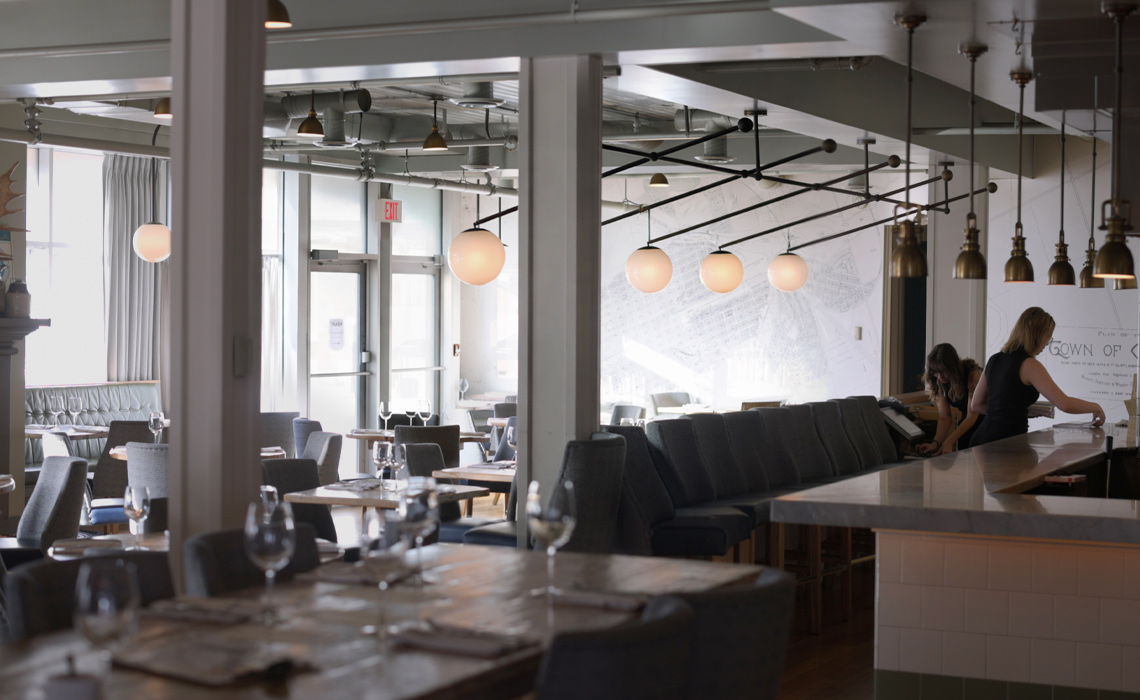
Ward says much of the magic in hospitality design comes down to the things people never notice — and that’s intentional.
Cleanability is one often-overlooked priority that influences everything from material choices to lighting. “As beautiful as a space is, you have to be able to scrub it down,” she says. “People love a moody, ambient space at 9 p.m., but when the cleaning staff arrive at 5 a.m., it needs to be fully lit.”
Thoughtful lighting, she admits, is her non-negotiable. “It’s the hill I’ll die on for every project,” Ward laughs. She approaches it like choreography, ensuring light glows where it should, bounces softly where it needs to and transitions throughout the day. A well-placed dining light can cast a warm, contained pool that lets guests read menus and admire their food without flooding the room. But she’s equally focused on maintenance. “If you’ve installed this beautiful fixture that’s 20 feet in the air and full of bulbs that go out all the time, that’s an operational problem,” she says. “It has to work beautifully and function day to day.”
Sound is another invisible but essential ingredient. “You want the energy of conversation and music, but too much can be exhausting,” she says. At Offcut Bar, Ward used velvet curtains and upholstered banquettes and chairs to absorb sound while maintaining atmosphere. “You can still have a space that’s buzzy and ambient without shouting across the table.”
Even the way staff move through a space is mapped with precision. “If a server has to walk 20 steps to punch in an order, that’s a lot of wasted time in a busy service,” Ward says. “We try to build in seamless service touchpoints so things happen faster and feel more natural.”
When those details are done well, the space simply works. Guests don’t think about where their server disappears to, why the room feels comfortable or how the light shifts across the evening. And that, Ward says, is the mark of great hospitality design. It just feels right.
Pushing boundaries
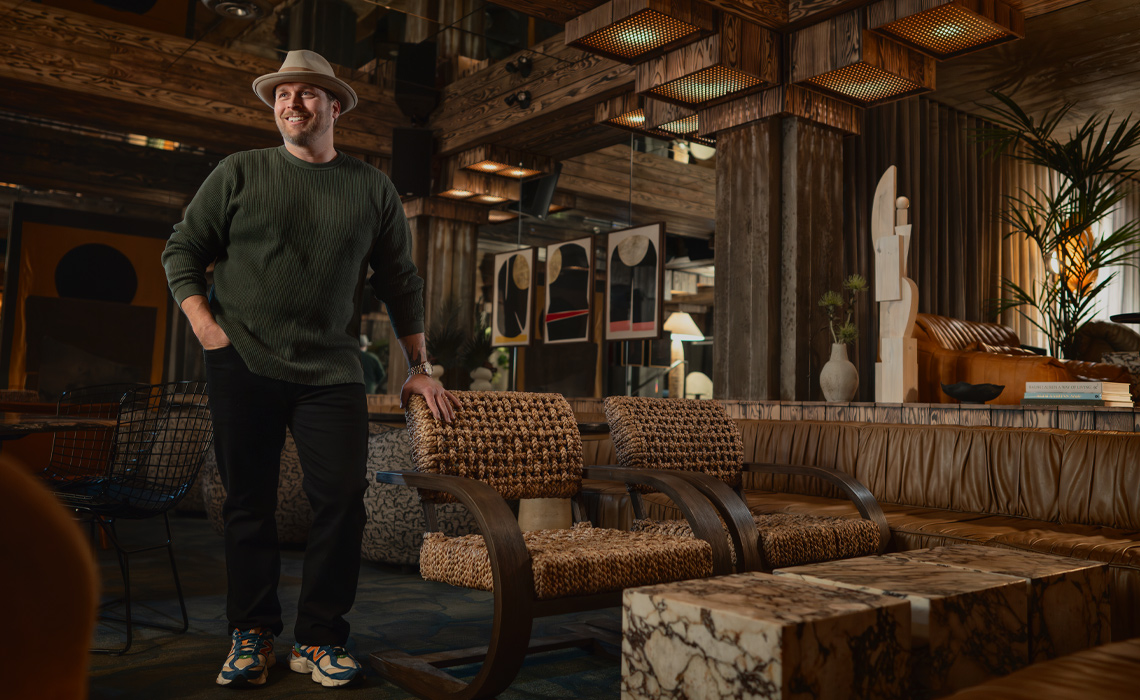
Anholt isn’t afraid to disrupt Calgary’s restaurant scene with concepts that go beyond the familiar.
Blue Rock Swim Club, designed by Anholt and his team at Way of Normal, opened in 2023 in the “pool level” (basement) of South Block Barbecue. With no exterior signage and a long corridor leading to the entrance, the project challenges expectations and invites discovery.
“Blue Rock is probably the project that pushed boundaries the most,” Anholt says. “It’s a hospitality narrative we haven’t really seen in Calgary.”
The studio drew inspiration from cities like London, New York and Los Angeles, where lounges are often tucked below street level and don’t rely on visibility or walk-by traffic. In Calgary, convincing people to descend a long, unmarked hallway is a bigger psychological leap.
The corridor itself, repurposed from a service passage, becomes a kind of tension-building prelude. Once inside, the abandoned-bathhouse aesthetic continues: a dramatic pool cutout echoes sunken living rooms and ghostly basins, while all seating is low and lounge-level.
“Normally, if you sit at a coffee table, people complain, ‘I can’t eat like this.’ But when that’s all there is, it reframes expectations,” Anholt explains. “Maybe you spill a little more, maybe it’s not the most practical, but you’re just grateful to be in the space.”
That willingness to push past the status quo is a defining trait of Way of Normal. “We don’t have a signature style,” Anholt says. “We hope people know it’s us because it feels different.”
‘Human behaviour over trends’
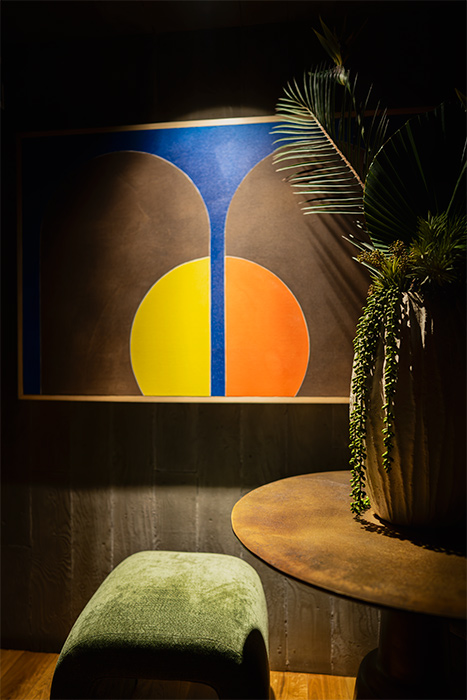
Anholt often looks to large cities where smaller spaces, tighter layouts and unconventional formats thrive. It’s not about replicating, but studying why it works and where the rules can be broken.
“Those spaces that organically happen are inspiring to us. In New York, a tiny little bar might have 90 people in it,” Anholt explains. “Why is it so tight? And why are people okay with it being tight? It’s understanding human behaviour over trends.”
While Calgary’s design scene may lean toward the familiar, Anholt sees that as an opportunity. “We’re trying to expand culture in this city, even if it’s only in small ways,” he says. It’s a careful balance of understanding what fits here while also introducing what’s possible.
OB Sound Room, a small, Japanese-inspired listening lounge tucked below Calcutta Cricket Club, is a prime example. Built in the former Tea House, the space isn’t just a bar, it’s an intimate, vinyl-only venue designed around sound. Sixty seats, cozy couches, low tables and carefully curated records draw people in, while acoustic panelling and retro-inspired details ensure the music can shine without drowning conversation. It’s an extension of Way of Normal’s ethos: crafting spaces that feel alive, intentional and unique to Calgary.
“We definitely have our finger on the trends,” Anholt says. “We know what’s going on, we have no reason to ignore it. But we also have no reason to follow it.”
The final course
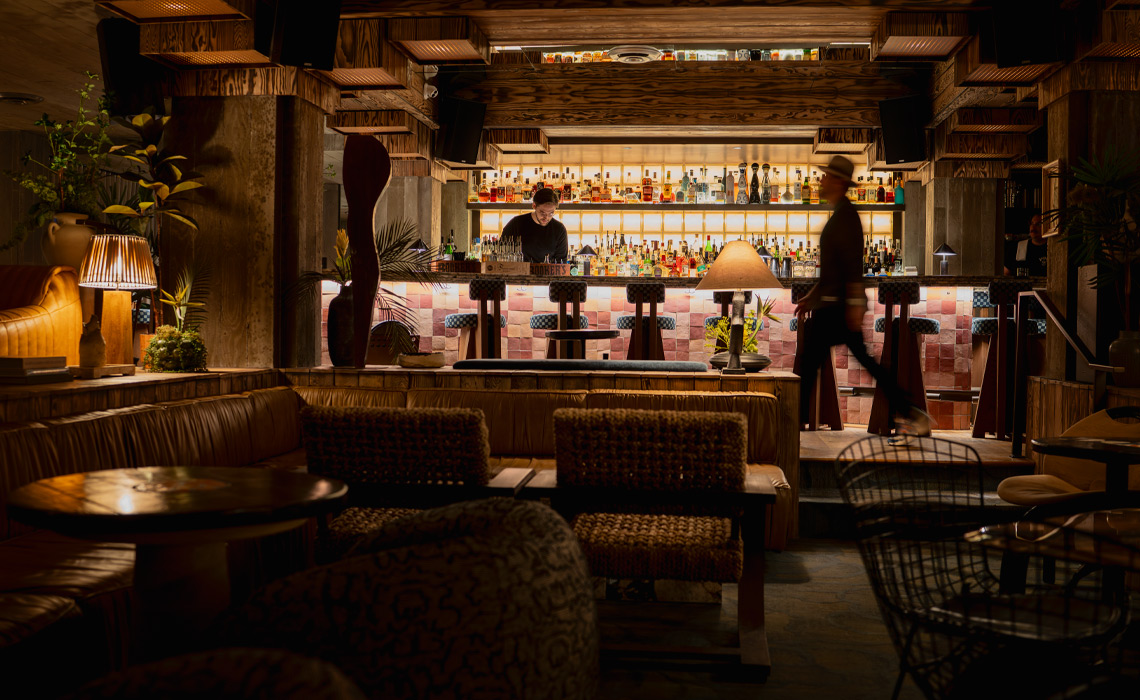
At its core, great restaurant design is a balance of aesthetics and operations, beauty and blueprint.
“We don’t want you to walk in and think, ‘Wow, this is the trendiest bar,’ because it’s only going to be busy for the first year, then it will be dead,” Anholt says. “But if you go in and you just feel good, that’s a big win.”
That feeling doesn’t come by accident. It’s built on trust from restaurateurs, clients and collaborators. "When someone believes in you, you do your best work," he says.
Hamilton shares the sentiment. "We’ll push clients past their comfort zone, because that’s really where the magic happens."
The reward isn’t just in the design, it’s also in what comes after. “Restaurants are one of the few spaces we design that everyone gets to share,” Ward says. “You create this thing for the community, and then you get to experience it with your friends and your family. That’s pretty special.”
As Calgary’s food scene continues to grow, and competition grows with it, the restaurants that thrive will be the ones that understand that great food pairs best with a great atmosphere.
Because in a city that eats out this often, how it feels might just matter as much as how it tastes.