 MENU
MENU



Managing what matters

When Katherine Wolfenden began Mount Royal University’s Project Management Extension Certificate, she had already been managing complex projects for years – she just didn’t have the formal language for it.
Wolfenden has worked with the Fort Nelson First Nation for nearly 15 years, leading programs and large-scale environmental initiatives in the Nation’s lands office. Her work spans habitat restoration, environmental monitoring and projects that move from early planning stages through to on-the-ground action. However, despite the scope and responsibility of her role, she had never received formal project management training as her career evolved.
“I didn’t even realize project management was its own designated profession,” she says. “In my world, people identify as biologists or environmental professionals, but at the root of almost everything we do, you have to be a strong project manager.”
Bridging practice and formal training
Encouraged to pursue formal credentials, Wolfenden enrolled in MRU’s project management training program, which culminated with the Project Management Professional (PMP) Exam Preparation course.
Building on a strong foundation of industry connection, Mount Royal is part of a project management program for Indigenous women in Western Canada. The program is supported by Trans Mountain and is offered in communities along the pipeline corridor as part of the Trans Mountain Expansion Project’s education and training initiatives. Program participants gain tools and knowledge not only to manage projects effectively but also to foster sustainable development within their communities. Offered remotely, the program brings together women from diverse backgrounds, cultures and geographic locations.
“I was honoured to receive the TransMountain sponsorship for PMP certificate training," Wolfenden says. "The support from fellow Indigenous women in the cohort, along with the dedication of TransMountain staff and Mount Royal instructors, made it a truly positive and empowering experience.”
While some of the course examples were rooted in fields outside her primary focus, Wolfenden says she found value in translating the fundamentals into her own environment.
“I had to think carefully about how to connect some of the examples to my work,” she explains. “But the fundamentals absolutely apply. Whether it’s a $5,000 initiative or a $5 million project, you’re still taking the same core steps.”
That process of translation became part of the learning itself. Wolfenden appreciated the interactive online format and the diversity of the cohort, which included professionals from industries ranging from scaffolding to banking.
“The discussions were incredible,” she says. “We learned from each other. It was such a communicative environment and that dialogue really expanded the learning.”
She credits instructor Matt Luik for fostering that environment, describing him as responsive, knowledgeable and well-suited to teaching in an online setting.
“Katherine brought an incredible depth of practical experience to the course. What stood out was how intentionally she translated the tools into her own context,” Luik says.
“Project management isn’t limited to construction or engineering – it’s a universal discipline. When professionals like Katherine apply structured frameworks to environmental stewardship and community-led initiatives, the impact is significant.”
Immediate impact
For Wolfenden, the benefits of the program were immediate. As she progressed through the course, she began applying tools and frameworks in real time within her organization.
“It wasn’t just about earning the designation,” she says. “It was about the learned experience. I was using the skills right away.”
Concepts such as project charters, defined sponsorship roles and structured planning processes brought new clarity and efficiency to her work. In her role, Wolfenden operates at a unique intersection combining environmental science, Western technical approaches and traditional ecological knowledge within a First Nations governance context.
“One day I’m reviewing GPS collar data for moose or caribou, and the next I’m out with land users and community members hearing their perspectives,” she explains. “Then I sit in the middle, combining worldviews and translating them into policy or action on the ground.”
Applying structured project management processes to this work has led to improved quality and greater efficiency.
“When you have a solid template and a clear framework from the beginning, you can adapt and repeat it across projects. That consistency really elevates the work.”
Building internal capacity
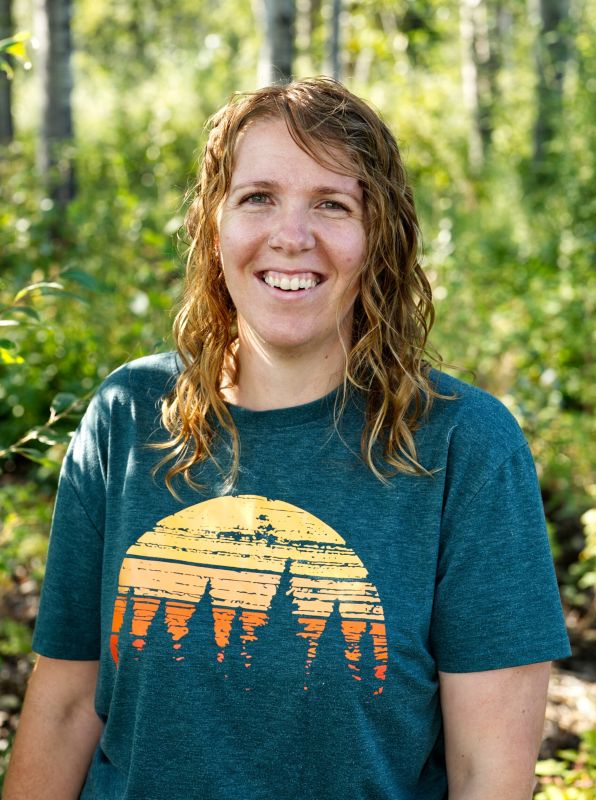
The impact has extended beyond Wolfenden’s individual role. She has begun mentoring colleagues and developing onboarding materials for her department, which includes approximately 14 staff members. She is helping shape a framework for effective management within the organization that positions project management alongside financial management, human resources and event planning as foundational competencies.
“If you want to be a manager here, you need some level of project management knowledge,” she says. “Maybe not everyone needs a designation, but everyone should understand the fundamentals.”
She also sees an opportunity for more specialized professional development offerings, particularly project management training that reflects Indigenous contexts while maintaining strong foundational principles.
“There’s a real need for accessible, focused professional development in this area,” she notes. “The basics are essential but there’s room to grow in how we contextualize them.”
Having earned her PMP certification, Wolfenden plans to continue refining and championing project management practices within her organization. For her, the designation represents not just a credential, but a structured way of thinking that strengthens the impact of her work.
“It opened up a whole new way of approaching what I already do,” she says. “And it’s made the work more efficient, more organized and ultimately more effective.”
Learn more about the Project Management Extension Certificate program and PMP® & CAPM® Certification Exam Preparation courses.