 MENU
MENU



From classroom to community
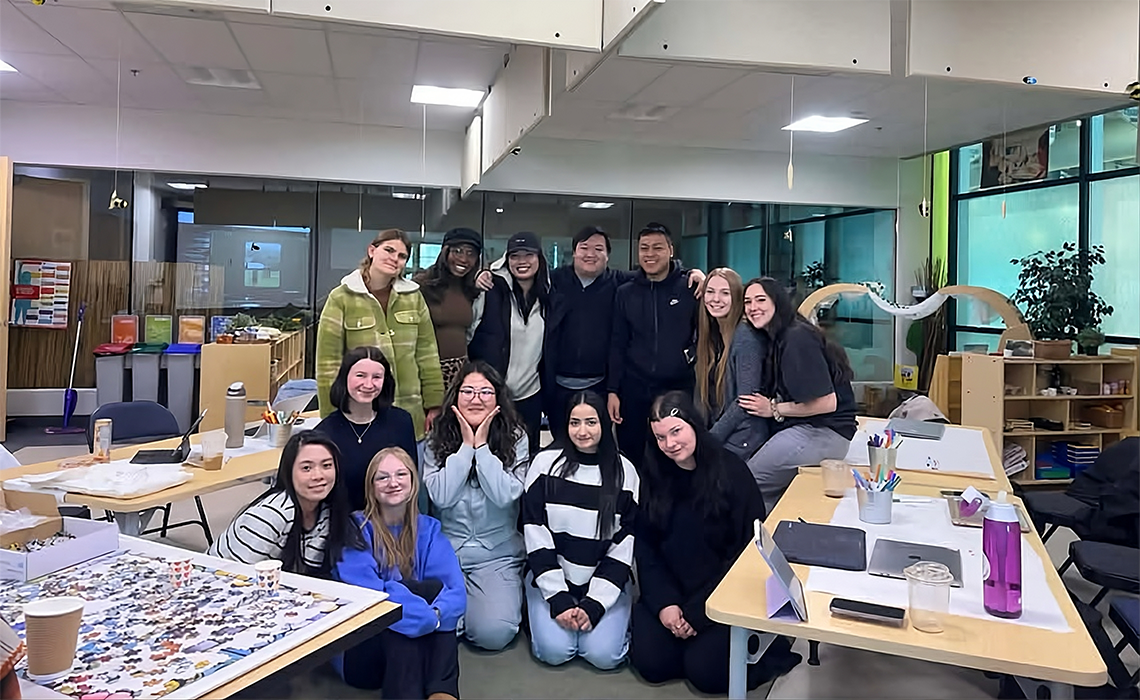
A group of 13 students in Mount Royal University’s Bachelor of Child Studies program is turning classroom learning into real-world impact by designing and launching a new evening program for youth in Calgary. Through their capstone course, they were able to gain hands-on experience in program development, community engagement and navigating the realities of funding and implementation in the non-profit sector.
The students partnered with Youth Centres of Calgary (YCC) to create YCC After Dark, a drop-in program aimed at providing a safe, welcoming space for high school-aged youth, particularly during evening hours when support is often limited. Director Jane Wachowich opened the first YCC home in the Ogden community in 2019.
Under the guidance of Associate Professor Monica Pauls, PhD, the class undertook a community needs assessment, researching service gaps across Calgary. They quickly identified a critical one: limited programming for youth in grades nine to 12, especially in the evening.
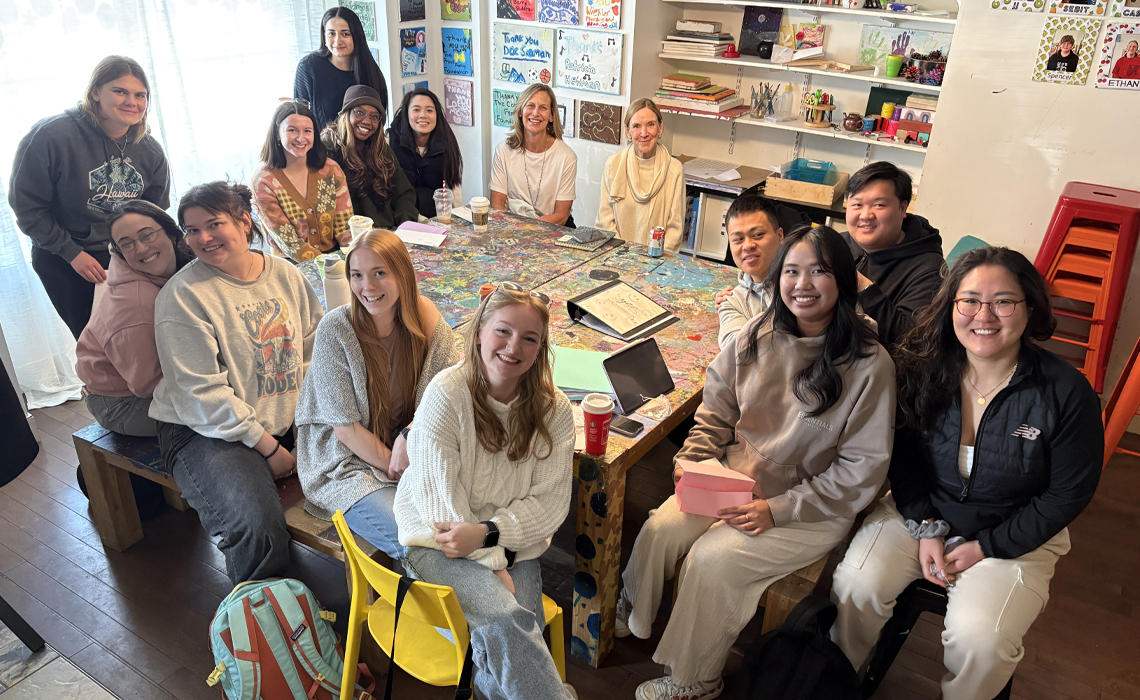
“There’s a lack of ‘third spaces’ in general,” Pauls says – places where young people can simply exist outside of home or school. “Programming is particularly lacking for that age group in certain communities.”
Students didn’t rely on numbers alone as they began their research. They conducted environmental scans, walking through Calgary neighbourhoods and talking to community members to understand what youth actually experience every day.
“We looked at what amenities were available and where kids were spending time,” student Sukh Aulakh explains. “There are after-school programs for younger kids, but after 6 p.m., there’s often nothing. Kids are sitting outside YCC locations just to access Wi-Fi late at night.”
“If youth don’t have something positive to go to, they will possibly find something negative,” she says, noting the group also examined research on youth gang involvement and the role of belonging and connection. “There’s a real need for prevention-based programs.”
Local supports bolster program success
The MRU students built a program from the ground up. Working in collaboration with YCC, they designed every aspect of the initiative, including programming, staffing models, outcomes and logistics. They also secured funding by researching grants, preparing applications and connecting with community partners.
“It was really eye-opening to see how many organizations are willing to support youth initiatives. But it’s also a lot of work, especially before we had an established organization behind us,” student Alisha Bagshaw says.
Through YCC, the project successfully obtained grant funding and community donations, including support from local businesses. Student Brianna Mayberry says that process was both unexpected and transformative. She was part of the team that secured key funding and donations, including grants and in-kind food support.
“We were going into businesses, pitching our idea, bringing cover letters and infographics, and asking for support,” she tells. “It wasn’t something I expected to be doing, but it got easier every time.” The students were successful in securing grants from the Calgary Foundation and Costco to pilot the program through YCC, and received donations from places like Big Al’s Bar and Grill in Forest Lawn (who provided pizza), COBS Bread and David's Tea.
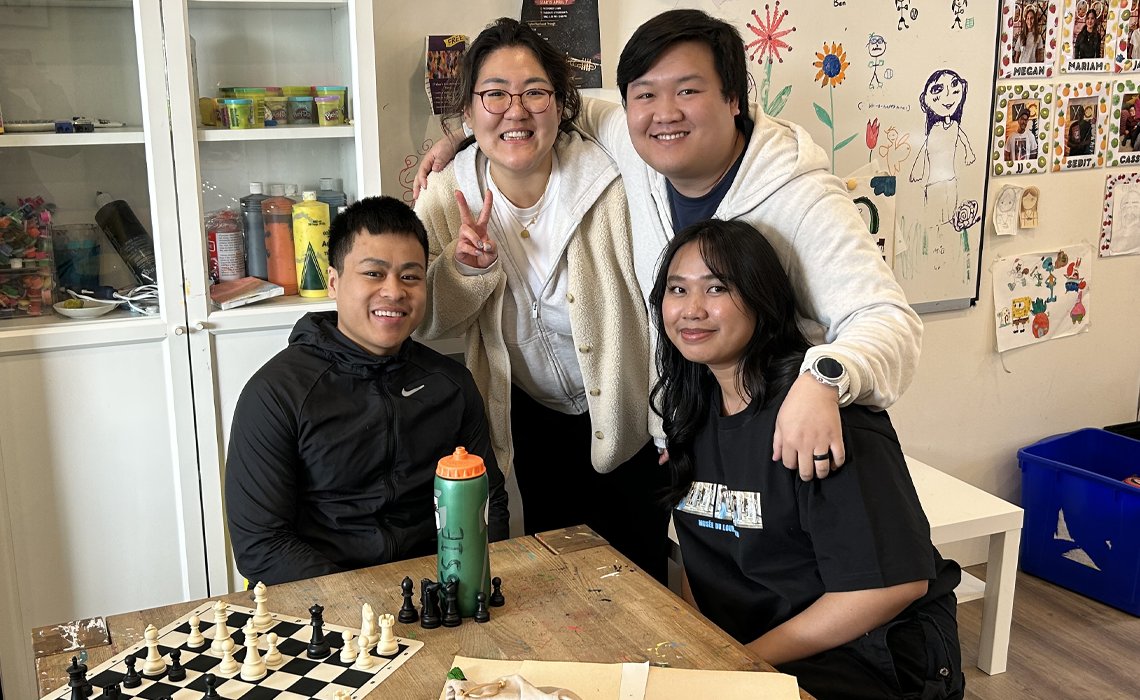
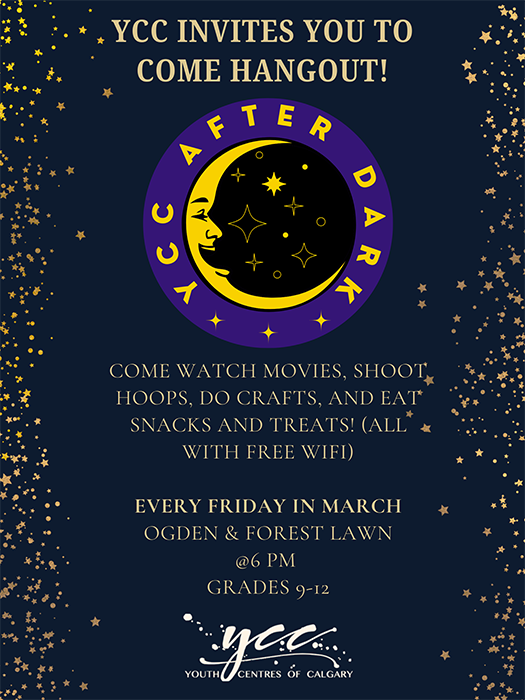
YCC opened its doors, allowing the students to pilot the program on Friday evenings in March in its community spaces in Ogden and Forest Lawn. There were planned activities like crafts, sports, games and movie nights, but just as importantly, there was room to simply hang out. Food is always available and participation is low-barrier and drop-in.
“The goal is really just to have a safe place where kids can be who they are,” Pauls says.
The response from the community’s young people was almost immediate. In its first week, the program welcomed just a few participants. By the second week – driven largely by word of mouth – attendance had jumped significantly.
“We knew it would take time,” Bagshaw says. “But seeing that growth so quickly was really reassuring. It felt like, okay, this is working.”
The program has continued to evolve in real time, with extended hours and activities shaped by youth interest.
Hands-on learning opportunity helps build confidence and skill
For Pauls, the project represents exactly what capstone learning is meant to achieve. “It’s incredible for students to see how something starts as an idea and evolves into something that’s actually impacting a community,” she says.
“They now know they can go out and do this,” Pauls adds. “This capstone has allowed the students to take everything they've learned throughout the entire degree and put it into practice.”
For Bagshaw, the experience has reinforced her passion for working with youth, particularly those who are often misunderstood.
“They’re so rarely given the benefit of the doubt,” she says. “But they’re some of the most kind-hearted people. Getting to know who they are beyond what their paperwork says is one of my favourite parts.”
While the student-led pilot runs for a limited time, its impact may extend far beyond the semester. YCC is exploring the possibility of continuing the program, and future capstone students are expected to build on the foundation already created. For the students involved, that legacy matters.
Aulakh says the capstone project taught her invaluable skills in program development and community engagement, and hopes to stay involved with the YCC program as much as she is able. “We never wanted the youth who attended to feel like they had to stay,” she says. “But we felt like it was our responsibility to create a space worthy of staying in. Jane filled us with inspiration. I was so much more motivated after meeting her. She opened a door for us.”
“We’ve put so much into building this,” Bagshaw says. “Knowing it could continue and keep helping youth is really meaningful.”