 MENU


Highest national research honours achieved
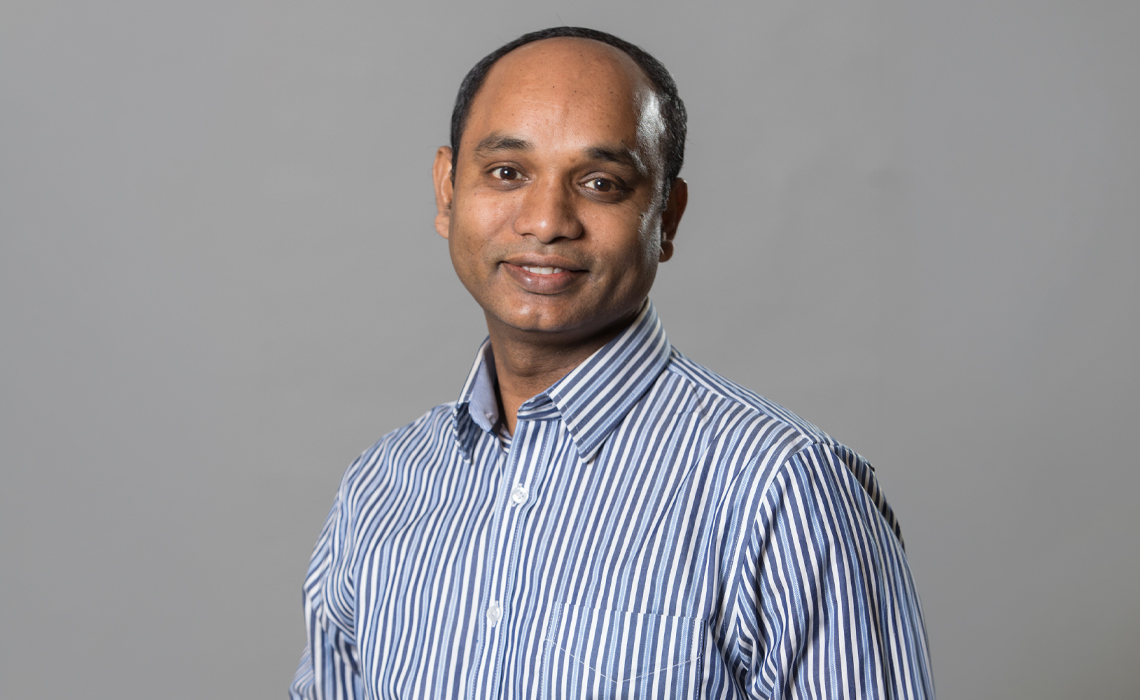
On Sept. 9, the Royal Society of Canada (RSC) officially announced its 2026 cohort of Fellows and Members of the College of New Scholars, Artists and Scientists, recognizing outstanding achievement across Canada’s scholarly, scientific and artistic communities. Among those names was Mount Royal University’s Dr. Ranjan Datta, PhD, who is an associate professor of Indigenous studies with MRU’s Department of Humanities and a Canada Research Chair in Community Disaster Research since 2020.
“Today, we are pleased to welcome the newest Fellows and College Members of the Royal Society of Canada. Their work spans breakthroughs in medicine, technology and climate research, contributions in the arts and literature, leadership in reconciliation, and efforts to build a more inclusive future. These individuals are shaping Canadian society through their scholarship, creativity, and impact — today and into the years ahead,” said Dr. Françoise Baylis, PhD, president of the RSC.
The RSC was convened in 1882 under the personal patronage of the governor general, and election to the RSC College is one of the highest honours bestowed on mid-career Canadian researchers and artists for remarkable contributions in the humanities, arts and sciences, as well as in Canadian public life.
Candidates for the RSC College may be nominated by current College Members, RSC Fellows or RSC Institutional Members. Datta was nominated by his research partner, Dr. Myrle Ballard, PhD, who is an associate professor with the Department of Earth, Energy, and Environment within the University of Calgary’s Faculty of Science. The celebratory induction ceremony is set to take place in November in Ottawa.
Dr. Chad London, PhD, Mount Royal’s provost and vice-president, Academic, says, “Congratulations to Ranjan on this exceptional achievement. His selection to the Royal Society of Canada recognizes the impact of his scholarship and his commitment to community-engaged research that centres relationships, knowledge and the priorities of the communities he works alongside. It is a significant honour for Ranjan and an important moment for Mount Royal, reflecting the strength and growing impact of research across our university, and into communities.”
From knowledge gaps to shared responsibility
Datta has been conducting community-based disaster research with Indigenous, local and racialized immigrant communities through community-led and land-based research for 17 years. He has secured and co-led more than $15 million in competitive research funding across 39 projects and developed international research partnerships spanning Canada, the Arctic, South Asia, Africa, and Europe.
“My research begins with communities themselves—their lived experiences, land-based knowledge, governance systems and priorities. Community-led research means that communities help define both the problem and the pathways toward solutions,” Datta says.
While carrying out his research in Bangladesh and Nepal, and within Indigenous communities in Saskatchewan, Alberta and Canada’s Arctic, “I have repeatedly seen excellent scientific research taking place alongside sophisticated community knowledge, yet the two are often disconnected. The deeper problem is that Indigenous and local communities are still too rarely involved in shaping research priorities, interpreting evidence and making the policy decisions that directly affect their lands, waters and lives,” Datta says.
These communities draw upon well-developed land-based knowledge, cultural practices and their own ways of knowing and doing to respond to complex challenges, including food insecurity, well-being, environmental change and disasters.
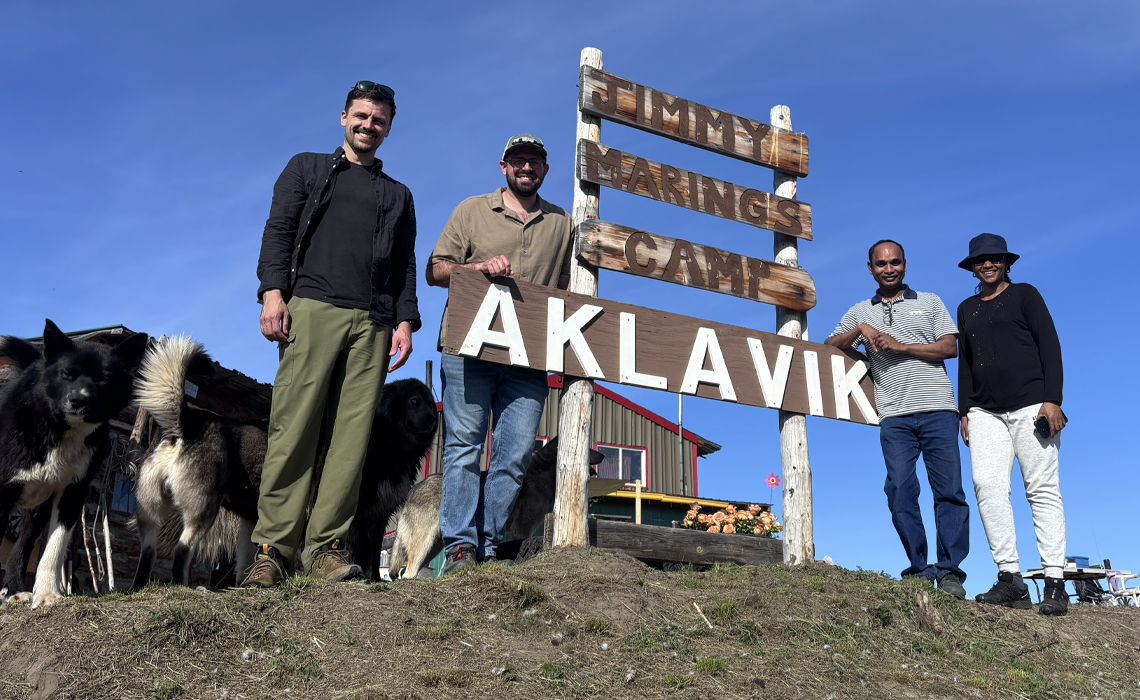
At the same time, universities, governments and scientific institutions generate extensive research on many of the same environmental challenges. Datta argues that the central challenge is not simply transferring scientific knowledge to communities, but creating meaningful relationships in which Indigenous and Western knowledge systems can inform decisions while retaining their distinct foundations, responsibilities and authority.
For example, Datta has been working with Woodland Cree First Nation communities in northern Saskatchewan through his Social Sciences and Humanities Research Council-funded research program in collaboration with colleagues at the University of Manitoba. In 2025, the region experienced severe wildfires that resulted in community evacuations.
“These communities have developed knowledge through generations of relationships with the land. Elders, hunters and land users observe changes in forests, animal movements, moisture, weather and biodiversity in ways that can provide important insights into changing wildfire risks.”
Community Elders and Knowledge Keepers have often not been meaningfully involved in forest management, prescribed or cultural burning, and related planning processes, despite their extensive land-based knowledge.
“The problem is that this knowledge does not always have meaningful authority within wildfire planning, mitigation or evacuation decisions. When communities are brought in only after major decisions have already been made, valuable knowledge is lost, and people can experience greater uncertainty, displacement and fear.”
Decolonization as responsibility
“Colonial systems were built over generations, and decolonization cannot happen through a single policy, project or act of reconciliation,” Datta says. “Decolonization is a long-term process of restoring relationships, responsibilities and Indigenous authority over lands, waters, energy, forests and other dimensions of community life.”
He continues, “For me, resilience begins with relationships. Land, water, plants, animals, insects and people do not exist as separate systems; they are interconnected. When those relationships are broken or ignored, we also lose sight of our responsibilities to one another and to the places that sustain us.”
Without responsibility, people see themselves as separate from that forest fire in B.C., or that flood in Alberta, or that heat wave in the Arctic. Responsibility is therefore central to understanding and responding to these interconnected crises
“When we treat environmental crises as disconnected events rather than relational problems, we limit our ability to understand their deeper causes and develop lasting responses,” Datta says. “That is why communities must be at the centre of defining what resilience means and how it is built.”
Datta sees a central responsibility in his work as advocating to create spaces where Indigenous knowledge, local knowledge, community experience and Western science can inform policy without requiring one knowledge system to be absorbed into another.
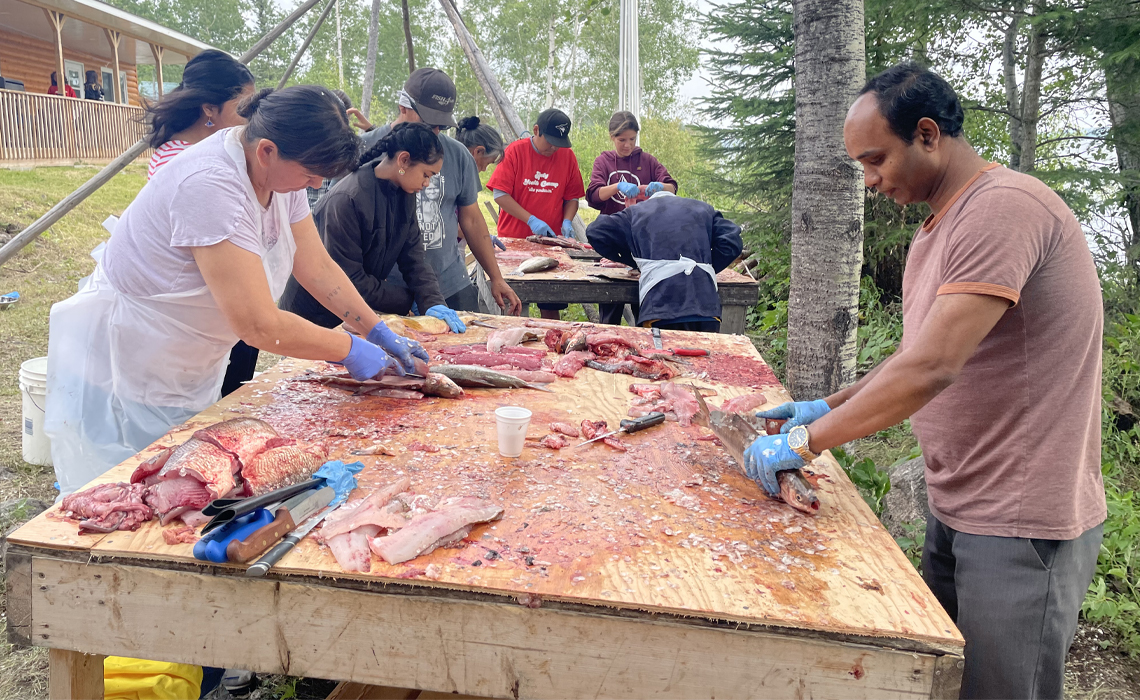
Connecting community-led research with national and international policy conversations, Datta’s research in Bangladesh has informed discussions involving government and international institutions. While in Canada he has worked with Indigenous Knowledge Keepers on water rights and governance. For Datta, knowledge mobilization is not simply about translating community knowledge into forms that institutions can readily use. Rather, it is about creating pathways through which communities and Knowledge Holders can meaningfully shape the policies, governance processes, and decisions affecting their lands, waters, and lives.
“Induction into the Royal Society of Canada is a testament to Dr. Datta’s extraordinary contributions to Indigenous studies and disaster studies,” says Dr. Jennifer Pettit, PhD, dean of Mount Royal’s Faculty of Arts.
“Selection to the RSC’s College of New Scholars, Artists and Scientists recognizes early- to mid-career scholars who demonstrate top-tier excellence in research, scholarship, and public life. As one of the highest honours a Canadian scholar can receive, this award reflects the global impact of Dr. Datta’s work and his contributions to Mount Royal University. We are thrilled to see his prolific achievements recognized on this prestigious national stage.”
Recognition and responsibility
Although Datta is grateful for the recognition from the RSC, he is far from finished.
“I am deeply grateful for this recognition, but I do not see it as an endpoint. If the communities I work with become stronger in exercising their self-determination and governance rights, that will be a much more meaningful measure of my work than any individual award.”
Datta, who serves as a lead author for the UNESCO Science Report and has contributed as a senior scientist to initiatives of the International Science Council and the United Nations Environment Programme's Global Environment Outlook (GEO-7), sees these roles as part of a broader responsibility to connect research, communities and policy.
“Protecting water, forests and the lands that sustain us is not only an Indigenous responsibility; it is a shared responsibility. We need to learn from the land, from communities and from multiple knowledge systems. Technical innovation is important, but technology alone cannot resolve crises that are also about relationships, governance, justice and responsibility.”
Datta is the author of many scholarly books, among them Decolonizing Climate Adaptation — Indigenous Land-Based Perspectives in Bangladesh. Datta is also co-editor, along with Dr. Jebunnessa Chapola, PhD, and Dr. John Bosco Acharibasam, PhD, of Indigenous Land-Based Knowledge and Sustainability: Settler Colonialism and the Environmental Crisis.