 MENU
MENU



A future without limits
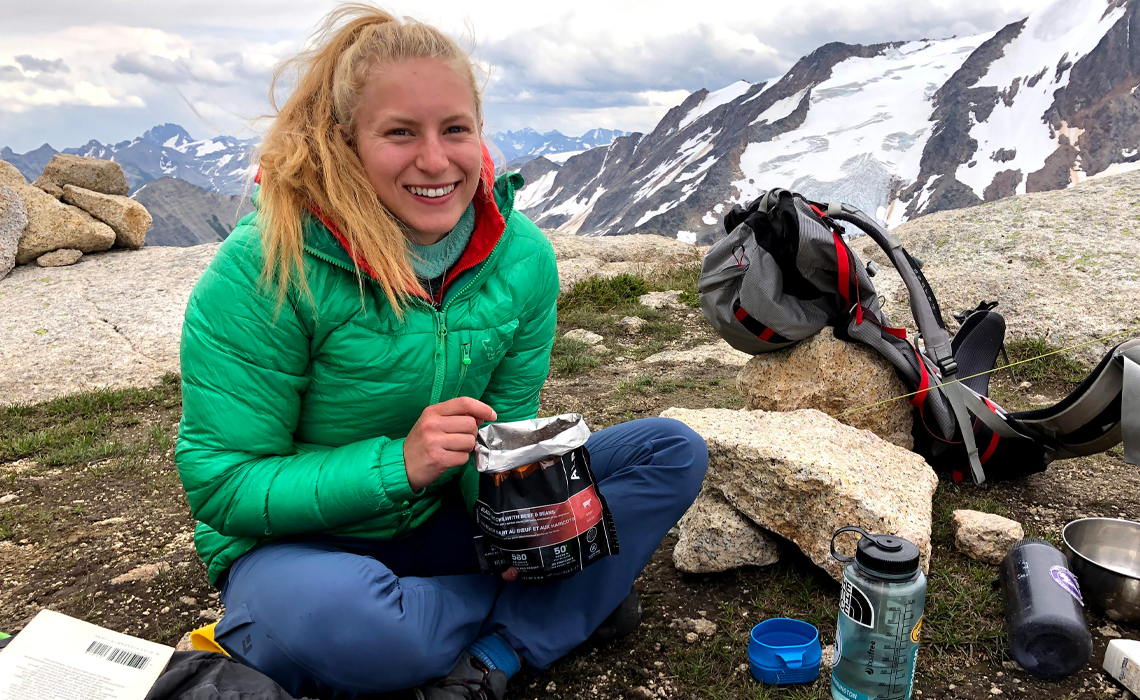
Jenna Sherrington doesn’t just study the outdoors — she thrives in them. A third-year Bachelor of Health and Physical Education — Ecotourism and Outdoor Leadership (ETOL) student at Mount Royal University, Sherrington always knew the “9-to-5” life wasn’t for her. Instead, she is blending her passion for physical fitness with her commitment to health, wellness and the environment, exemplified by her work in Kenya through the Faculty of Health, Community and Education’s Queen Elizabeth II Diamond Jubilee Scholarship program.
Her story is a reminder that the most profound learning often happens far beyond the confines of a lecture hall and when one is pushed right to the edge of their comfort zones.
“I always knew I didn’t want a job just sitting down in an office,” Sherrington says. “It felt like my brain was just never wired for that. Elementary school, and junior high and high school, were really hard for me because I felt very trapped in a classroom. So, I actually really struggled to find something where I was interested and that felt aligned with who I was and what I wanted out of life, even if I didn't quite know what exactly that was at the time.”
ETOL represented the ideal starting point. The myriad opportunities to take courses such as kayaking, canoeing, backpacking, and mountain and rock climbing, in addition to regular classroom course content such as sustainable tourism, leadership, ecology and geography, coincides perfectly with her affinity for the outdoors (the mountains in particular) and her active lifestyle.
Experiential learning
Sherrington emphasizes that Mount Royal’s smaller class sizes and personalized teaching has allowed her to get to know her professors and build strong relationships with her community and her classmates. A fellow student encouraged Sherrington to apply with them for the Queen Elizabeth II Diamond Jubilee Scholarship program. Their applications were both successful, leading the pair to live and work in Nairobi, Kenya, as part of Mount Royal’s collaboration with Commonwealth Sport Canada.
While in Kenya, Sherrington worked on the CHEZA Healthy project, an initiative designed to address the growing prevalence of non-communicable diseases such as obesity, diabetes and hypertension, all of which are significant contributors to global health challenges. The CHEZA project highlights the importance of preventative measures and works to educate youth about the mental and physical benefits of an active lifestyle through sports and physical activity, with the intent of empowering them to integrate those habits into their lives long-term.
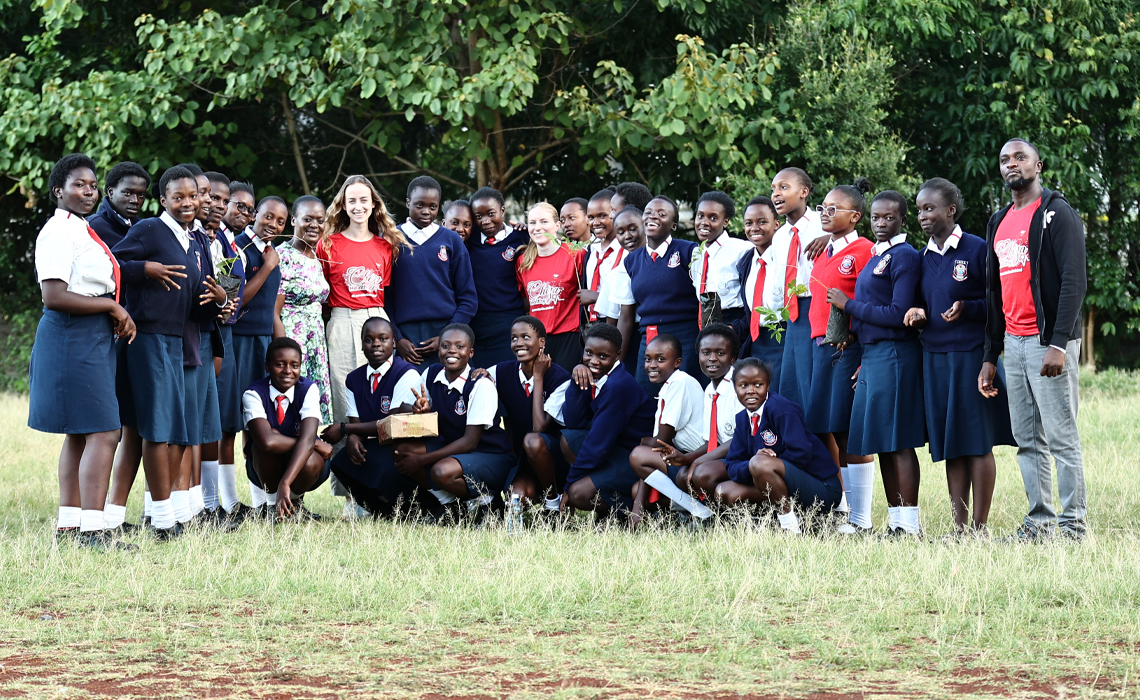
Sherrington took part in the Queen Elizabeth II Diamond Jubilee Scholarship program, living and working in Nairobi, Kenya, as part of Mount Royal’s collaboration with Commonwealth Sport Canada.
Cheza is a Swahili word meaning "play" or "dance,” and refers to several distinct initiatives focused on culture, sport and wellness.
“The first few weeks were spent gathering information and data and finding schools to approach,” Sherrington says, and that the ETOL pair had arrived at the perfect time. The project had been mainly in the planning stages and it was now “go” time.
“It started a little slow, but it picked up very quickly. We planned a lot of school visits and reached out to a lot of schools, and by the end I think we ended up going to 10 or 15, or possibly even 20 schools.”
For a little more than three months the two dealt with the differing technical and physical capabilities of each location and planned relay races, tug-of-wars and other activities while presenting what non-communicable diseases are and mitigation strategies.
“We focused primarily on getting enough physical activity in a day, about one hour, and giving different ideas for how they could fit that in.”
They then spoke with the schools to see how they could implement physical activity into their scheduling, such as perhaps starting a running club and similar tactics.
“I think my biggest takeaway from Kenya was just how big of a perspective shift I had during and afterwards and being immersed in a completely different cultural context. It made me so aware of my own personal privilege and how relative everyone's priorities are.”
Forced to live outside of her pre-established boundaries, Sherrington came to understand she had an intense fear of public speaking, a slight difficulty because she was often speaking to audiences of more than 500 people at a time.
“It was a very big realization. I was like, ‘Dang. I am actually really scared of this.’ But I think overall the experience definitely helped me see a bigger picture of life, how large and complex our world actually is and how important it is to approach everything with humility, curiosity and just a lot of openness.”
Scaling new heights
When not immersed in school activities, Sherrington times races for Zone4 Timing Systems, such as national triathlons, cross-country skiing and biathlon, a sport in which she competed at the international level while spending two years on the Canadian National Biathlon Team. In fact, she was racing in World Cups while in the first two years of her ETOL degree.
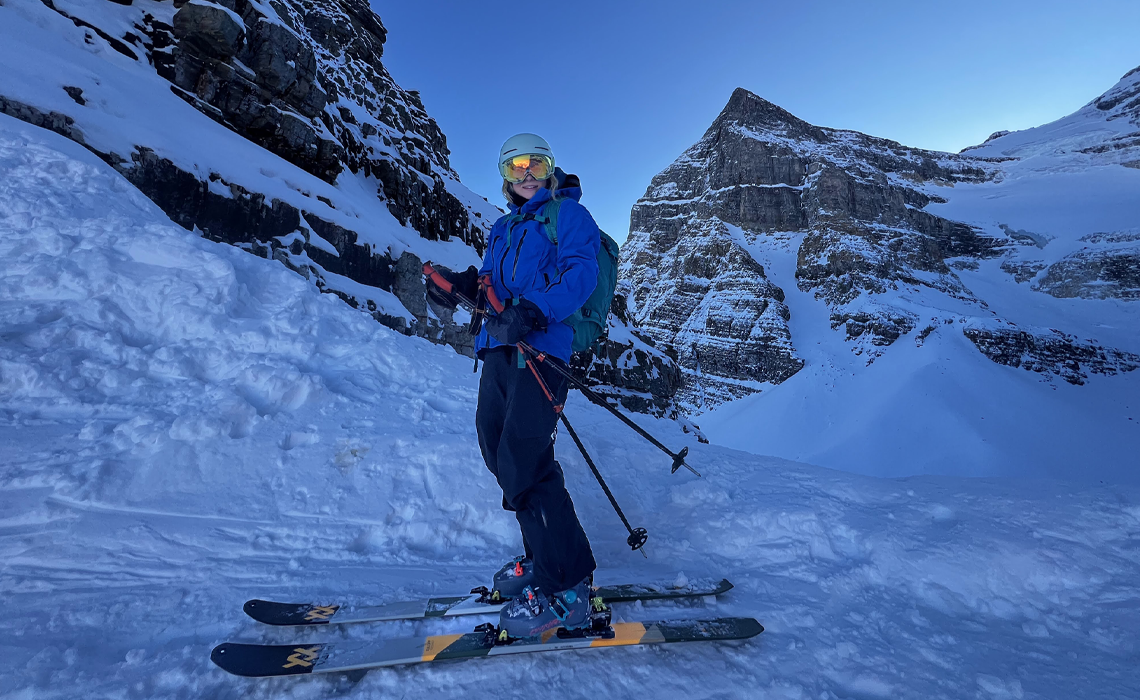
Sherrington spent years competing at the international level in biathlon.
Sherrington’s ETOL training was quickly put to work as a hiking and adventure sport guide last summer. This summer, Sherrington had targeted becoming a wildfire fighter, a job that she was offered, however she took a position with Parks Canada in the Pacific Rim National Park instead.
The ETOL program consists of two expeditions — 10-day trips — the first with a professor and the second on the students’ own. For the first, Sherrington went on a backpacking trip, and for the second she and classmates tackled another backpacking trip through the western Purcell Mountains.
“It was stunning. Incredible,” she says, even though it was difficult and the learning curve was steep.
“Everything you need is on your back, so you’re constantly thinking about weight, food, navigation and how your body is holding up. The terrain in the Purcells is rugged and the weather can change fast, so there’s a lot of problem-solving as you go. The student-led trip added another challenge, because we were responsible for everything; planning the route each day, managing risk and making decisions as a group. It pushed us outside our comfort zones, but it also gave us a lot of confidence in our abilities.”
After completing her Queen Elizabeth II Diamond Jubilee Scholarship program stint, Sherrington certainly didn’t plant her feet back firmly on Canadian soil, as she was soon taking off again for the ETOL Norway Field School (HPED 3711). Participants spent time at a camp learning Norwegian outdoor skills and survival techniques, rowing a traditional Viking boat along the coast and camping under northern European stars.
“I learned that every experience can be taken as a learning opportunity. It was a lot of what felt like random experiences, but you can tie them together in a really interesting way.”
Careful to stay present and in the moment, Sherrington isn’t thinking too far ahead right now. Instead, she is concentrating on finishing her degree and adding certifications to her portfolio, such as guiding, plus avalanche search and rescue.
“If I would give advice to any ETOL students, or anyone who is interested, it would be to do as many extra things as you can. It's not just the degree that is an awesome stepping stone, but also going out, getting involved and experiencing as much as you can.”