 MENU
MENU



Health Simulation Learning Centre
Where theory and practise intersect
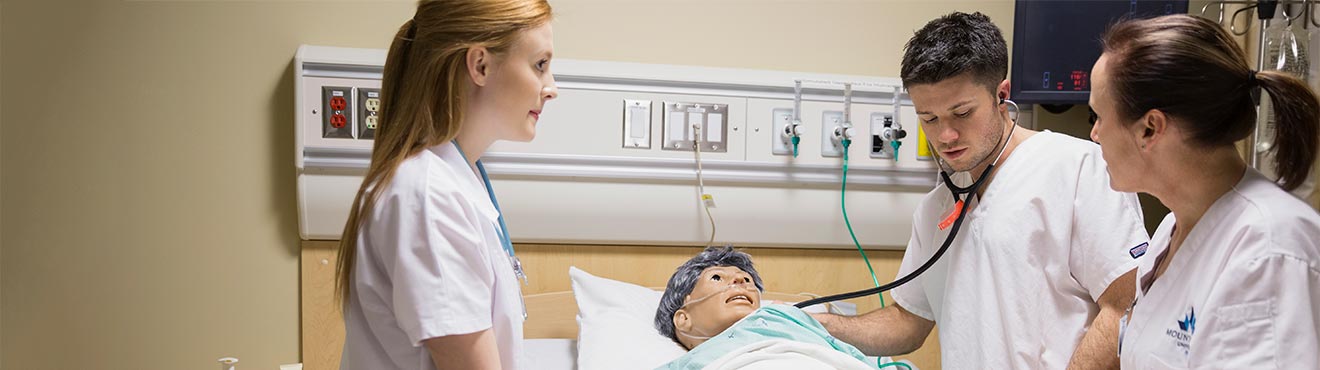
Put health-care theory into practise at the Mount Royal University Health Simulation Learning Centre (HSLC). The HSLC is an advanced health training facility delivering realistic scenarios for a range of students, educators and practitioners.
The HSLC features a 1,010-square-metre learning environment in the Faculty of Health Community and Education, simulating anywhere from a full hospital unit to specialized acute care and home setting scenarios.
Users of the HSLC will immerse themselves in highly realistic, training scenarios all within a safe learning environment.
Mission
To provide an environment where the cognitive, behavioural, and affective learning domains unite to create a unique learning experience.
Vision
To foster dynamic and immersive learning experiences contributing to the excellence in practice of emerging health care professionals.

What we do
- We promote the knowledge, skills and abilities necessary for professional health care practice.
- We focus on fostering dynamic and immersive learning experiences.
- We engage cognitive, affective and psychomotor areas of learning to ensure learners are ready for their chosen professional careers.

Who can benefit from the HSLC?
- Students in nursing, midwifery, social work, athletic therapy, medicine or other health-care fields
- Employers providing professional development opportunities

Advanced technology
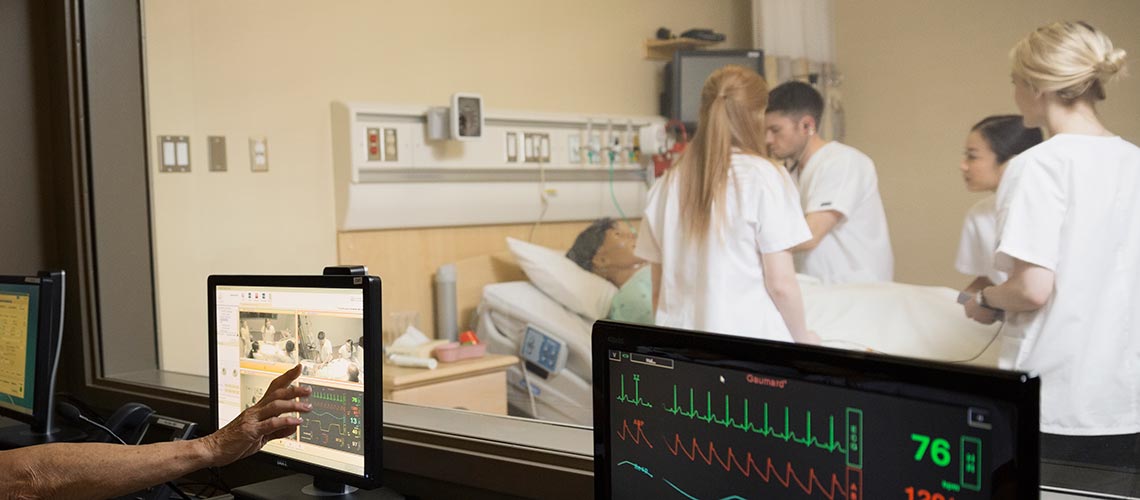
- Video Audio Learning Tool (VALT) is used to observe and assess clinical simulation training and assessment sessions. Students and instructors can review sessions to pinpoint areas of improvement or reinforce strengths. Using video results in more precise assessments for instructors and specific actionable feedback for students.
- All patient simulators — Manikins/LLEAP and Gaumard UNI software — are computerized with interactive capabilities to simulate physiological and pharmacological responses in real-time, giving a seamless and immersive training experience for the learners.
What is simulation?
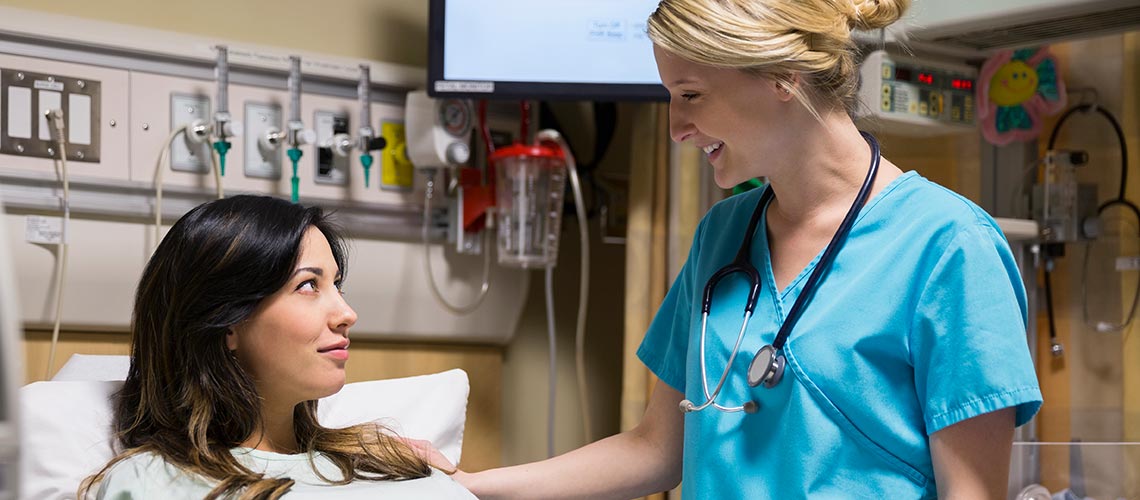
Simulation mimics the reality of a clinical environment and can be designed to allow demonstration of procedures, skills, decision making and clinical reasoning.
Techniques such as role play and case studies or the incorporation of interactive devices such as videos, computer programs, manikins and real-life actors may all be included in a simulation.
A training scenario can be as close to reality as needed. Simulation lets learners feel like they are experiencing an actual situation they would encounter in the workplace. This experience:
- gives learners the opportunity to work through genuine clinical problems, make real-time decisions, synthesize information and reflect on their practice, within a safe learning environment.
- ensures there is no possibility of harm to an actual patient. Learners are also not at risk of any negative consequences as a result of their performance.
- mimics a professional practice setting with the expectation that learners, faculty, staff, embedded actors, researchers and guests adhere to their respective professional policies and codes of conduct.
Overview of the Health Simulation Learning Centre

1,010-square-metres
(10,880 square feet)

4 High-fidelity simulation rooms
2 acute care settings
1 birthing room
1 home living environment
All high-fidelity simulation suites include individual control rooms and debriefing space — to review the audio-visual that each room captures, with playback capabilities for enhanced teaching and learning.

6 hospital unit-style clinical teaching spaces
These unique teaching spaces give students the opportunity to hone their skills across multiple scenarios.

8 beds per unit
Learn basic skills related to:
- Patient care
- Communication/teamwork
- Critical thinking
Those practicing in the centre are expected to treat the areas as they would a real patient care setting, maintaining respect for simulated patients, other learners and the environment in which they are immersed.
Health Simulation Learning Centre Virtual Tour
Support the next generation of health-care professionals
Part of the Mount Royal University exceptional undergraduate educational experience is providing students with relevant experiences in and outside of the classroom. The HSLC is a cornerstone of Mount Royal University’s Faculty of Health, Community and Education programs.
We are educating the next generation of heath-care professionals. Join us in ensuring they are ready for Alberta’s future. Consider making a donation in support of the Health Simulation Learning Centre’s mission by reaching out today.
Rent the MRU Health Simulation Learning Centre
The HSLC space is available for rental outside of typical class times. For more information or an in-person tour please fill in the HSLC rental inquiry form.
Meet the Health Simulation Learning Centre team
Dr. Cathy Carter-Snell
Faculty Coordinator
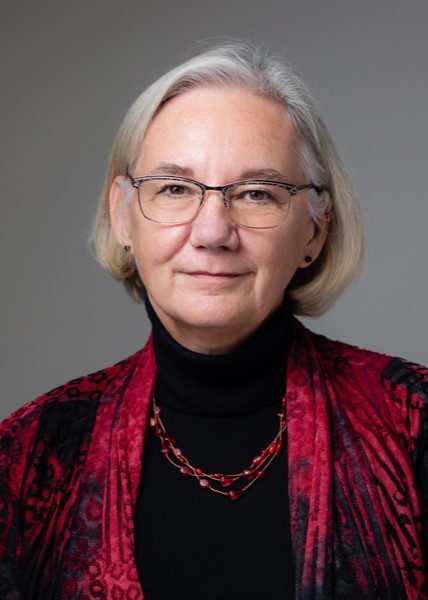
Dr. Cathy Carter-Snell has a background of almost 40 years of trauma nursing including Emergency, Intensive Care, aeromedical transport and sexual assault/domestic violence teams. She developed the first online sexual assault nurse examiner (SANE) course in North America, was the first Canadian to be certified internationally as a SANE-A, and co-founded what is now the Canadian Forensic Nurses' Association. Her research focuses on prevention or early intervention with interpersonal violence, including mental health and injuries.
Contributions include the BALD STEP physical findings guide for trauma assessment, contributing to the IAFN core curriculum for forensic nurses, and an Enhanced Emergency Sexual Assault Services (EESAS) multidisciplinary course for rural communities. She has a background in adult education and curriculum development and years of post-secondary education. Her research now includes examining BN preparation for NCLEX, and nursing student resilience to stress. Teaching interests include adult health, pathophysiology, complex case management and violence prevention.
Credentials
PhD, University of Alberta
MN, University of Alberta
BN (with distinction), University of Alberta
Nursing Diploma, Holy Cross Hospital

Mohammad Haider
Simulation Coordinator
Mohammad Haider is a Simulation Coordinator at the Mount Royal University Health Simulation Learning Centre (HSLC).
With a degree in Community Health Sciences—with a focus in Family Social Sciences and Psychology—from the University of Manitoba, university-level coursework in human anatomy and physiology, and hands-on experience in the tech industry, Mohammad helps bridge the gap between simulation technology and the people using it. Simulation is always evolving, so he focuses on keeping up with the tech and learning as he goes while working with high-fidelity manikins, AI-assisted technology, and virtual reality simulation.
He works alongside a multidisciplinary team with backgrounds in nursing, biological sciences, and administration, supporting faculties like Nursing, Midwifery, Social Work, and Athletic Therapy. Day to day, his role involves the practical backend work of keeping the lab running—handling equipment, scheduling, and troubleshooting so scenarios can come together smoothly. Having a foundational grasp of human anatomy and physiology also helps him better understand the clinical intent behind the faculty's scenarios.
Mohammad has completed simulation operations technologist training through NAIT and is working toward his CHSOS certification.
Contact us
For more information or for those interested in research, volunteer or rental opportunities with the Health Simulation Learning Centre, contact us at:
Health Simulation Learning Centre
Mount Royal University
Lincoln Park Campus, W-Wing
4825 Mount Royal Gate SW
Calgary, AB T3E 6K6