 MENU


A force for good
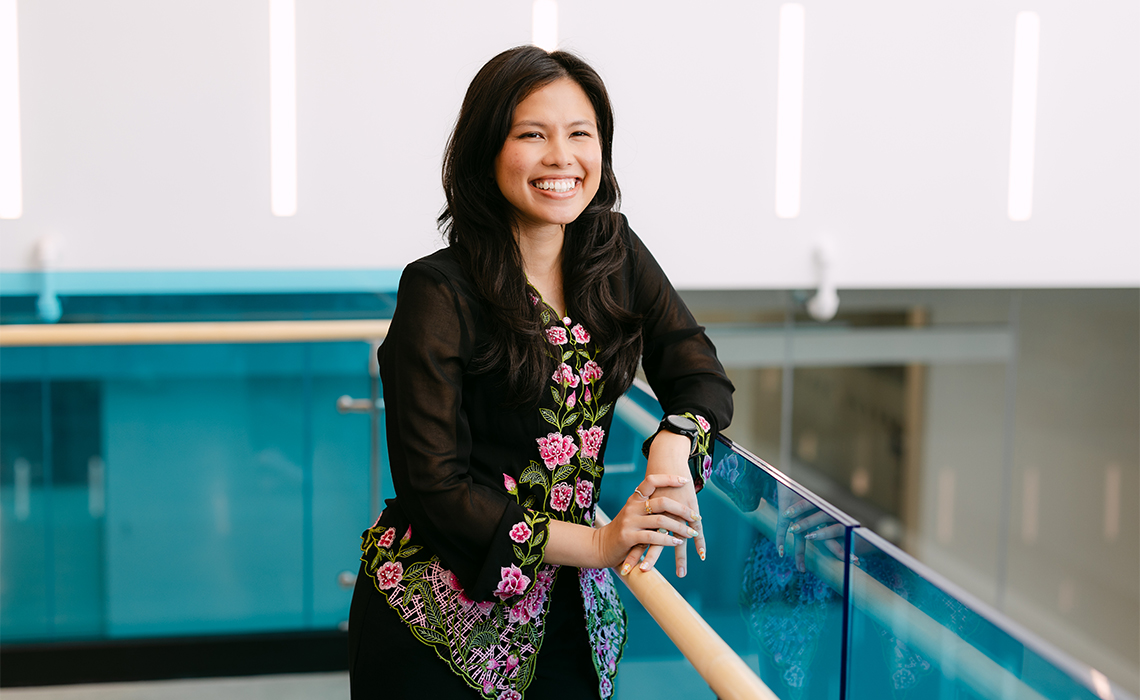
If you ask Aisyah Ghazali about winning the Terry Fox Humanitarian Award, she’ll laugh and tell you she only applied to practise writing applications. Then she made it to the interview round, which became a chance to practise those skills, too. When the call came confirming her selection, she was genuinely floored.
Now in her third year of MRU’s child and youth care counselling (CYCC) program, Ghazali was one of 15 students selected from over 3,300 applicants across Canada. The award provides up to $28,000 over four years to students who demonstrate community service, courage, determination and a commitment to helping others — qualities Ghazali displays through her studies, community advocacy and volunteer work.
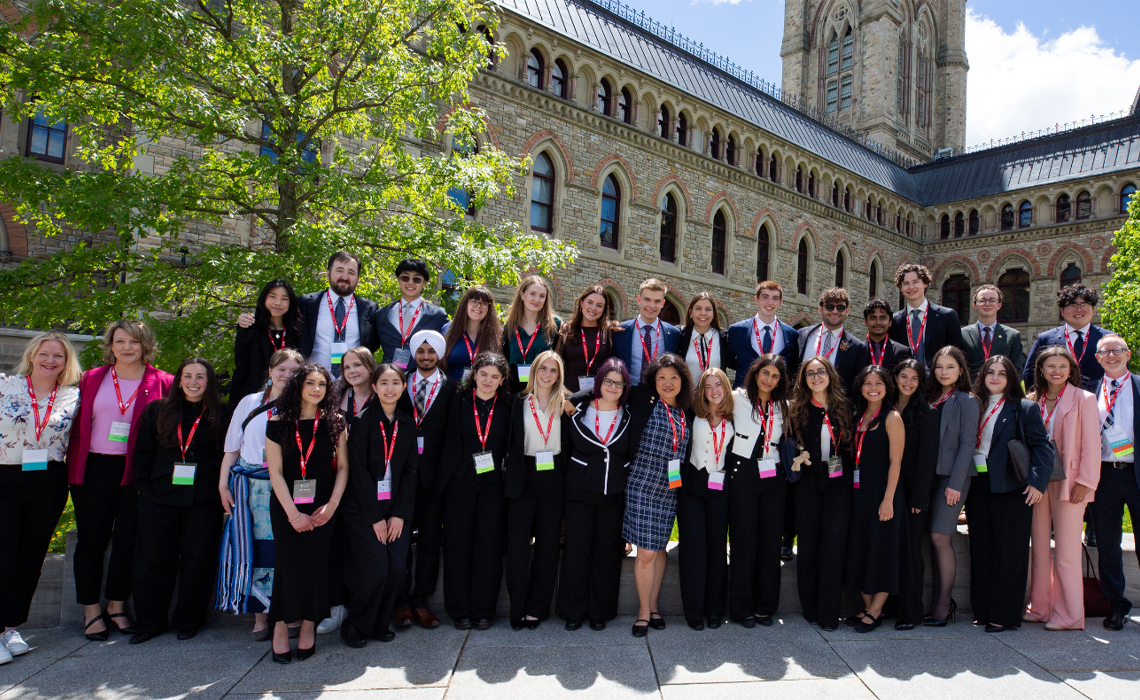
As part of the award, Ghazali travelled to Ottawa to connect with her fellow recipients and program alumni, visit Parliament Hill, and meet the speaker of the house and her local member of parliament.
“At first I was a bit intimidated, but coming out I was just inspired and motivated to do more,” she says. “It was an honour to meet such talented and inspiring young adults, and now call them friends.”
It started with family
Ghazali’s interest in helping others started at home with her sister, who has Down syndrome.
“The community is very grassroots,” she explains. “If you are related to someone who has Down syndrome, then you tend to help out and that’s how I started as well.”
Over the years, she has volunteered with a number of Calgary organizations, with the majority of her time going to Ups and Downs: Calgary Down Syndrome Association. She helps organize inclusive events, including the annual Street Meet walkathon, which raised $46,000 this year for community programming.
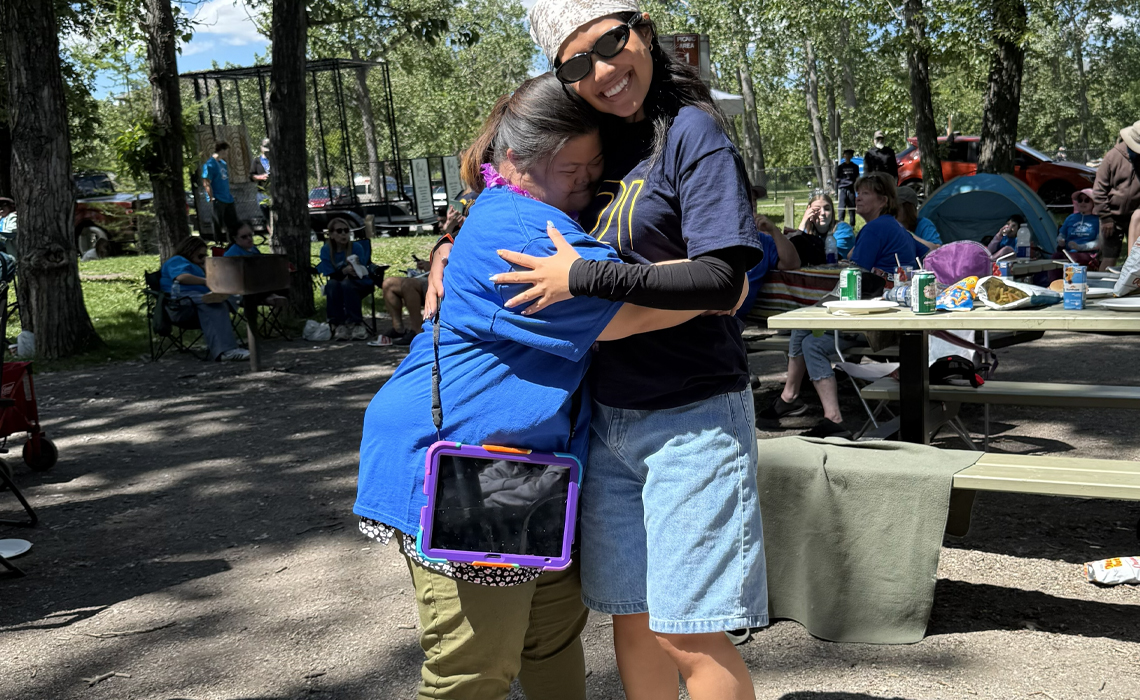
“It’s a charity fundraiser, but also a way for the community to find each other,” she says. “Having that community really helps, and the events bring a lot of joy to our members.”
Recently, Ghazali helped plan the organization’s Teen and Adult Conference, a full-day event offering workshops ranging from cooking and arts to emotion regulation and financial literacy. She also invited MRU assistant professor Mackenzie Fraser to lead sessions on emotional learning.
“Aisyah is a natural leader and compassionate individual, whether she’s in the classroom or out in the community,” Fraser says. “Having her invite me to lead sessions at the Ups and Downs 2026 Teens and Adults Conference was such a privilege, and a great way to bridge community with our CYCC program. Aisyah represents the true essence of what it means to be a CYCC and is a great example of the impact our students have.”
Finding her path
Ghazali chose MRU’s Bachelor of Child Studies, majoring in CYCC with a minor in psychology, for its small cohort sizes and emphasis on experiential learning. She notes the program centres on relationship building, explaining that the work can be compared to setting a broken bone.
“The youth can heal on their own, but just like a cast, we are that extra support that helps them along,” she said. “I want to create a space where children and youth feel seen, heard and believed.”
That practical approach came alive during her first-year practicum at the Children’s Cottage Society crisis nursery, a 24/7 shelter for families facing hardship. Over several weeks, Ghazali built trust with a four-year-old boy who was non-verbal when he first arrived. Sitting side-by-side with him, she watched him begin to use words like “play” and “love.” On the last day of her practicum, he moved on to live with his foster family.
“To see him coming in being shy and reserved and then to be able to send him to his foster family, that was really nice,” she says. “It’s the small things that really matter.”
For Ghazali, the connection between the classroom and the people she works with is one of the best parts of the program. “We’re learning about something in theory or writing a paper on it, and then I’m actually experiencing it in my practicum,” she says.
She also credits her professors for teaching that caring for others requires taking care of yourself, too. Her classes have included conversations about self-care, vicarious trauma and burnout.
“I don’t think I’ve met more understanding professors when it comes to mental health and everything that happens in life,” she says.
Looking ahead
Ghazali is currently working as a scientific intern with the Alberta Family Wellness Initiative, which has piqued her interest in research around child development, resilience and trauma.
She plans to pursue a master’s degree in counselling, with a long-term goal of launching an inclusive community of practice for children and youth with developmental disabilities that combines counselling, experiential therapy, nature and outdoor activities.
For now, she’s taking things one opportunity at a time, just like she approached the Terry Fox award.
“I think the takeaway for anyone is just to try,” she says. “You never know what can happen.”