 MENU
MENU



Like and follow for more symptoms
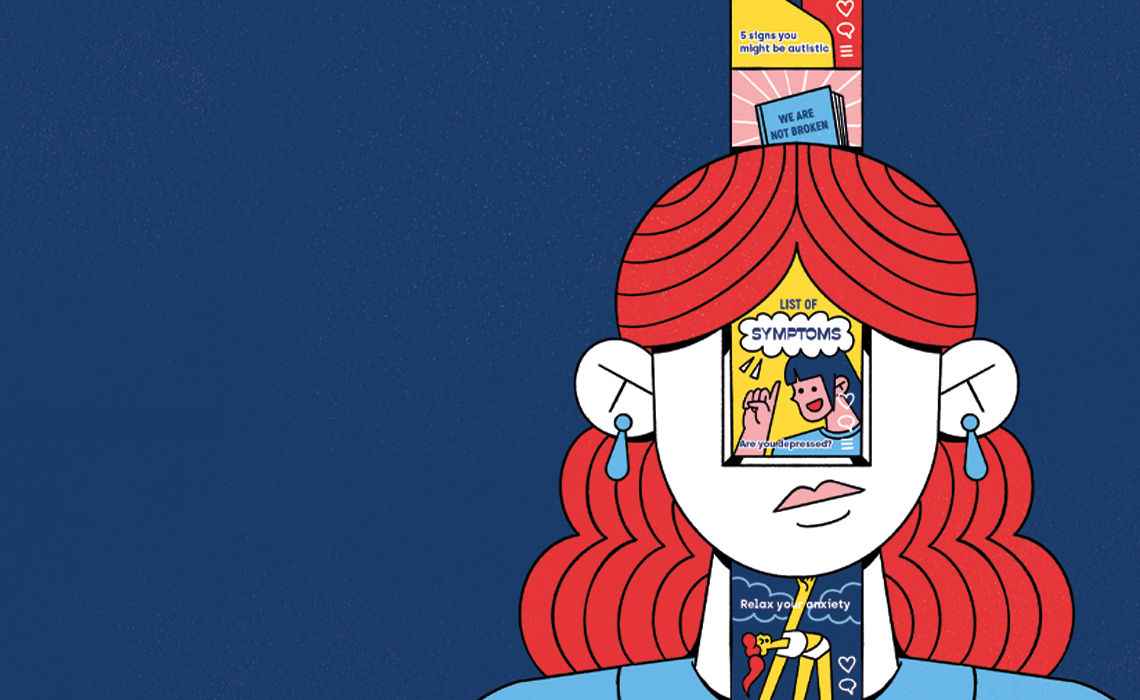
One minute you’re mindlessly scrolling. Next, you’re down a self-help rabbit hole, being interrogated with questions that land a little too close to home.
Do you struggle to finish tasks? Are you easily overwhelmed? Does it feel like your brain has too many tabs open?
Below, the comments read like a collective realization: This is so me. You just explained my whole life!
Welcome to the age of social media-informed self-diagnosis, a digital frontier where platforms like TikTok, Instagram and YouTube have become informal entry points into conversations once reserved for a doctor’s office.
According to a 2025 survey by LifeStance Health, nearly one-third of American adults say they have self-diagnosed a mental health condition using social media content. Among Gen Z, that number jumps to 50 per cent.
We are, by many measures, the most health-aware generation in history. But we are also navigating a landscape where anyone can speak with self-appointed authority and the algorithm rewards what resonates, not necessarily what is right.
So what happens when those two realities collide? And what does it mean for the people trained to diagnose and treat mental health?
The clinician perspective
Dr. Joanne Park, PhD, a clinical psychologist and assistant professor at Mount Royal University, noticed this shift firsthand about six years ago, coinciding both with the start of COVID and the rise of short-form video social media. Some clients, particularly youth and young adults, were arriving with theories already shaped by content on their phones.
“They’d say, ‘I saw these symptoms on social media and I think this fits me,’“ Park says. If the formal assessment didn’t align, some clients would simply pivot: “Okay, I found this other video … ”
“It felt a bit like they were chasing a diagnosis,” she says.
This pattern of “diagnosis shopping” wasn’t isolated. Colleagues across the country were describing similar experiences, yet there was little formal research examining how social media-informed self-diagnosis was shaping clinical care.
That gap led Park to collaborate with fellow MRU associate professor Dr. Malinda Desjarlais, PhD, whose research focuses on social media, and three psychology honours students-turned-alumni: Alyssa Peppler, Jessica Sadler and Wilfredo Vargas Suarez. Their ongoing study surveys clinicians across North America, exploring how often this shows up in practice, how strongly clients hold onto these beliefs and what it means for the therapeutic relationship.
Early findings confirm what Park suspected: this is not a fringe issue. Out of 47 clinicians surveyed so far, each one has encountered it, and many deal with it on a regular basis.
While the quantitative analysis is still underway, preliminary responses reveal a fascinating duality.
“Clinicians describe social media as a bit of a double-edged sword,” Vargas Suarez says. While they frequently flag the spread of misinformation, they also point to undeniable benefits like reduced stigma and earlier help-seeking.
Initially, Vargas Suarez worried self-diagnosis might delay professional care or damage the therapeutic relationship. Instead, preliminary data suggests the impact on rapport is often neutral, acting more as a starting point for negotiation between client and clinician.
While not everyone who self-diagnoses online will ultimately pursue professional follow-up, for those who do, that content can be a powerful catalyst. Clinicians report that clients most frequently ask about labels like attention deficit hyperactivity disorder (ADHD), autism, anxiety and obsessive-compulsive disorder (OCD). It is a trend Vargas Suarez says directly mirrors the most visible diagnostic language circulating online, where certain conditions have become highly normalized and broadly applied.
The power of being seen
To understand why self-diagnosis has gone viral, it helps to understand what it offers.
A 60-second video might be the first time someone realizes the traits they’ve spent years apologizing for — chronic forgetfulness, sensory overwhelm, the inability to start a task — might actually be symptoms of a brain that processes the world differently.
A well-documented example is women with ADHD. For decades, diagnostic frameworks were based largely on studies of hyperactive young boys. Women and girls, whose symptoms often present more inwardly, were frequently overlooked or misdiagnosed entirely.
“I’ve seen a lot of adult women finding some clarity through social media,” Sadler says. “For them, it’s like this huge weight has been lifted. They’ve finally figured out and been able to label this mental block that has been such a burden their whole life.”
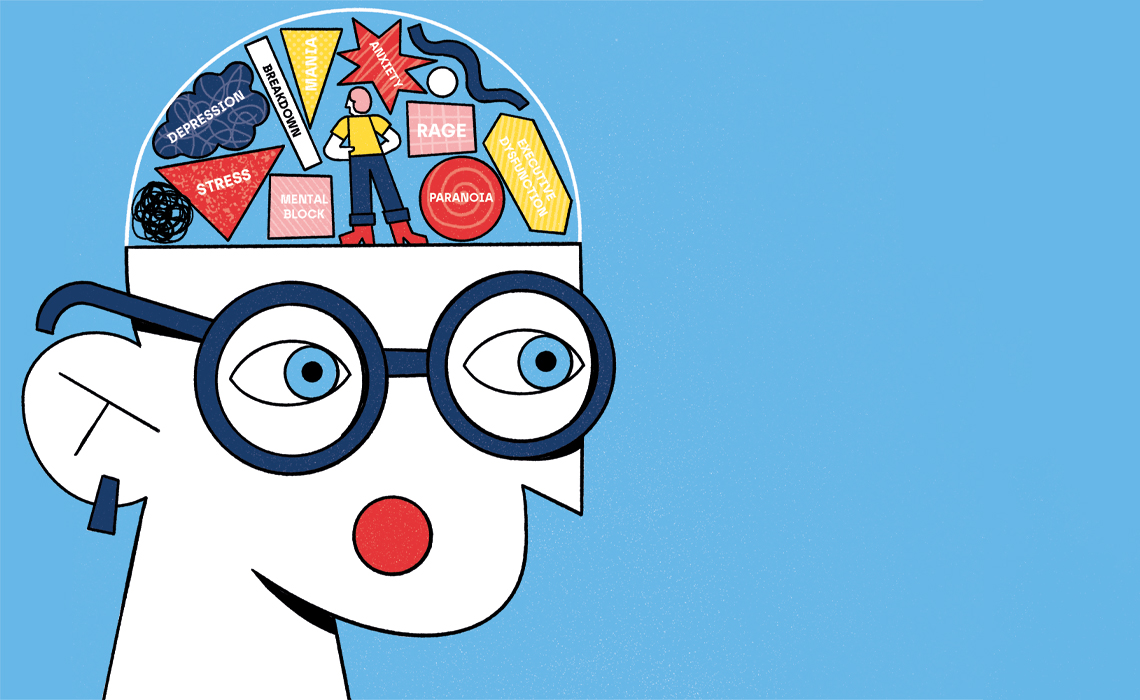
Another reason people can fly under the diagnostic radar is masking, a survival strategy involving the constant, often invisible work of adapting behaviours to fit a neurotypical world. These are people who appear to be coping, even thriving, while quietly working much harder than everyone else to stay afloat.
But masking is exhausting, and it doesn’t magically disappear with age.
That’s why recognition, even later in life, can be so powerful. In her work as an assessment co-ordinator at a Calgary practice that evaluates adult ADHD and autism, Peppler sees it often.
"I love hearing their stories and that moment of relief when they get the diagnosis and their lives are changed. They’re like, 'This makes so much sense.' It’s so validating.”
If an influencer’s reel is the fuel that finally pushes someone to seek an assessment and get the help they’ve always needed, it’s hard to argue against the value of that digital open door.
Context matters
But here is where the relief of recognition meets the reality of the algorithm. The very systems that make this content so accessible and easily digestible are also the ones erasing clinical nuance.
For her honours thesis, supervised by Desjarlais, Peppler analyzed the top 100 TikTok videos under the search term “ADHD,” coding how closely they aligned with the Diagnostic and Statistical Manual of Mental Disorders (DSM-5).
While 71 per cent mentioned at least one symptom that corresponded to the DSM-5 symptoms, “almost every single video was missing the contextual criteria needed for diagnosis,” she says.
In clinical practice, diagnosis involves multiple criteria beyond symptom count: symptoms must be pervasive across time and settings, significantly interfere with daily life and not be better explained by something else.
Social media, by design, strips that context away. Complex conditions are reduced to short, relatable fragments like being forgetful or struggling to concentrate — traits that can apply to almost anyone under certain circumstances.
“If people are seeing these videos and thinking, ‘I have ADHD based on this,’ they’re missing almost all of the contextual diagnostic criteria,” Peppler warns.
Research beyond MRU proves Peppler’s findings are not an isolated fluke, but a microcosm of a massive global trend. A recent, large-scale study from the University of East Anglia looked at rates of mental health misinformation across multiple platforms. The results mirrored what MRU researchers saw: TikTok was the worst offender, where over half of the content for ADHD and 40 per cent for autism was inaccurate or unsubstantiated.
One notable “bright spot” was YouTube Kids, which refreshingly had no misinformation on anxiety and depression, and less than nine per cent inaccuracy for ADHD. Researchers attributed this success to stricter moderation.
If we know how to curb health misinformation, why aren't the platforms doing more of it?
The reality is that they are businesses, and highly relatable, unchecked mental health content is an attention-grabbing revenue goldmine. For years, tech giants have essentially put virality ahead of public health, knowing that stricter moderation means losing engagement.
But the legal tide may finally be turning on this algorithmic free-for-all.
In a landmark March 2026 verdict, a California jury awarded $6 million to a woman who developed severe depression and anxiety after compulsively using social media as a child. They found Meta and Google liable for treating their apps as "defective products," deliberately engineered to exploit and addict developing brains.
If tech giants are increasingly forced to pay for the psychological toll of their designs, it could trigger an industry-wide reckoning — one that finally prioritizes user safety and clinical context over endless engagement.
Young and impressionable
For her honours thesis, Mediating the Relationship Between Social Media and ADHD Self-Diagnosis in Adolescents: Using Social Media for Mental Health Information, Sadler set out to track exactly how this digital landscape shapes self-perception. Supervised by Park, the research specifically investigated whether early social media use predicted later self-reported ADHD symptoms, and how online searches for mental-health content factored into that equation.
Using data from the University of Calgary’s long-running All Our Families cohort study, Sadler analyzed survey responses from nearly 1,400 local participants as they transitioned from late childhood (around age 10) into early adolescence (around ages 12 and 13).
The longitudinal data set offered a unique opportunity to “capture that transition when kids are especially vulnerable to social media influences,” Park explains.
More than half of the participants reported using social media to learn about mental health, and roughly 32 per cent said that content made them think they were experiencing symptoms of a disorder.
“That’s a few elementary schools’ worth of kids,” Sadler points out.
But there is a catch: when the adolescents' actual self-reported symptom scores were reviewed, the averages fell well below the threshold for clinical concern. The content they watched led them to believe their mental health was much worse than the data reflected.
Specifically, Sadler found that early social media use predicted a later increase in inattentive symptoms, like struggling to focus, but not hyperactive ones. This makes sense in a digital ecosystem built on constant notifications and short videos that continually disrupt developing attention spans.
However, this relationship isn't a simple one-way street. While social media might convince a teen they have ADHD, the reverse scenario also plays out. Adolescents who are already struggling — and who might lack trusted adults to talk to — often turn to TikTok or Instagram simply because they don't know where else to look for information on their mental health.
“Young teens are searching for who they are,” Park says. “Finding community online can be helpful, but if they don’t have the literacy or critical thinking skills to evaluate what they’re seeing, it can also cause problems.”
Still, there is a silver lining to the screen time.
“Social media captures adolescents’ attention in a way no other media source does today,” Sadler says. “There’s huge potential for increasing mental health literacy if used properly.”
That opportunity comes with a heavy responsibility: ensuring the content young people encounter is not just relatable, but reliable.
Valid without a label
Not everyone who seeks an assessment leaves with a formal diagnosis, but that doesn't mean their symptoms aren't real or that they don't deserve support.
In a clinical setting, a diagnosis is not a confirmation or rejection of identity. It’s simply a tool to help guide proper treatment. The internet, however, doesn’t like nuance. A rigid, black-and-white checklist or an emotionally triggering quiz will always go viral faster than a clinician gently explaining, "Well, it depends."
To be fair, the vast majority of creators mean well. While every corner of the internet has a few bad actors, most people are simply sharing their lived experiences, hoping to help someone else feel less alone. But good intentions do not equal clinical expertise.
“Nothing is ever black and white in this realm,” Peppler says. “There's so much to consider in the grey area.”
When people become too attached to a specific label pushed by a viral video, it can actually hinder treatment or miss the overlapping realities of anxiety, burnout or trauma.
“Most clients will come with openness,” Park says. “But there seems to be a small proportion of people that are seeking a specific diagnosis that validates them, which isn’t necessarily how mental health diagnosis works.”
“That’s the double-edged sword,” Peppler adds. “Social media can be a great starting point. But if people overidentify with things that aren’t accurate, it can lead them away from the supports they actually need.”
If you relate to information online, Park notes that the ideal next step is seeing a trained mental health professional like a psychologist. “Maybe the findings show it’s not the disorder you thought. Maybe you’re struggling in an area of your life that you still need help with. It’s still all valid.”
At the end of the day, you don't need a viral label to justify asking for help. The goal isn't to fit perfectly into a category — it's to figure out what’s hurting and how to fix it.
The access paradox
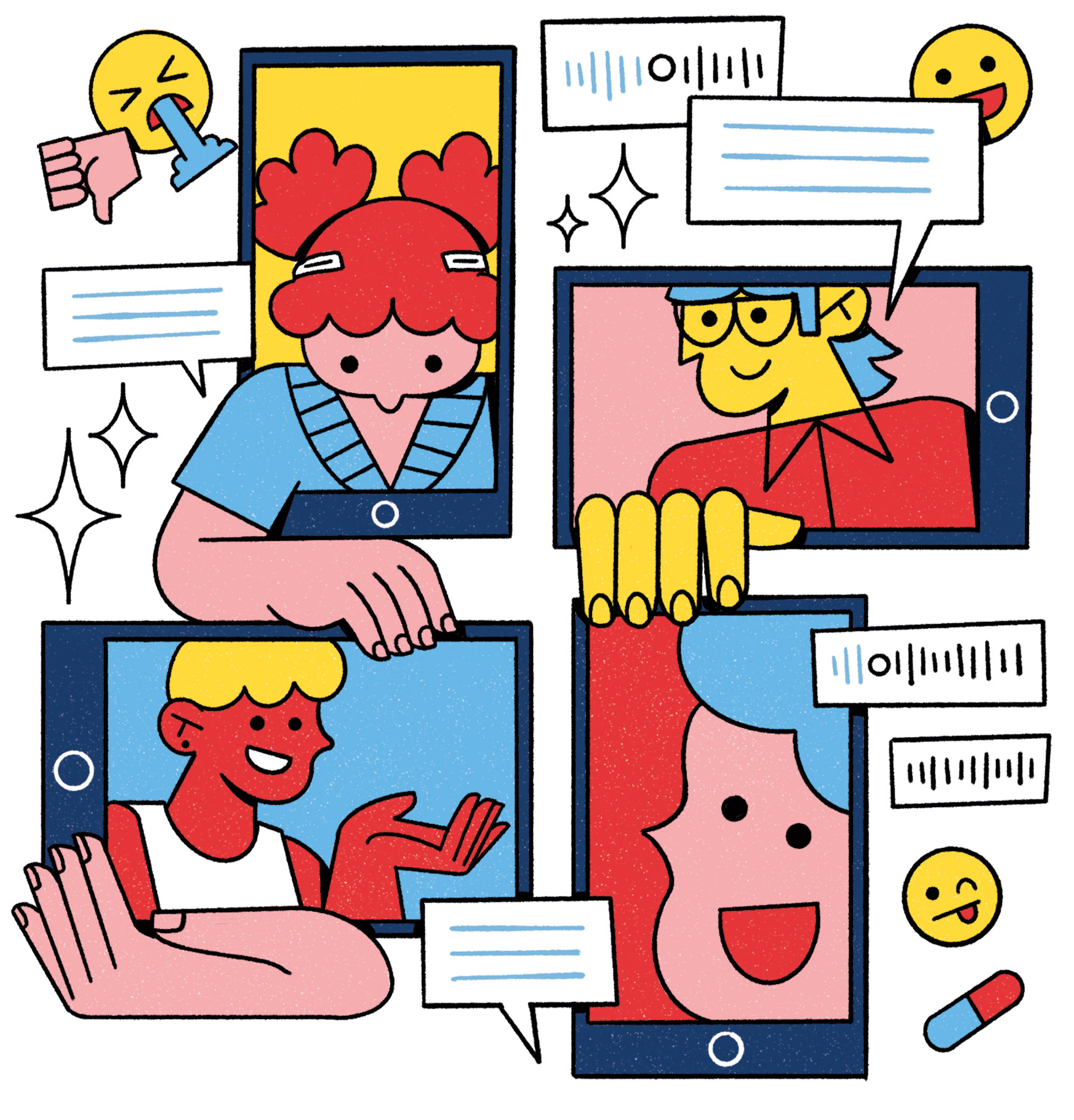
At the centre of this conversation is an uncomfortable truth: professional mental health care is not equally accessible.
In a perfect world, every TikTok-inspired realization would lead to a full assessment with cognitive testing, third-party reports and hours with a clinician. In reality, private evaluations can cost thousands of dollars and public waitlists are long.
“There can be a lot of barriers,” Peppler says. “Mental health care isn’t always accessible or affordable.”
Even so, there are ways forward. A family doctor can help rule out other causes, provide referrals or connect patients to publicly funded services. Community health centres, non-profits and university-based clinics can offer lower-cost or sliding-scale support.
Even before booking an appointment, there is value in taking a breath and closing the apps.
“Putting in the work to do your own research and critical thinking as a first step is really important,” Peppler says.
Looking beyond a trending reel and finding reputable sources, such as hospital websites, established mental health organizations or peer-reviewed research, can help restore the context short-form content removes.
The MRU team describes this as digital literacy. Not dismissing what resonates, but building on it carefully by asking where the information comes from, whether symptoms are long-standing or situational, and staying open to the possibility that the answer may be more complicated than a single label.
Social media may be a helpful starting point, but it should never have the final word.
Cautiously optimistic
For better or worse, the digital waiting room is open and social media-informed self-diagnosis is here to stay.
There are serious risks here with misinformation, oversimplification, diagnosis shopping and algorithms that prioritize engagement over accuracy. But there is also immense value in awareness, validation and connection, particularly for people who have long felt overlooked by traditional systems.
Both things can be true at once.
That sense of community is exactly what keeps people coming back. Online groups offer a vital space to share practical, non-medical tools, like how to hack a chaotic routine or manage sensory overload. The grey area darkens when community advice crosses into harmful territory, such as self-medicating, or when the digital echo chamber begins to breed a deep distrust of licensed medical professionals.
Then there’s everything in between, the part we are still figuring out. What does it mean to grow up with clinical language at your fingertips? How does it shape the way people seek help or show up in a clinician’s office? That work is still unfolding, both in research and in practice.
What we do know is that people aren’t usually looking for labels as much as they are looking for understanding. So when someone says a video resonated with them, the most useful response may not be to immediately correct them, but to ask why.
From there, the next steps matter. It requires a collective effort: educators integrating digital media literacy into classrooms and policymakers holding tech platforms to tighter safety guidelines. It demands health-care systems build more accessible, affordable pathways to care so the gap between recognition and support isn’t so devastatingly wide. And it means universities must train the next generation of psychologists to meet clients exactly where they are, ready to unpack a viral video without stigma or dismissal.
Because behind every self-diagnosis is a person simply trying to make sense of their own mind.
The algorithm might start the conversation, but it is context, care and human connection that will carry it forward.
Resources
MRU Mental Health Services: offers mental health assessments, medications and counseling services for current MRU students, employees and faculty. Get started.
University of Calgary Psychology Clinic: A low-cost, outpatient mental health program. Psychotherapy and assessment fees are determined using a sliding scale fee structure based on total household income. Learn more.
Primary Care Alberta Addiction and Mental Health Help Line: Call 1.877.303.2642 (toll free within Alberta) for mental health advice or dial 811 and follow the prompts to speak to the Addiction and Mental Health team.
If you or someone you know talks about suicide, self-harm, a mental health crisis, a substance use crisis, or any other kind of emotional distress, get help right away.
Call or text Canada's suicide and crisis hotline at 988.