 MENU
MENU



Feeding the Fire
A guide to the development of strategic initiatives
As you enter the lodge, you feel humbled as you crouch and enter through the doorway. This space is alive. You feel safe as the canvas encapsulates you, and you feel warmth as you find a space around the fire. It is time for the winter stories, and for four nights, you are present to listen to a gifted storyteller who accurately tells stories that have been passed down for generations. These stories are entertaining, instructive, scary and historical. You savour the experience night after night, since you can anticipate the narrative, gain new insights, appreciate the nuances and assist the storyteller with your memory of the details. Throughout each night, the fire is constantly fed to animate and maintain the space.
Purpose of this Guide
Stories help us understand how others have carried a responsibility, how they have lived with challenges, or how they have strived to live a good life. Feeding the Fire draws on this way of learning. Rather than offering a checklist or a prescribed sequence of steps for creating initiatives, it shares stories of initiatives that have taken shape across Mount Royal and the lessons they offer.
In Inii Awattoo, the fire represents the initiatives that give life to our shared commitments and keep ethical space alive. Each story in this guide is one example of how a person, team or unit has chosen to begin or continue their journey to indigenization and decolonization at Mount Royal. None is meant to be copied. Instead, they offer possibilities — ways of seeing, understanding and imagining what might be needed today.
As with all stories, meaning comes through reflection. You are invited to consider how each example relates to the six strategic priorities, what teachings resonate with your work, and where movement is possible. Through interpretation and relationship, new initiatives can take form and help keep the fire burning.
The Stories
At Mount Royal, there have been many initiatives that advance indigenization and decolonization, to be celebrated through story. The stories that follow are a curated sample that reflects the work of a wide range of units across the University. Each story touches on one or more of the four foundational poles outlined in Inii Awattoo, showing how the work of indigenization and decolonization takes shape in diverse contexts.
These stories offer moments of movement — times when people have acted, listened and collaborated to feed the fire. Their purpose is to spark reflection and help readers imagine what tending the fire might look like in their own areas.
So you are welcome to sit with us for the stories. There is room.
Blackfoot Odyssey
A Course by Christopher Grignard, Joe Eagle Tail Feathers, and the Academic Development Centre
Hear the story of Blackfoot Odyssey
The O’to po’pa Field School Journey
Developed by Roy Bear Chief, Hayden Melting Tallow, Audra Foggin, Sarah Brown and Christina Tortorelli
Hear the story of the O’to po’pa Field School
Inii Awattoo
Created near Charlton Pond by Facilities Management, Michael Clark (Geology), Dion Simon (Iniskim Centre) and Elder Miiksika’am
Hear the story of Inii Awattoo
Ceremonial Gifting
Cultural Disbursements were developed by Debra Scott, Manager, Payables & Expense Management and John Sambo, Manager, Receivables & Treasury with Dion Simon, Medicine Trail Coordinator and John Fischer, Director, Iniskim Centre in 2016.
Hear the story of Ceremonial Gifting
Kimma pi pitsin
Transferred in ceremony by Elders Doreen Spence and Roy Bear Chief
Hear the story of Kimma pi pitsin
Resources
Learn more about indigenization and decolonization at Mount Royal:
Blackfoot Odyssey
A Course by Christopher Grignard, Joe Eagle Tail Feathers, and the Academic Development Centre
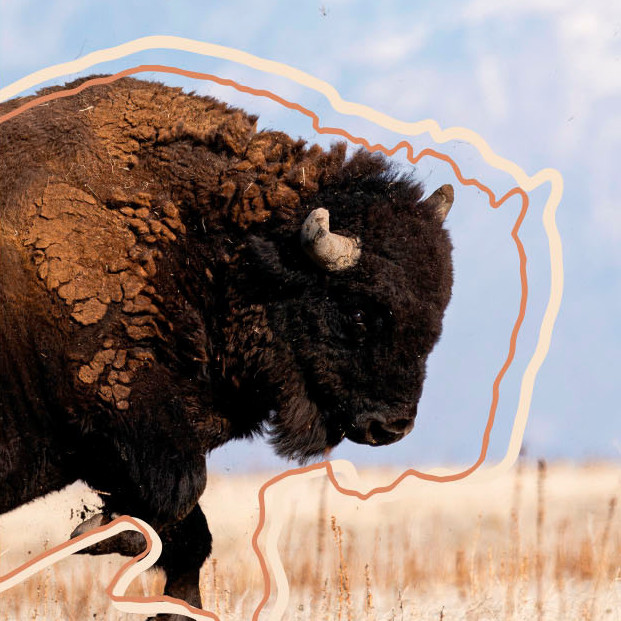
Blackfoot Odyssey is a learning unit developed by Chris Grignard and the Academic Development Centre (ADC) for a course taught every Winter semester, ENGL 3353: North American Indigenous Literatures. Since he started at MRU in 2022 as an Assistant Professor of Indigenous Literatures, Christopher re-conceptualized the course, placing an emphasis on taking a ceremonial and sacred approach to the subject matter. In the spirit of the oral tradition, a new curriculum was created from the stories and life experiences of Blackfoot (Kainai) Elder and ceremonialist Joe Eagle Tail Feathers. This curriculum is grounded in Indigenous ways of knowing and being, Indigenous pedagogy, land-based learning, and Indigenous languages and ceremonies. There is an Indigenous-informed experiential learning component to this work, and that uniqueness has to do with its sacred and ceremonial nature through the involvement of a ceremonial elder.
ADC’s Academic Media Group created videos of Elder Joe in which he talks about six Blackfoot sacred sites where he was taught through vision traditional protocol to conduct ceremony. ADC’s eLearning developer Khethwen Woo created the course’s D2L Brightspace based on Joe’s materials, such as his tipi design, and Christopher’s conceptual vision for the course. Everything was developed in consultation with Joe, and he offered his approval for the use of his material on a permission form created with MRU’s legal team.
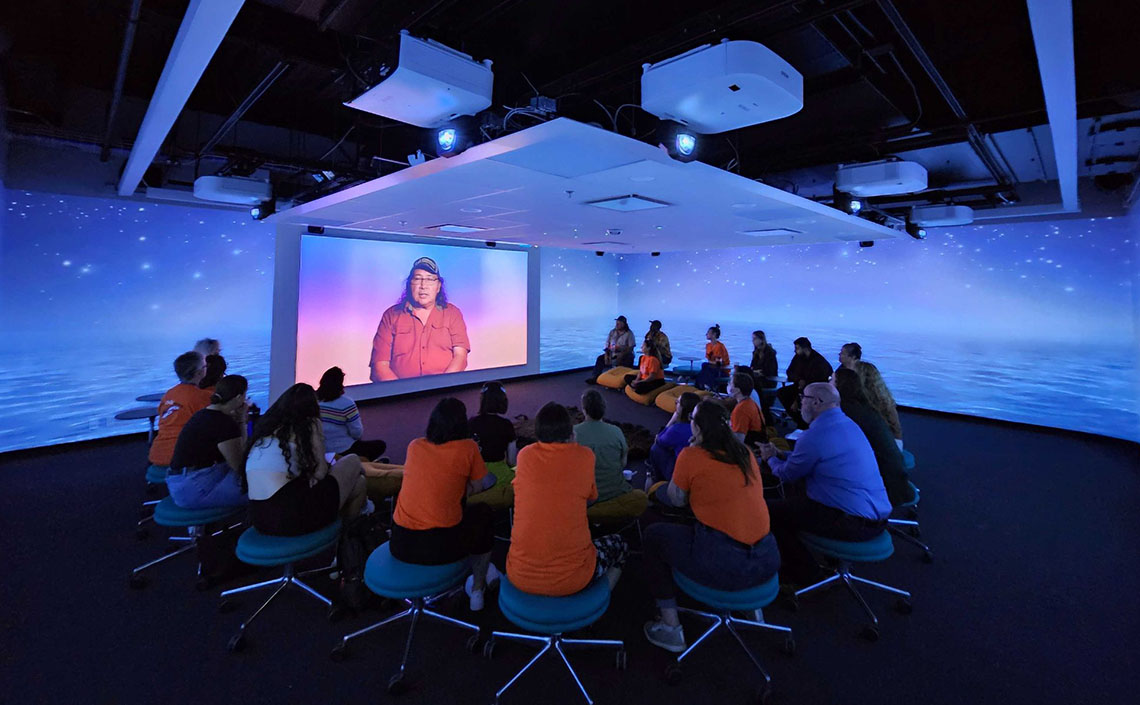
Premiering Belly Buttes video at Mount Royal's Immersion Studio with Joe Eagle Tail Feathers in attendance (Sept. 25, 2024)
Through the Blackfoot Odyssey course, D2L Brightspace moves away from being a learning management system and becomes a personalized learning platform. At MRU, it plays a significant role not just serving as a site of a revived treaty relationship but becoming a knowledge bundle for the students to explore. Christopher’s vision of the Indigenous Literary Lodge conceptualized Brightspace as being informed and designed by Elder Eagle Tail Feather’s vision. In Brightspace, now transformed into an Indigenous literary lodge, students are presented with Elder Joe’s stories as he experienced them through his personal learning journey and odyssey, many involving the guidance of his visions. It offers learners an experience to look through another lens to experience a different way of seeing from the ones to which they have been accustomed. Thus learners have the chance to see through both a decolonized and indigenized lens.
Foundational Poles reflected in this story:
- Elevate Indigenous lifeways
- Build and sustain relationships, partnerships and nation-to-nation commitments
- Initiate and establish decolonial practices, systemic change and institutional responsibility
The O’to po’pa Field School Journey
Developed by Roy Bear Chief, Hayden Melting Tallow, Audra Foggin, Sarah Brown and Christina Tortorelli
Cultivation and Roots
It is an honor to share this story with you. As you read, consider the relationships that you have already as a starting point for possibilities. We have dreamed of this field school for many years. This is how the field school journey began, centered in existing relationships and nurtured to grow into something more impactful than our team could have imagined. As Elder Roy Bear Chief reflects on the emergence of this field school in 2025, he shares this reflection:
“I met with Christina Tortorelli about a year ago over coffee to discuss her idea about a field school. During our conversation, the word “o’to po’pa” started to appear and I wrote it down. After our discussion, I showed it to Chris and told her that this is what she was looking at and offered the idea of using Blackfoot Crossing Historic Park as the site. I told her that in English it means, “sitting down to learn” and shared how it was used to answer the question, when a residential school survivor would ask you, “kitoh’ to pi’pa” or “did you go to residential school”.
I recaptured the word and put it into its proper context to mean sitting down to learn rather than going to residential school. When we look at the field school Blackfoot title, “O’to po’pa” it references “sitting down to learn” because that was how teaching and learning was done in the past. The land that people sit on was the classroom space. Nature was the lab with all the specimens that it had to offer, hands on teachings occurred around medicine or food sources. What roots or plants to use for medicine? Where to pick them and when to pick them? What roots are good for consumption, and where to pick them? What time of the season do you pick them? This is experiential learning in real time.”
Sprouting
The O’tó po’pa Field School has emerged through relationship-building with Elders and Knowledge Keepers at Mount Royal University, Siksika Nation, the team at Backfoot Crossing Historical Park, and with community members who have chosen to share their knowledge, time, and guidance. The course genuinely emerged from a community and is sustained through relationships with community.
Sustaining these relationships has required deep listening, humility, and a willingness to move differently within institutional spaces. It has meant allowing trust to develop over time and recognizing that relationships must come before tasks. The work unfolds through reciprocity and ongoing presence, not through one-time consultation or symbolic inclusion.
The importance of travelling to Siksika land was reinforced when Siksika people noticed that this was the opposite of their experience. Most often, Elders, knowledge keepers, and community members journey away from their community and their lands and come to us. When we take the time and genuinely show up, magic happens.
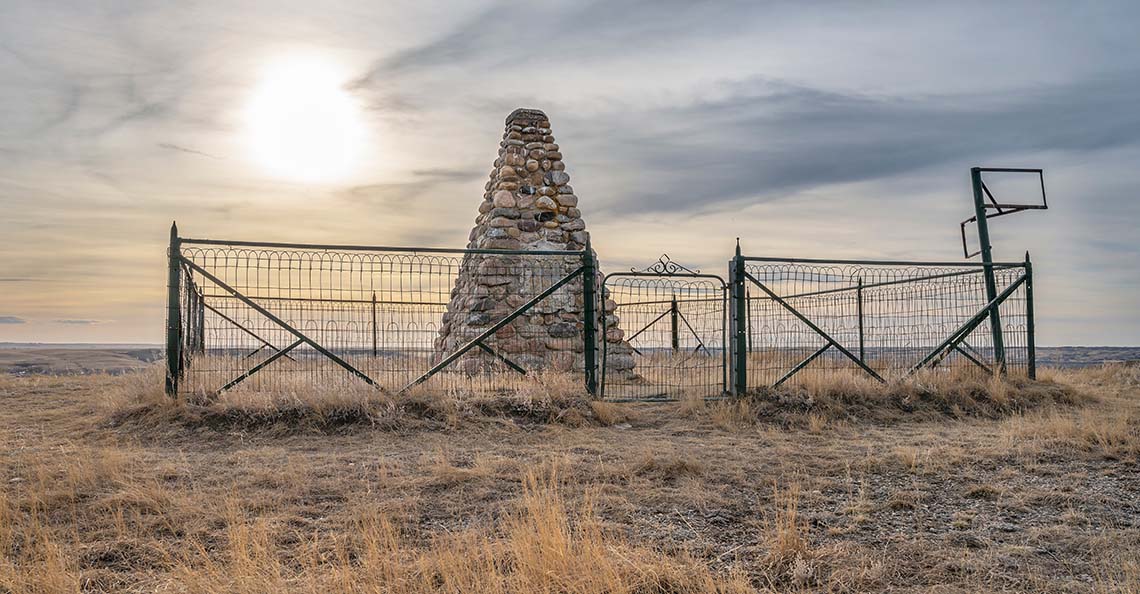
Treaty 7 Monument at Blackfoot Crossing
Nourishing
The MRU instructional team consists of Audra Foggin and Sarah Brown. The ethical space between Indigenous and Settler perspectives creates space for reflexive dialogue on decolonizing curriculum. The field school, however, is certainly not delivered by instructors alone. It is carried by a community whose members hold layered relationships: to the land, to one another, to their histories, and to the institutions that shape our shared spaces. These layers of relationality shape what and how students learn. Knowledge emerges through place, story, ceremony, dialogue, and shared experience, disrupting conventional pedagogical structures, inviting a different orientation to space, authority, and knowledge. In turn, the students created a strong community through shared intentions and experiences.
In this way, Indigenization and decolonization are not abstract goals within the course. They are lived practices enacted through ongoing relationships that extend beyond a single week in the field. The work is imperfect and evolving, and it requires continual reflection and care. What sustains it is not a strategic objective, but trust built over time.
Flourishing
Land-based learning means offering each student an opportunity to sit on Mother Earth to learn. A transformational process occurred in the students as each student shared their looking, listening, and learning reflections throughout the five days of living in the Blackfoot world with each other, and within the community that supported them.
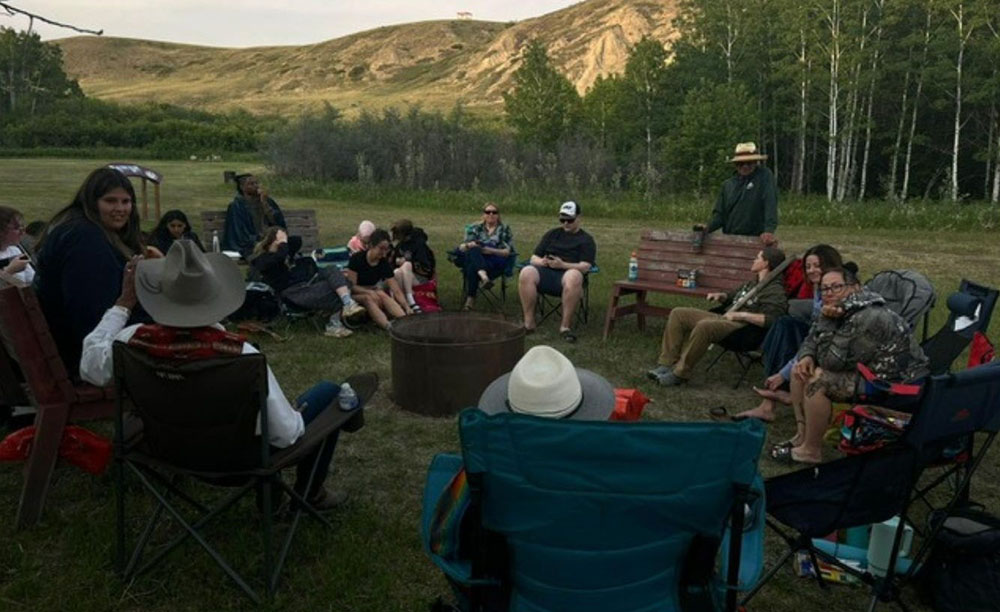
Students of the O’to po’pa Field School sitting around a campfire
The sixteen students who participated experienced growth through relationships with one another, with the land, with Elders, with members of the Siksika Nation, and with faculty. The relationships extended beyond the duration of the field school. These students are furthering their relationships by connecting with students who will participate in Spring 2026. In this way, the cohort expands not only numerically but relationally, as commitments to one another and to the community deepen over time.
The land and community did not simply host the learning, they actively shaped the ways participants encountered knowledge and one another. In doing so, O’to po’pa Field School responds to the Calls to Action 62 and 63, issued by the Truth and Reconciliation Commission of Canada, particularly those directed toward post-secondary institutions to engage in intercultural understanding, mutual respect, and education for reconciliation. This meaningful work strives to embody MRU’s Indigenization and Decolonization Strategic Framework.
Listen to more about O’to po’pa Field School Journey from the authorsFoundational Poles reflected in this story:
- Advance truth and reconciliation
- Elevate Indigenous lifeways
- Build and sustain relationships, partnerships and nation-to-nation commitments
- Initiate and establish decolonial practices, systemic change and institutional responsibility
Inii Awattoo
Created near Charlton Pond by Facilities Management, Michael Clark (Geology), Dion Simon (Iniskim Centre) and Elder Miiksika’am
As you walk along the west side of Charlton Pond, you see a garden with several boulders in a line and a metal stand in the shape of a buffalo with a territorial acknowledgement and a passage composed by Elder Miiksika’am. The plaque says:
“In the buffalo days, inii made their annual move in the springtime to their calving sites, such as near Buffalo Lake (a sacred Blackfoot site) in the northwest part of the Blackfoot traditional territory. Today the young and old seek knowledge at Mount Royal University. When completed, they are able to benefit from their journey. Education is the new buffalo from which a good life will be attained. Iniskim Centre was named through a Blackfoot ceremony, it was destined to find the Buffalo. Inii is here and on the move.”
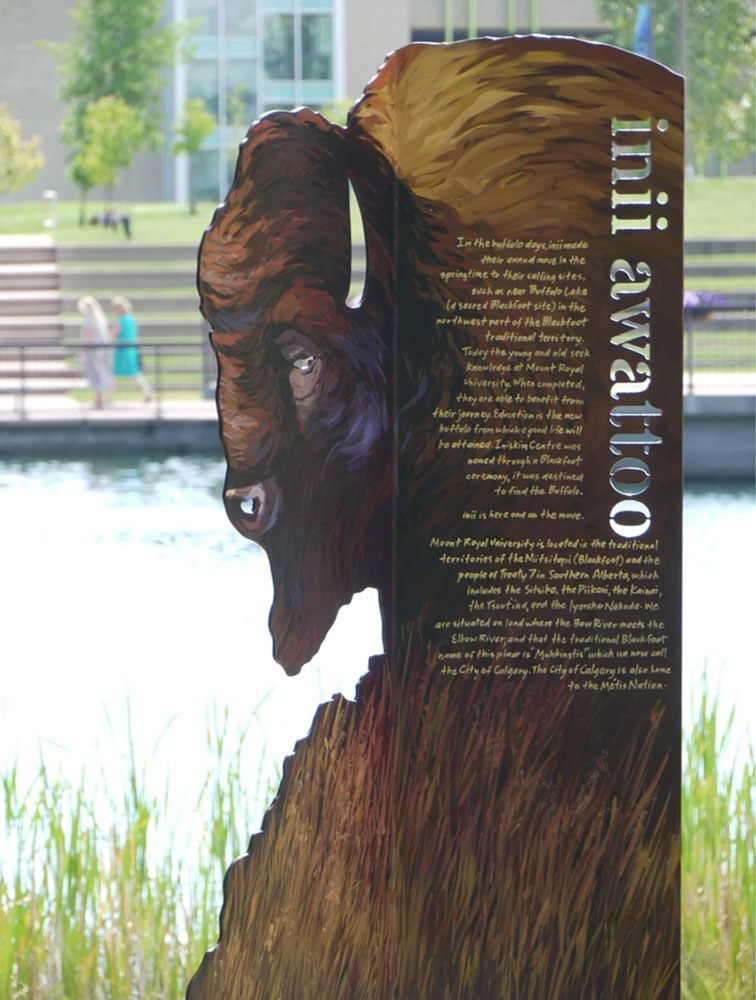
The buffalo-shaped metal stand of the inii awattoo installation.
In 2017, a new campus installation called inii awattoo (Buffalo on the Move) was positioned near Charlton Pond, where millions of bison once roamed and thousands of students now learn. The installation includes seven carefully placed rocks that came from traditional Blackfoot territory. Facilities Management staff initiated the project as a way to honour the Indigenous population on campus and provided transportation and installation. Michael Clark, an instructional assistant in the Faculty of Science and Technology, sourced and selected the rocks, which are around 500 million years old. The rocks were transported to the campus and installed on a bed of earth in a line. The concept was developed by Elder Miiksika’am (Clarence Wolfleg Sr.) and Dion Simon (Medicine Trail Coordinator at the Iniskim Centre). The Iniskim Centre worked on positioning the rocks in a pattern representing a herd of buffalo. A sign that points north tells of the vision of the installation and the land acknowledgement.
The central message of the installation is encapsulated in the phrase "Education is the new buffalo." This teaching suggests that while the buffalo historically provided all the sustenance, clothing, and tools necessary for survival, education has now become the means by which Indigenous and non-Indigenous people can achieve a good and sustainable life.
“I thought the big, lead rock looked like a buffalo sitting down, looking north,” Miiksika’am says at the time of the installation, clearly proud of the impact inii awattoo has had as a signature location. He saw the seven rocks as buffalo heading north after he had a meeting with the Mount Royal President where they discussed leadership and indigenization.
In 2026, when he was asked to suggest a name for the Indigenization and Decolonization Strategic Framework, he responded immediately with “ inii awattoo”.
Foundational Poles reflected in this story:
- Teaching and learning of treaty relationships
- Strengthen Indigenous learner success and belonging
- Build and sustain relationships, partnerships and nation-to-nation commitments
Ceremonial Gifting
Cultural Disbursements were developed by Debra Scott, Manager, Payables & Expense Management and John Sambo, Manager, Receivables & Treasury with Dion Simon, Medicine Trail Coordinator and John Fischer, Director, Iniskim Centre in 2016.
Ten-Year Anniversary of the Cultural Disbursement Form
Before 2016, gifting elders and ceremonialists relied completely on a process that was based on transactions. They were being compensated with funds rather than being provided gifts in reciprocity for their expertise, knowledge, and earned rites. This viewpoint — that they are being paid for services rendered — did not acknowledge how many Indigenous Peoples give gifts to elders, ceremonialists, drummers, and dancers as a respectful act of reciprocity.
An elder is asked for advice or to do a ceremony through an offer of tobacco. When the ceremony is complete, the elder is presented with a personalized gift, a thank-you card, and a cash gift that is in line with the nature of the ceremony. It is the cash component of the gifting that was challenging for university employees to offer. Ceremonies are not transactions. They are not services that have fixed pricing. Thus, signing for the receipt of a cheque, supplying a SIN number, and address are practices that limit participation and are mitigated through the Cultural Disbursement Form. This reflects an intentional shift from transactional to relational relationships.
With the development of the Indigenous Strategic Plan 2016-2021, an increasing number of elders and ceremonialists were invited to the campus. There was an explicit need to develop a process for staff to be able to access cash for gifting using their department finance codes rather than their own resources or claiming expenses. Claiming expenses would still be transactional since receipts were required.
Debra Scott, John Sambo, Dion Simon, and John Fischer met and reviewed several First Nation Protocol documents from various Universities, including the Blackfoot and First Nations Métis and Inuit Protocol Handbook, University of Lethbridge, 2013: Pamphlet #23 Elders Protocol, University of Manitoba; University of Winnipeg’s Elder Protocols; and Elder Protocols and Guidelines, University of Alberta 2012. These protocols affirmed the process needed to support the inclusion of cash gifts as a reciprocal process.
The complexity of the task included finance protocols such as the security of cash on campus and the ability to track the process for purposes of audit. Debra Scott and John Sambo developed the processes for using the Indigenous Cultural Disbursement Form . The form was first used by faculty working with Elders in August 2016.
The form is to be signed by a budget manager and the Director of Iniskim Centre (and later the Associate Vice-President, Indigenization and Decolonization) in order to provide access to the cash office services. It has been updated several times and exists in the shared drives with other finance forms. An associated document, the Indigenous Cultural Disbursement Form Procedures , outlines the circumstances for use of these gifts.
The importance of this process is that it provides a mechanism for staff to meet community expectations around ceremonial gifting. It is an important act of decolonization that has stood the test of time. Some employees may be unaware of the process. In 2023, the Protocol and Engagement Fund was launched to support the understanding of protocols and educate employees about the use of the Indigenous Cultural Disbursement Form.
Foundational Poles reflected in this story:
- Initiate and establish decolonial practices, systemic change and institutional responsibility
- Elevate Indigenous lifeways
Kimma pi pitsin
Transferred in ceremony by Elders Doreen Spence and Roy Bear Chief
As you walk into the Recreation Building at Mount Royal, there is a large wooden frame holding a painted buffalo robe. The design painted on the robe represents the teaching of Elders Spence and Bear Chief, which was transferred in a ceremony on the National Day of Truth and Reconciliation in 2022. There are many ways to remember. Those who attended the ceremony carry a responsibility to remember what they witnessed that day.
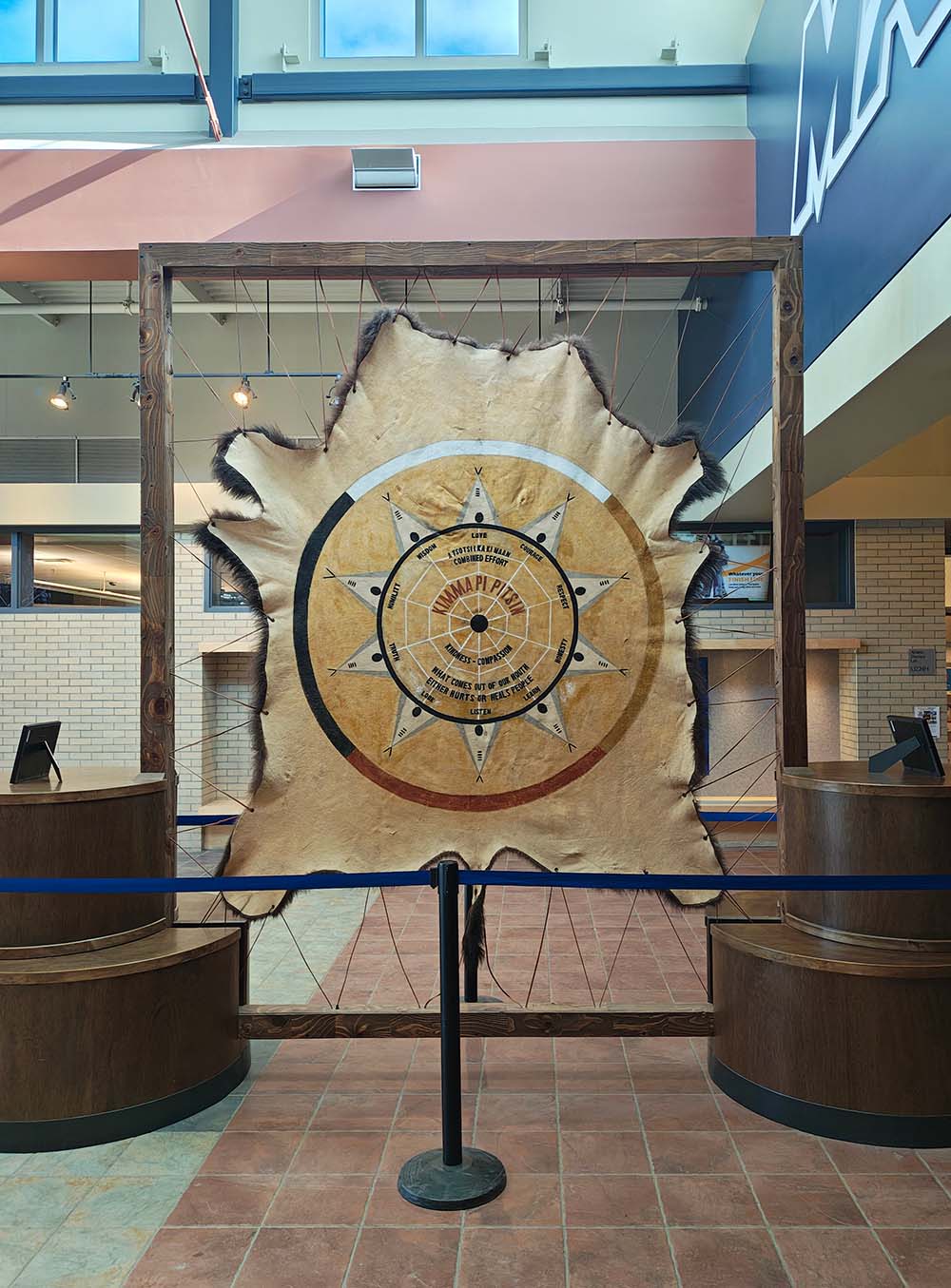
The painted buffalo robe hanging in its frame at the Recreation entrance of Mount Royal University.
On Sept. 30, 2022, a transfer ceremony was held in a double lodge erected on the East Gate lawn. The community gathered to witness the transfer of Kimma pi pitsin to the University, so it would be available for teaching. The teaching was developed by Elders Doreen Spence and Roy Bear Chief, who brought together Blackfoot and Cree perspectives. The combined teaching addressed the importance of kindness and compassion, kimma pi pitsin in Blackfoot and kisêwâtisiwin in Cree. The teaching was one outcome of a research project that included Andrea Kennedy, Jillian Bear Chief, Katherine McGowan, Mohamed El-Hussein, Stephen Price and Dion Simon. The teachings help to advance reconciliation, promote partnerships and caring, and fill the need for guidance from Elders.
Jill Bear Chief designed the emblem that was painted onto a buffalo robe by Dion Simon. The Buffalo Robe was blessed in a ceremony by Miiksika’am. Additionally, Elder Miiksika’am transferred the rites to Dion Simon to be able to paint a buffalo robe. Dion Simon had the painted robe mounted, and it was installed in Spring 2023.
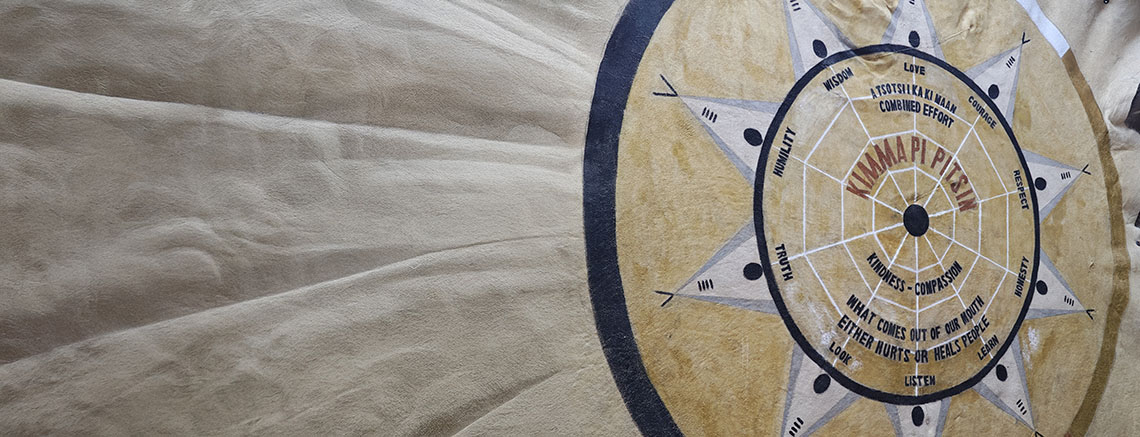
Close up image of the painted emblem.
At the transfer ceremony, Espoom taah (helper) Roy Bear Chief told the story of the design philosophy, and the hard work and dedication of the team over many years that led to it. Grandmother Doreen Spence shared her teachings in the design. MRU president and Vice-Chancellor Tim Rahilly, PhD, received the transfer.
“I acknowledge the gift and share with you my sincere gratitude for it. The challenge for me is to take this knowledge and incorporate it into the way I lead and stretch myself, and apply this for all people at the University, but particularly for the Indigenous people,” Rahilly said. “This means so much to me personally, and it’s such a gift to the University.”
Foundational Poles reflected in this story:
- Elevate Indigenous lifeways
- Build and sustain relationships, partnerships and nation-to-nation commitments
- Initiate and establish decolonial practices, systemic change and institutional responsibility