 MENU
MENU



Preparing for a career in the modern justice system

Building a successful career in today’s justice system requires far more than standard training. Modern policing and public safety careers need professionals equipped with emotional intelligence, strong interpersonal skills and a comprehensive understanding of how the legal system functions.
Mount Royal’s Police Studies Extension Certificate has helped learners build a deeper understanding of Canada’s justice system – and how they might work within it – for over two decades.
Offered through the Faculty of Continuing Education, the program provides students with the knowledge they need to prepare for careers in this field from building a solid understanding of policing, courts and corrections to developing in-context interpersonal and analytical skills. As an online offering, learners from across Canada can complete the program at their own pace while balancing jobs, shift schedules and everyday life.
“We’ve had students from across the country, from Vancouver to Nova Scotia,” says Justice Studies professor and program instructor Doug King, who helped develop the program. “We’ve even had members of the Canadian Armed Forces who were deployed overseas taking the courses.”
That flexibility continues to be one of the program’s defining features. Students working in security, law enforcement or other shift-based roles can complete their coursework whenever their schedules allow – even in the early hours of the morning.
While many students begin the program with an interest in policing, the course content applies to careers beyond becoming a police officer. The program introduces students to key areas of the justice system, such as criminal law, policing practices and the structure of courts and corrections. Courses also explore contemporary issues like diversity in policing and the evolving role of law enforcement in Canadian communities.
King – who teaches the program with Dr. Scharie Tavcer, PhD – says this broad perspective helps students understand the system as a whole.
“If you aspire to work anywhere in the justice system, you should know how it works,” he explains. “You should understand the difference between municipal policing, provincial policing and what the RCMP does, and how the court system and criminal law operate.”
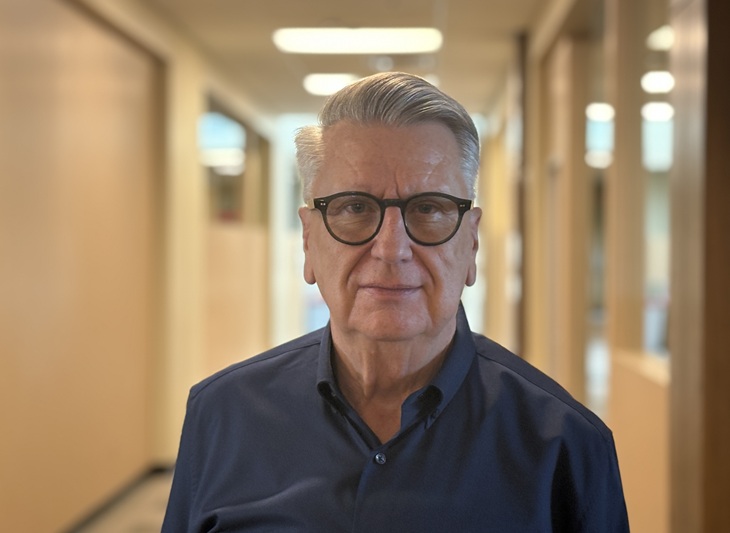
One of the program’s most valuable components focuses on interpersonal skills – essential skill-building for anyone working with the public. Along with learning about effective communication, teamwork and conflict management, students also examine issues such as bias and diversity in the justice system, exploring how professionals can recognize their own assumptions while maintaining fairness and objectivity in their work.
“If you’re a police officer working in a patrol car with a partner for ten hours a day, you need strong interpersonal skills,” King says. “But those skills are valuable in many other careers as well.”
While many participants are early in their careers, the program regularly attracts students from a wide range of backgrounds. Some are security professionals hoping to advance into law enforcement or public safety roles while others are considering a career change, looking to deepen their understanding of the justice system, or are simply interested in the subject.
The mix of perspectives often leads to rich discussions, says King. “You can see the difference between students who want to work in the system and those who are just fascinated by how it operates. All perspectives add something valuable to the conversation.”
King believes understanding the justice system is valuable regardless of the specific role someone hopes to pursue. The program also reflects the growing variety of roles connected to modern policing. In addition to sworn officers, police organizations rely on analysts, communications specialists, dispatchers and other civilian professionals.
More than 20 years after its creation, the Police Studies Extension Certificate continues to evolve alongside the profession it explores. For students interested in understanding the justice system or finding their place within it, the program offers a flexible and practical starting point.
Learn more about the Police Studies Extension Certificate program and courses