MENU


Faculty Research and Scholarship Spotlight
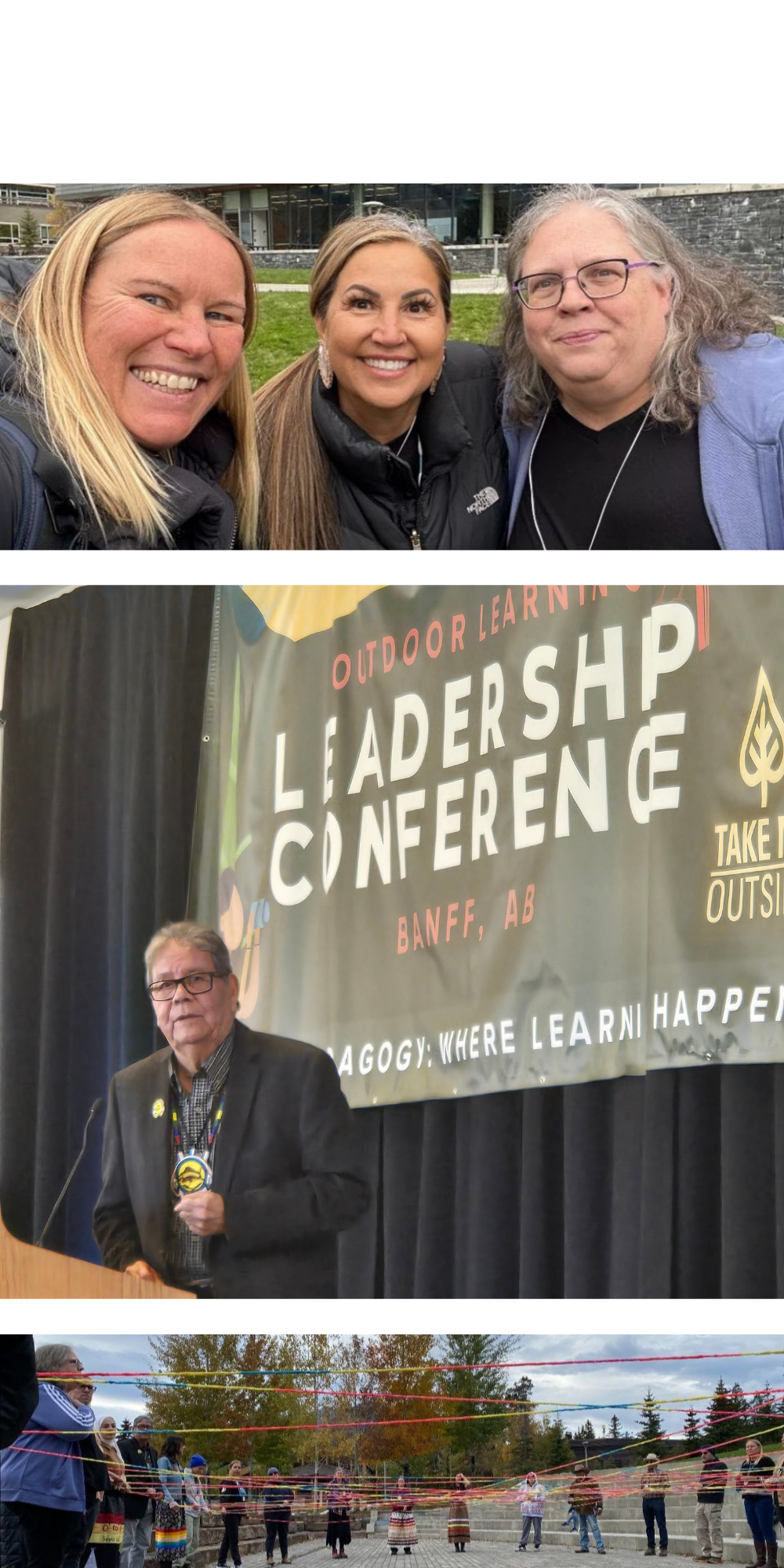
Social Work Program Faculty Present in Banff
Our team — Elder Roy Bear Chief, Elder Hayden Melting Tallow, Audra Foggin, Sarah Brown, and Chris Tortorelli — was invited to present on the Community Development Field School at Blackfoot Crossing in spring 2025, where Elder Roy Bear Chief opened with powerful stories, including Ani to pisi, and a blessing that grounded participants in Blackfoot ways of knowing. Later that day, students joined us in building a spider web to reflect on how the field school was imagined, experienced, and embodied through learning on the land, joined by K-12 educators from across Canada and the U.S. who became part of the connections in the web.
This theme continued at the Take Me Outside Outdoor Leadership Learning Conference (October 16–18, 2025, at the Banff Centre), where Elder Roy Bear Chief, MRU faculty Dr. Sarah Brown, Christina Tortorelli, and Audra Foggin, alongside seven student presenters, led an interactive session on the birth of O’to’po’pa (Sitting on the Ground to Learn). Rooted in Blackfoot teachings and protocol, the session traced how the field school grew from social work education into an interdisciplinary, intercultural offering that advances reconciliation through accountable, land-based relationships.
Elders offered place-grounded guidance from Siksika and Blackfoot knowledge, while students shone as they co-created an Ani to pisi web of learning and growth, mapping teachings, practices, and pathways for educators to adapt within their own contexts.
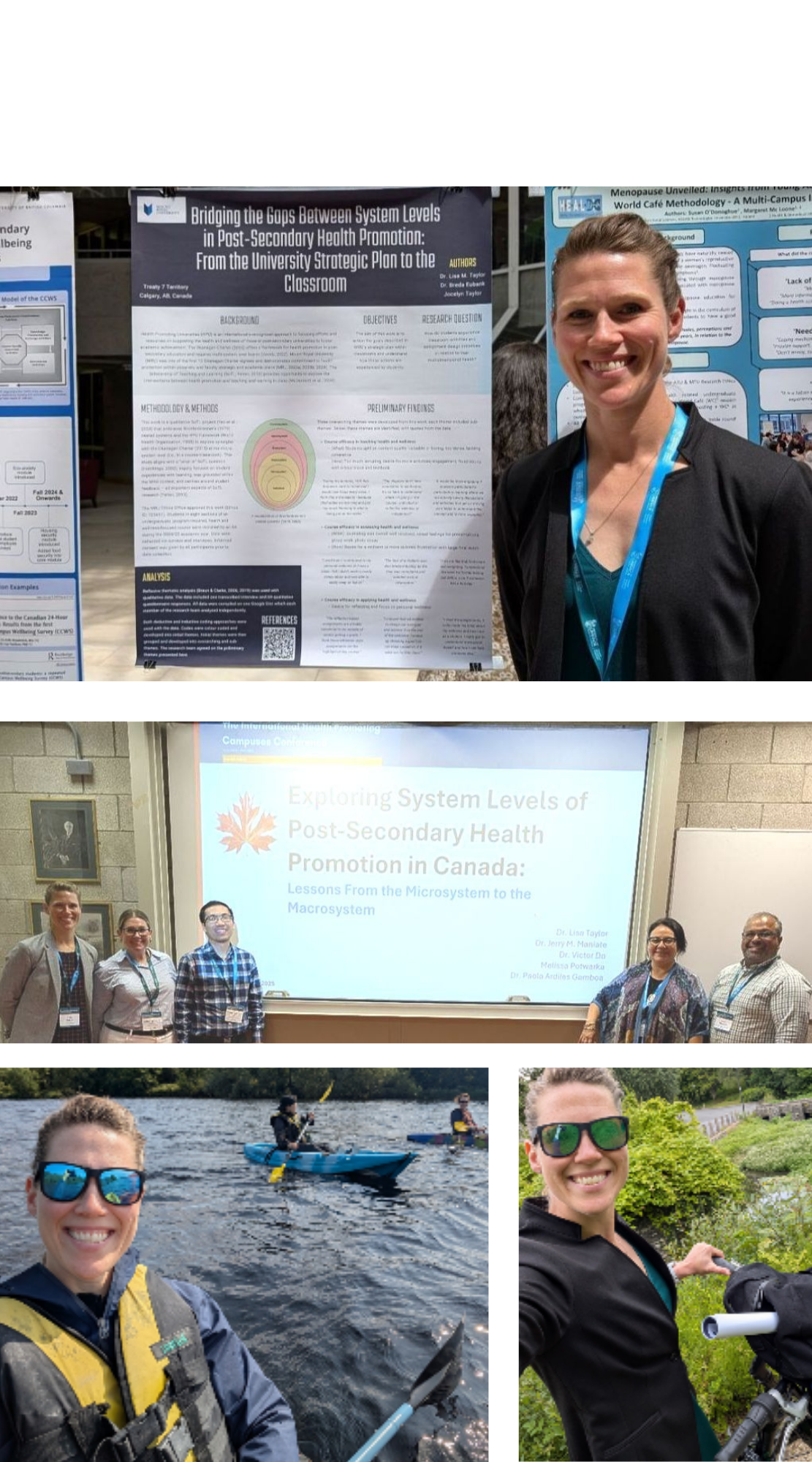
Dr. Lisa Taylor Presents in Ireland
In June 2025, Dr. Lisa Taylor traveled to Limerick, Ireland, to lead a symposium at the International Health Promoting Campuses Conference. This conference marked the 10th anniversary of the Okanagan Charter, which has inspired post-secondary momentum toward creating healthier campus communities worldwide.
The symposium, led by Lisa alongside four Canadian colleagues, focused on sharing examples and experiences across the multiple system levels within post-secondary education, the coordination of which has the potential to support effective health promotion.
Lisa also presented a research poster on a Scholarship of Teaching and Learning project exploring how course instruction and assignment design influence student wellness; a project she collaborated on with MRU’s Dr. Breda Eubank and alumnus Jocelyn Taylor. It was a joy for Lisa to connect with colleagues, contribute feedback to the developing Limerick Framework for Action (to be launched in December 2025), and experience many gifts of Ireland!
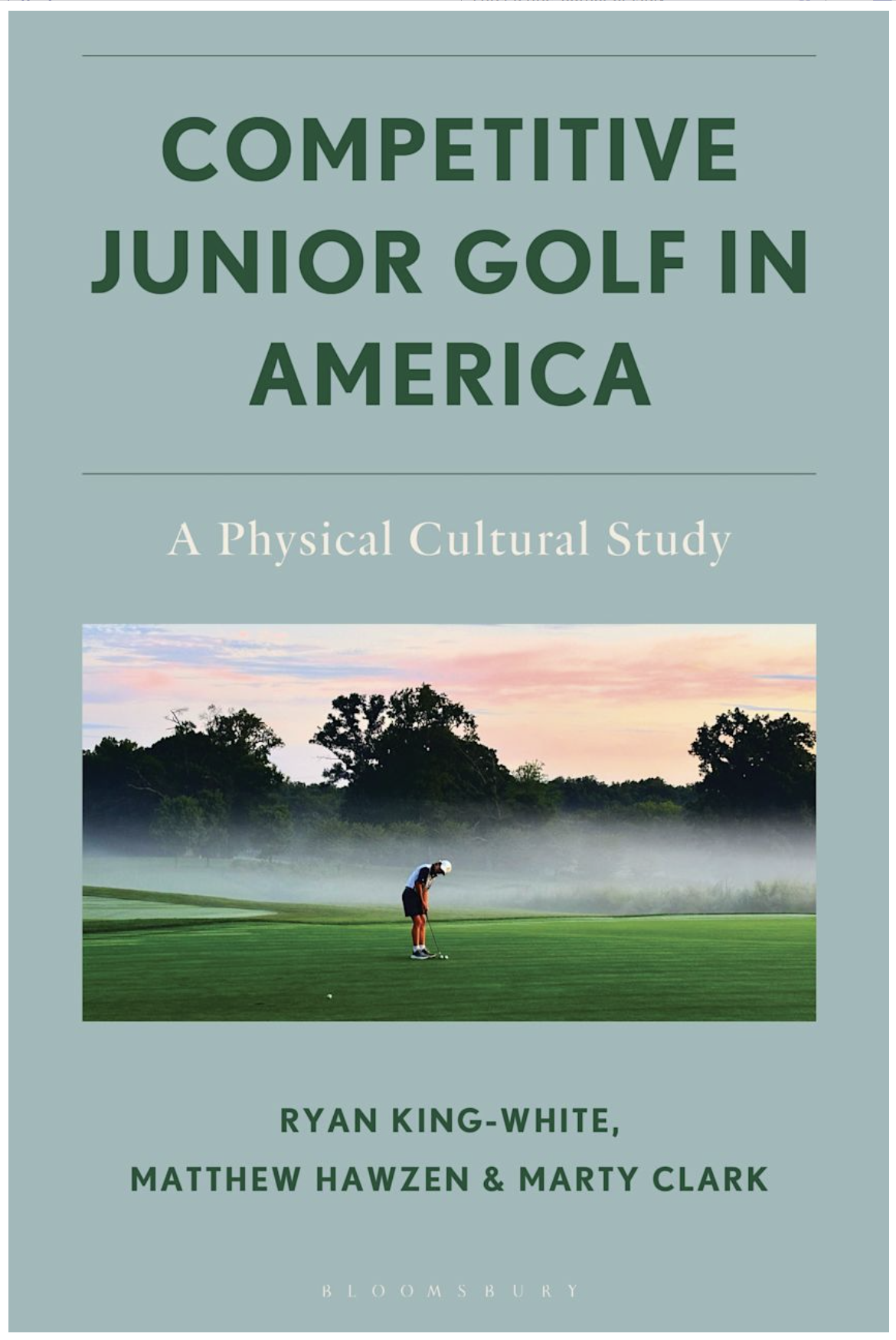
Dr. Marty Clark Co-Authors New Book on Competitive Junior Golf in America
Published on September 17, 2026. Link to the publisher's website.
In October, 2026, the Faculty of Health, Community, and Education (HCE) became a signatory of DORA (the San Francisco Declaration of Research Assessment). Watch for the DORA signatory graphic on various projects, policies, or accomplishments in HCE materials. As such, HCE remains committed to evaluation of academic contributions using the following core principles:
- Intrinsic Content Quality: Research outputs (articles, books, datasets, software, policy contributions) are assessed on their scientific and academic merit rather than the impact factor or status of the publishing journal.
- Broad View of Impact: We recognize a wide spectrum of scholarly contributions, including datasets, open-source code, mentoring, public engagement, and policy influence.
- Holistic Career Assessment: In hiring, tenure, promotion, and funding evaluations, we prioritize qualitative narrative assessments and article-level metrics over aggregate journal metrics.