 MENU
MENU



Canada’s World Cup moment
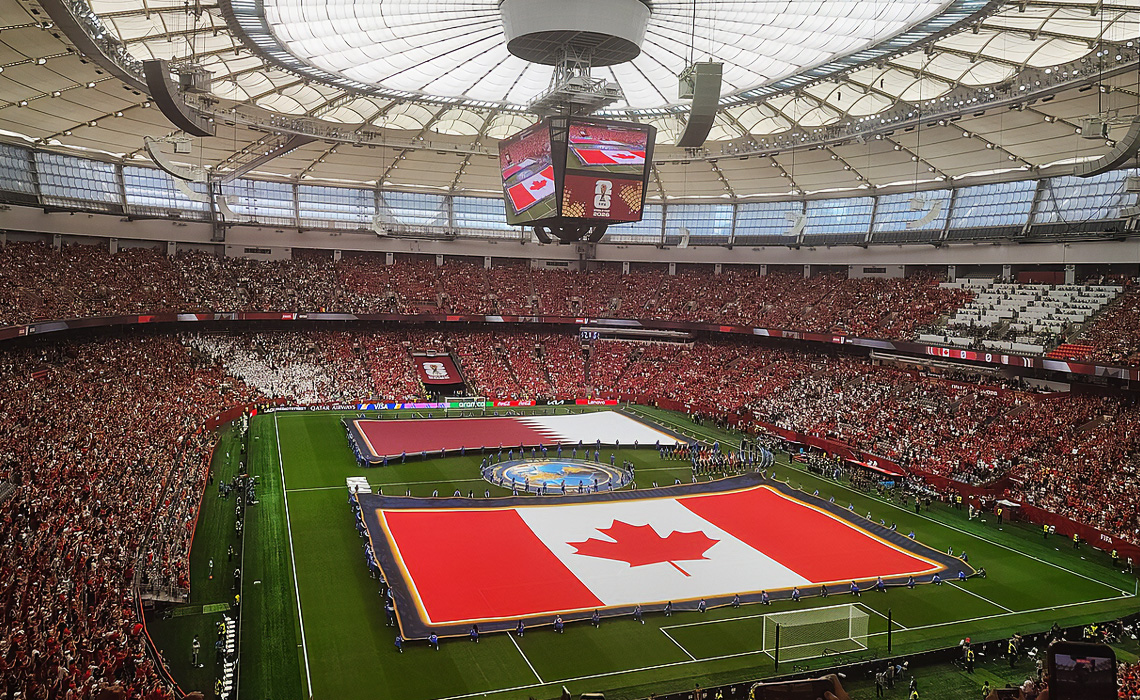
Call it soccer if you're Canadian, or football if you're part of the other 90 per cent of the planet. Either way, it is a beautifully simple game played on a big field with 22 players, two nets and a ball. And somehow, that simplicity has captivated the globe.
In this year's FIFA World Cup, more than 100 matches are being played across Canada, the United States and Mexico as 48 countries compete for the title. By the time a champion lifts the trophy, the Bank of America projects that more than five billion people will have tuned in at some point.
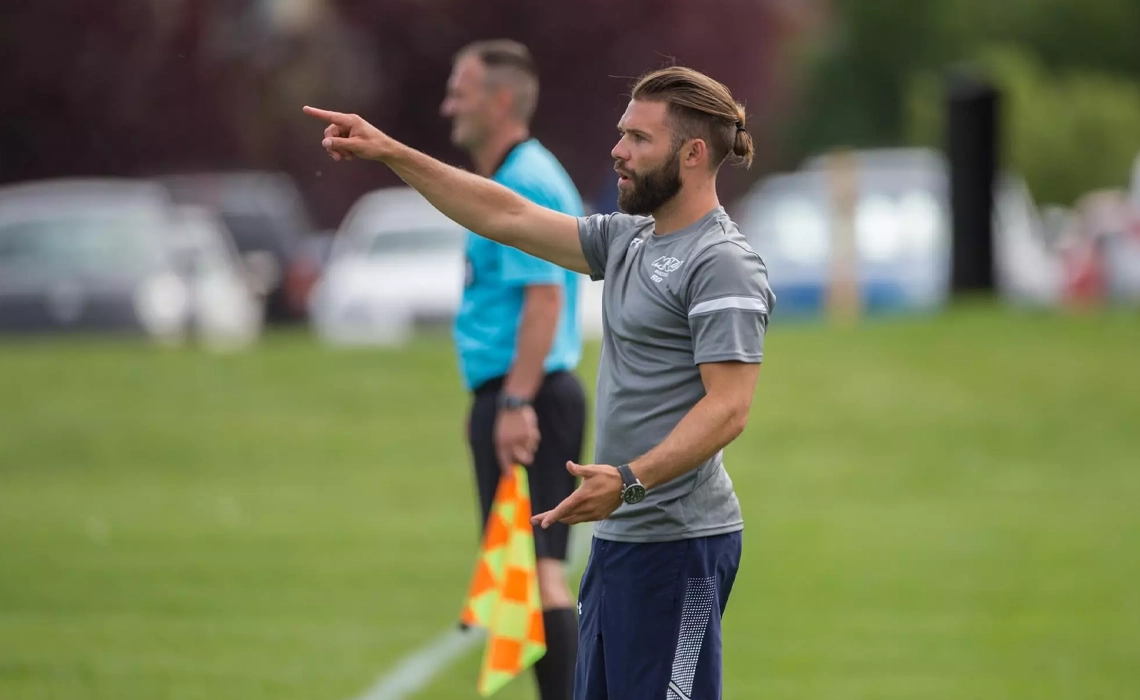
“It doesn't make sense that it matters so much,” laughs Ryan Gyaki, head coach of the Mount Royal’s Cougars men’s soccer team. “But it's intoxicating. It's addictive to be part of.”
On paper, it's just a game. Yet it has the remarkable ability to bring strangers together, create unlikely heroes and convince entire countries to believe.
The draw of the game
Gyaki’s connection to the game runs deeper than most. He left Calgary at 16 to play in Sheffield United’s academy system and later in Germany with Hansa Rostock. He also represented Canada at the FIFA U-20 World Cup and is now a decade into his coaching career at MRU.
“The World Cup is one of the rare times where you get to be very patriotic in a healthy and joyous way,” Gyaki says. “There's great rivalry without any true animosity for the most part. It really is an incredible event to be part of.”
He remembers attending a 2018 World Cup match between Brazil and Costa Rica in St. Petersburg with no real allegiance to either side.
“We were sitting with the Costa Rican fans, so we cheered for Costa Rica,” Gyaki says, explaining how quickly the atmosphere changed things. “I lost my voice because I was cheering so much — I couldn't even coach when I got back for the season.”
Gyaki’s story reflects what makes the World Cup so powerful: it turns strangers into supporters and gives people a reason to connect. In a world shaped by algorithms and personalized feeds, those shared experiences are becoming harder to find.
“Few events bring together all members of a nation at the same time, and Canada would be a great example,” says Dr. David Legg, PhD, a professor of sport and recreation management at Mount Royal. “When else, except cheering for our national team, do all the disparate parts of our country come together to cheer for one common goal?”
Whether inside a stadium, packed shoulder-to-shoulder in a neighbourhood pub or chatting about yesterday's match around the office coffee machine, the tournament creates a rare shared moment.
Unscripted drama
Part of the World Cup magic lies in the format.
Unlike most North American professional sports, where long playoff series reward the more consistent team, the World Cup leaves no room for error once the knockout rounds begin.
“I don't think there's a better sport with underdog success,” Gyaki says. “A powerhouse team can dominate the ball for 90 minutes and still go home.”
That all-or-nothing pressure produces the stories people remember. Unlikely heroes have already emerged, including Cabo Verde, an island nation of roughly half a million people that pushed defending champion Argentina into extra time, and Norway, celebrating each victory of its generational run with its trademark Viking row alongside thousands of supporters in the stands.
Then there’s Canada, writing a story of its own.
Despite injuries that sidelined key players, the men's national team battled through pool play on home soil and won a knockout-stage match for the first time in program history. After the victory, head coach Jesse Marsch called his players “Canadian heroes” — a fitting description for a team that continues to reshape what Canadians believe is possible in the sport.
The business side
The global spectacle, however, isn't without its complications.
“FIFA is a multi-billion-dollar corporation that partners with transnational corporations like Coca-Cola and Adidas to effectively sell the World Cup brand to billions of people around the world to make profit,” notes Dr. Marty Clark, PhD, chair of health and physical education at Mount Royal.
“This whole economic model relies on intense nationalism. In short, we cultivate our national identity as ‘Canadian’ through the collective act of watching the Canadian national team play against another nation.”
The FIFA World Cup exists in two worlds: a breathtaking celebration of sport and a global business empire that has faced decades of criticism over corruption, governance and commercialization.
Those tensions are part of the tournament’s complicated legacy. FIFA’s decisions and business practices deserve scrutiny, but they do not erase the genuine emotion created on the pitch and in the stands. Those moments still belong to the players who pour years of sacrifice into a single opportunity, the fans who carry their passion across borders and the communities discovering what it feels like to cheer for something together.
Canada’s soccer boom
The tournament arrives at a defining moment for soccer in Canada.
That momentum has been building for years, highlighted by the women’s team winning Olympic gold in Tokyo and the men’s semifinal run at the 2024 Copa América tournament.
Today, soccer is Canada’s largest youth participation sport with nearly one million registered players across more than 1,200 clubs nationwide.
“It's fantastic to see how many kids are playing. Our Calgary Minor Soccer Association seems to just keep growing,” Gyaki says.
Meeting that demand in a Canadian climate requires investment in facilities.
“The idea of having full-size, 11-versus-11 indoor fields 10 years ago was very hard to imagine,” he says. “Now, they are just popping up one after the other. Even at Mount Royal, just building our turf field has opened up so many playing possibilities.”
The World Cup now provides another opportunity to accelerate that growth. But Legg says creating a lasting legacy requires more than a moment of excitement.
“Ideally, events like the World Cup act as a catalyst to create interest in participation and volunteering, but this doesn't happen automatically,” he says. “It has to be purposeful and supported before, during and after the event.”
For Gyaki, that process starts with inspiration. He hopes today's excitement becomes tomorrow's habit, whether that means supporting Cavalry FC, Calgary Wild FC, the MRU Cougars or a local community club.
“As our national teams do better, more kids wear our national jersey to school, that starts getting people excited, and then we have more kids playing,” Gyaki says. “It’s a big chain reaction event, and the World Cup helps provide that spark.”