 MENU


MRU supports AgeCare Innovation Lab
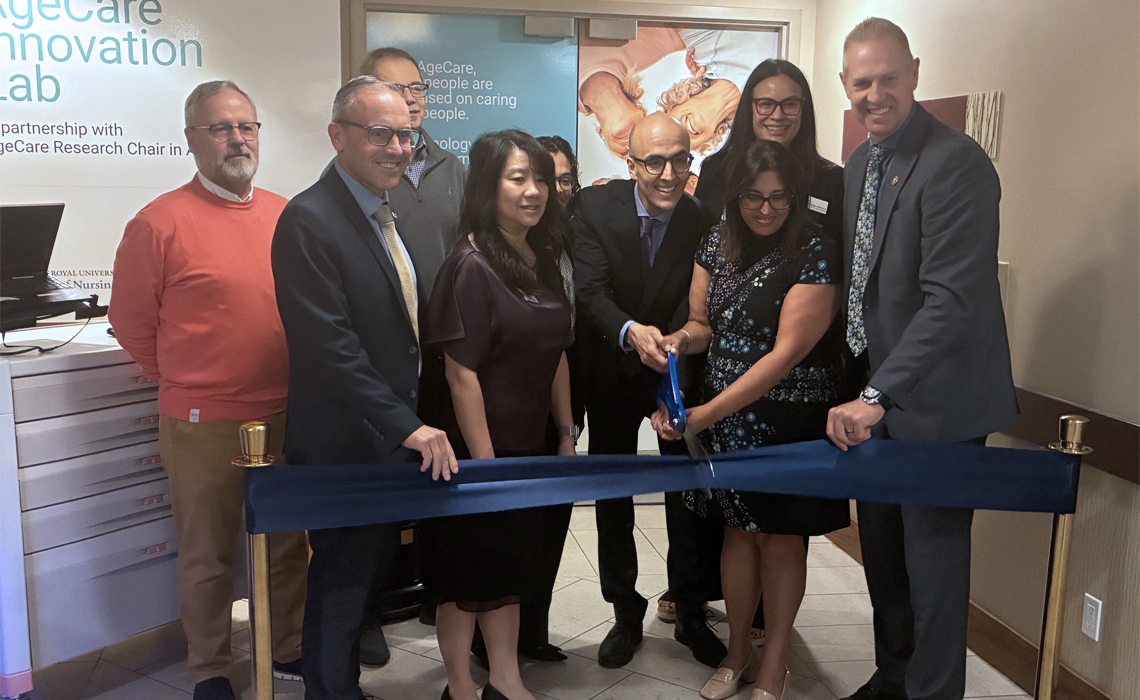
An Innovation Lab launched Oct. 9 at AgeCare’s Seton location will focus on pioneering health care research and using AI and automation to strengthen community care, freeing staff to spend more time directly with patients.
The launch took place with the support of Nathan Neudorf, minister of Assisted Living and Social Services, Dr. Chad London, provost and vice-president, Academic of Mount Royal University, Dr. Mohamed El-Hussein, AgeCare Research Chair in Aging at MRU, and AgeCare CEO and former MRU Board of Governors member Salimah Walji-Shivji.
A partnership with MRU’s School of Nursing and Midwifery and the Agecare Research Chair in Aging, the AgeCare Innovation Lab will be located at AgeCare Seton.
The AgeCare Innovation Lab is the first-of-its kind in the continuing care sector in Canada, focused on pioneering health care research and incubating artificial intelligence (AI), automation and robotics solutions to strengthen Canada’s Continuing Care Sector. The lab’s mission is to build a health and life sciences community in Alberta, drive innovation in the health care market and create a hub for learning and advancement.
“People working in continuing care know how much goes into looking after residents every single day. They also know where things could be better and where a different tool or approach might be able to help,” Neudorf said. “This lab gives them a space to explore those ideas alongside researchers and see how they might work in every day care.”
The Lab will expand AgeCare’s ongoing partnership with Mount Royal University, with the university leading research, publishing and supporting the knowledge dissemination and thought leadership developed through the Lab.
“With the opening of the AgeCare Innovation Lab, we are celebrating what becomes possible when visionary community leadership aligns with academic excellence,” London said.
“The lab bridges the gap between theory and practice, ensuring that groundbreaking, evidence-informed research directly reaches the frontline of care, enriching the lives of residents today and building the foundation for healthier aging tomorrow.
“The lab is particularly important because it creates a real-world environment where AgeCare and MRU can work together to test and evaluate innovations, involve students and faculty, and translate research into practice.”
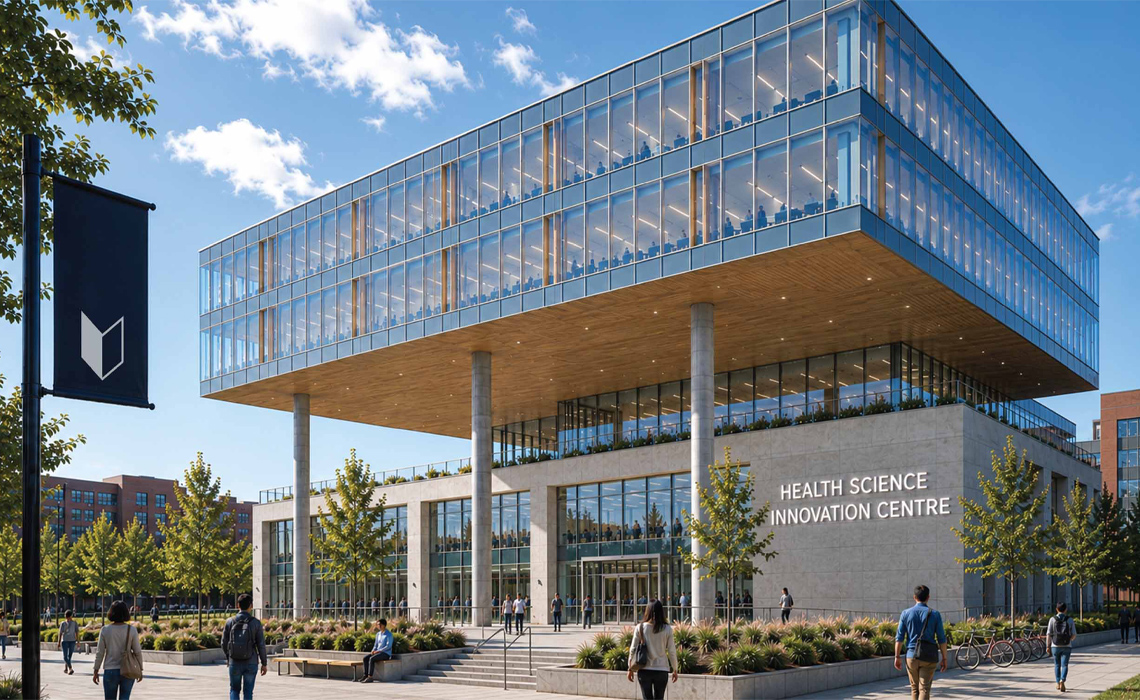
London referenced MRU marking 60 years of nursing education, and how health care education is the focus of the proposed Health Science Innovation Centre at MRU.
The opening is the result of AgeCare’s 18-month journey of training its team in AI, automation and robotics solutions. Within this journey, Agecare invested in AI and automation training of more than 200 AgeCare leaders to date.
A smaller sub-set of teams have completed intensive modules, gap analysis and solutioning research to enhance operations and care and service delivery. As a living lab, its operations will include research, pilot programs and the testing of various automation and AI solutions within the continuing care sector.
Robotics and AI-driven health solutions will be tested in a fully operational continuing care residence and supported by a cross-industry ecosystem including AgeCare’s strategic partners, academics and clinicians.
AgeCare CEO Walji-Shivji said she hears concerns about whether a focus on AI will lead to job losses, but she emphasized that the opposite is true.
“This journey is not about people losing their jobs; it is about providing more value and more time to our staff to do their jobs,” she said. “Think about a health aide on a night shift. Every minute spent charting, retrieving supplies, every minute on a task that technology can perhaps take on. That is a minute not spent holding a hand, sharing a story, noticing that someone is not quite themself today. The number of seniors in this province is increasing every single day. The pressure on our people is real. Those minutes are the heart of the care that we give and the sector needs every single one of them.”
To support the Lab’s governance and research, AgeCare is launching the AgeCare Innovation Steering Committee, an oversight team who is responsible for reviewing and approving every AI and robotics solution before they are put into practice. The mandate of the Committee will be to critically assess that solutions are designed to improve safety, dignity and quality of care for AgeCare residents and staff.
The AgeCare Innovation Lab will also serve as a community incubator for innovators and entrepreneurs working to improve human health outcomes, with the goal of driving health and life science technologies into the Canadian market. Through various strategic partnerships, teams will have access to a network of expert advisors and partners within the innovation ecosystem.
“The AgeCare Innovation Lab presents an exciting opportunity to bring research, technology and clinical practice together to improve the quality of life of older adults,” El-Hussein explained. “I would like to see the Lab serve as a collaborative space where we can test and evaluate AI, robotics and other innovative technologies in real-world continuing care settings, with a focus on improving care quality, supporting the workforce and promoting older adults’ health, safety, independence and dignity.”
El-Hussein said key areas to explore include early detection and prevention of delirium and falls, monitoring mobility and functional decline, supporting residents living with dementia, and using AI to enhance clinical decision-making.
“Equally important will be involving older adults, families and care teams in the design and evaluation of these innovations to ensure they are practical, ethical and responsive to the needs of those receiving and providing care.”