 MENU
MENU



Mount Royal nursing celebrates six decades
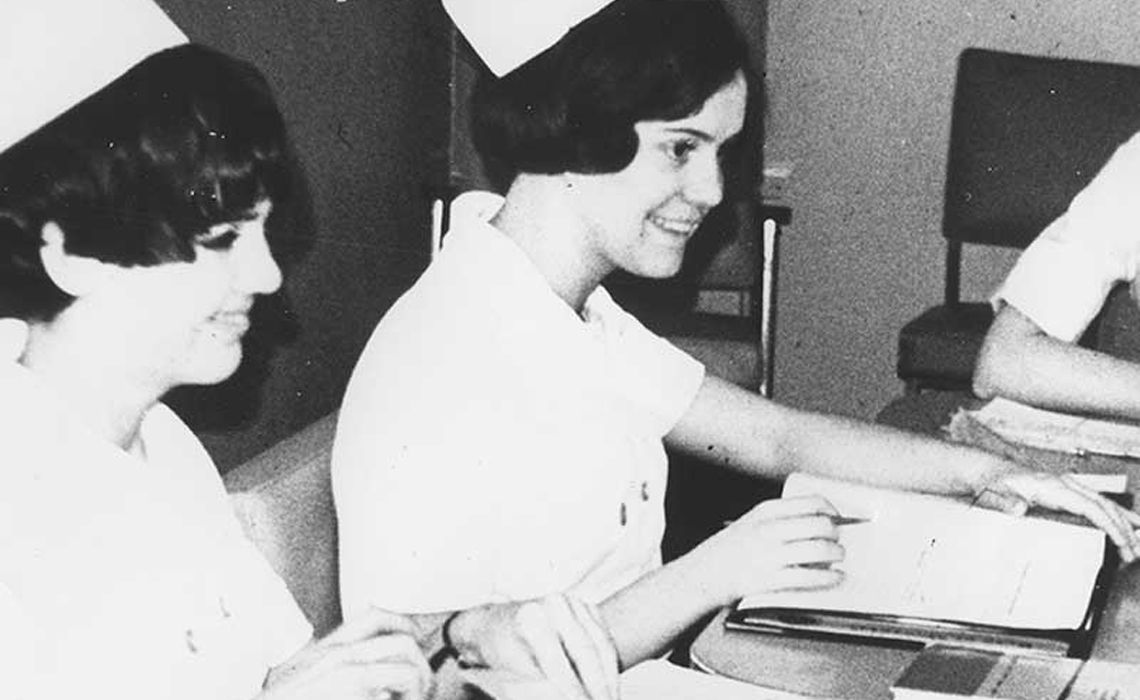
As nursing at Mount Royal celebrates its 60th anniversary at Mount Royal University, its history reflects enormous changes in health care, education and the responsibilities of the professionals delivering care. But Dr. Joseph Osuji, PhD, director of the School of Nursing and Midwifery, says some of its defining qualities have remained remarkably consistent.
Mount Royal College made the unconventional decision to launch a two-year nursing diploma in 1967, when most diploma programs were hospital-based. While Osuji explains that move was not necessarily popular at the time, the ambitious plan helped those graduates go on to build careers through decades of profound change in health care, shaped by the efforts of early clinical instructors, preceptors, staff and community partners.
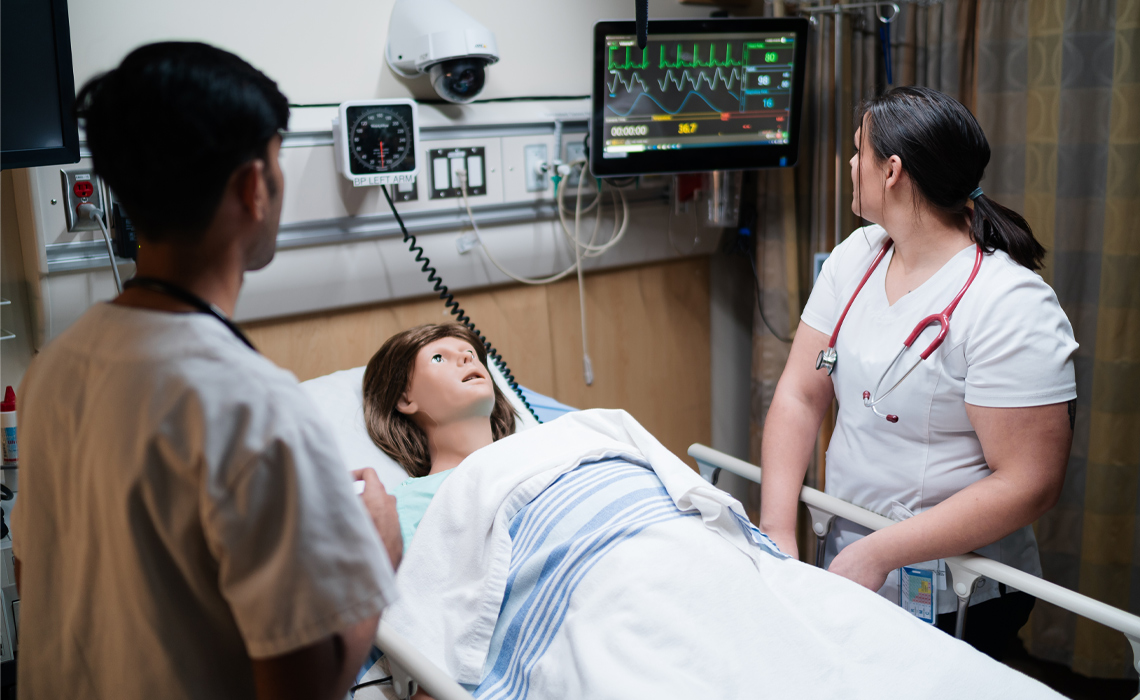
Six decades later, that willingness to adapt and challenge convention remains part of the story of nursing and midwifery education at Mount Royal University. Today, students learn through degree education, clinical placements and a leading-edge simulation facility on campus — the Health Simulation Learning Centre — that help them prepare for careers that can look dramatically different from those of Mount Royal’s first nursing graduates.
“While MRU started innovating when that word was not yet a cliché, what has remained constant is the conviction that excellent care begins with treating another person as an individual with agency,” Osuji says.
“Our graduates are ready to practice from day one and demonstrate a combination of skill, curiosity, professionalism and compassion that has long defined MRU nursing and midwifery. This reputation is even stronger in the wider community today.”
Dean of the Faculty of Health, Community and Education Dr. Doug Gleddie, PhD, says that standard of excellence has been evident since his first days on campus in late July. “I see people who really care about what they’re doing. They want to make sure that the students are the best that they can be for their patients and the situations that they’ll be working in.”
A history of pushing boundaries
From its ambitious beginnings, nursing education would eventually play a significant role in Mount Royal’s own evolution.
The Bachelor of Nursing began as a joint program with the University of Calgary and later became a collaborative program with Athabasca University. Eventually, the Mount Royal Bachelor of Nursing became the first bachelor’s degree the institution could award before it transitioned to university status. The School continued to expand its reach, offering Alberta’s only Bachelor of Midwifery program, which recently marked ten years of graduating midwives and has helped increase access to professional midwifery care across the province.
Osuji says that history belongs not only to faculty and graduates, but to generations of clinical instructors, preceptors, staff and community partners whose contributions may be less visible.
“I salute the people who laid the foundation for the important work we are doing today at the School,” he says. “Their story belongs within this anniversary.”
A career shaped by the unexpected
Dr. Cathy Carter-Snell, PhD, has experienced nearly half of Mount Royal nursing’s 60-year history herself. After approximately thirty years, the longtime professor is now contemplating retirement, although not necessarily a quiet one.
Carter-Snell’s career has spanned clinical practice, teaching, research, forensic nursing, curriculum and program development, technology and simulation. Looking back, she can see connections between experiences that were far less obvious while she was living them.
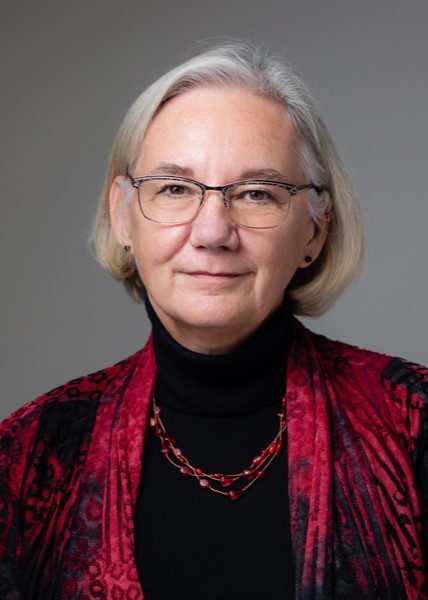
That idea is at the centre of her upcoming Impact Lecture on Oct. 15, in which she will use “chaos theory” as a lens for reflecting on a career shaped by unexpected events, opportunities and relationships.
Carter-Snell describes a professional life in which one experience frequently opened another door she hadn't anticipated. For example, she recalls taking on projects without necessarily having all the expertise at the outset, including developing a computer program to track patients at a time when that type of work was far outside her formal background.
Her career also led deeply into forensic nursing. Carter-Snell helped establish the Canadian Forensic Nurses Association and has worked in an area of nursing that requires practitioners to navigate some of the most difficult moments in patients’ lives.
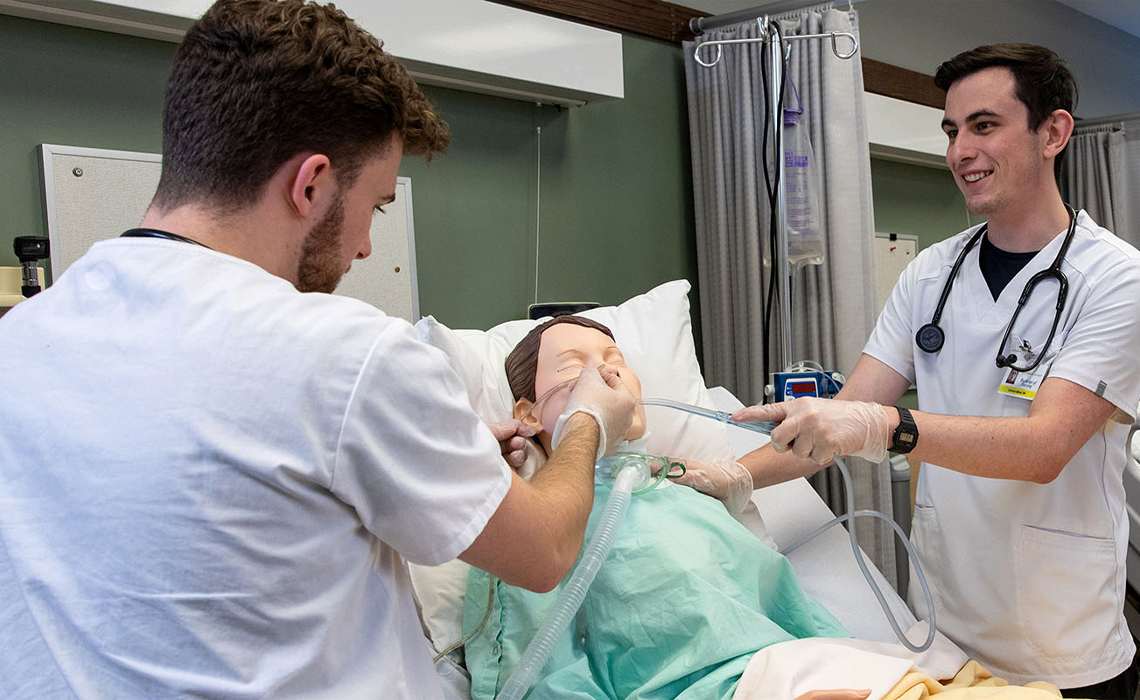
Her career has also given her a front-row seat to the changes in nursing education over the years. Simulation, Carter-Snell says, has transformed what educators can ask students to experience before they encounter a situation in real life. Over the years, technology has changed and so have the tools available to students and educators. But, like Osuji’s, Carter-Snell’s reflections return to the colleagues, students, patients and professional relationships that shaped where her career went next.
Looking backward, those connections can appear almost inevitable. Living through them is another matter. That unpredictability is part of the message she hopes to share with students and colleagues. Sometimes, careers do not necessarily unfold according to a tidy plan, Carter-Snell says. “You just have to move forward and be confident.”
Preparing for the future
Today, nursing and midwifery students are preparing to enter professions with broader scopes of practice, increasing autonomy and growing complexity while collaborating with other health-care professionals. In the School of Nursing and Midwifery, training for the present and future involves combining a clinically focused curriculum with simulation and extensive opportunities to learn alongside patients, clients, families and communities through partnerships with clinical agencies. In the on-campus Health Simulation Learning Centre, students can work through complicated scenarios, make decisions and learn from the results. “It allows them to engage in practice with excellent feedback and in a safe environment for them to do so,” Gleddie says.
As the professions have evolved, so have considerations for preparing what actual practice looks like in today’s health-care landscape. Along with clinical judgment and hands-on skills, students learn to examine established practices and reflect critically on their own. Cultural humility, indigenization of curriculum and responding meaningfully to the Truth and Reconciliation Commission’s Calls to Action have also become essential parts of that education, Osuji explains.
For Osuji, that work requires more than adding new material to existing courses. It means working with Indigenous colleagues, Elders and Knowledge Keepers, examining assumptions students may bring into health care settings and preparing graduates to confront racism and provide culturally safe care.
If the previous 60 years are any indication, the professions will continue to change. Osuji expects more health care to move into homes and communities in the coming years. Nurses and midwives may take on broader scopes of practice, including prescribing, while nurse practitioner clinics, collaborative practices and roles in prevention, mental health and primary care continue to grow. He also anticipates more nurses and midwives working independently, developing services in response to needs they see in their communities.
Although technology will inevitably play a larger role, Osuji cautions against allowing increasingly sophisticated tools to overshadow one of nursing and midwifery’s greatest strengths. “Graduates will still need to recognize when a person needs time, advocacy and human connection,” he says. “The human connection in nursing and midwifery is our greatest asset for building trust and we must not neglect it.”
Osuji says the School’s committed faculty are among its greatest strengths.“Nursing and midwifery bring distinct perspectives. Each profession asks students to listen carefully and use evidence to build trust, often at pivotal moments in people’s lives,” he says.
As the School continues to evolve, Osuji would like to see more accessible pathways for licensed practical nurses to become registered nurses, the development of a psychiatric nursing program and focused certifications in nursing and midwifery that respond to emerging health-care needs. He also hopes the School will deepen its partnerships with Indigenous and other communities and continue making meaningful progress toward reconciliation.
Although program growth matters, Osuji believes the success of the next chapter should be judged primarily by another measure.
“We should judge our future success by its impact on people … whether our students feel they belong, whether our graduates are ready to serve and whether the communities that place their trust in nurses and midwives experience better care because Mount Royal was part of their education,” Osuji says.
“What gives me the greatest joy is our graduates' competence, the genuine sense of responsibility they bring to their practice and the wonderful reputation they have cultivated for the school as a result.”